Russian Satellites Are Interfering GPS Signals Across Europe, Say Scientists
A University of Texas at Austin study has reported Russian-linked GPS interference across parts of Europe, affecting navigation systems used by aircraft and ships. Researchers say the disruptions highlight growing concerns over electronic warfare and vulnerabilities in satellite infrastructure. European authorities are now exploring stronger safeguards and backup navigation systems to improve resilience.

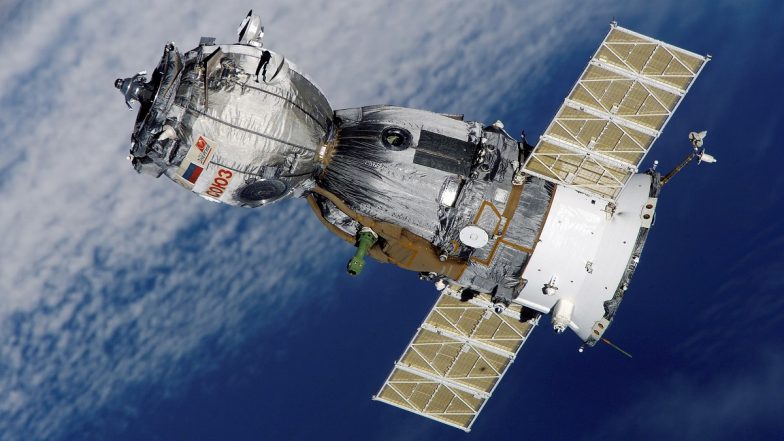
Russian-linked GPS interference has reportedly been disrupting satellite navigation signals across parts of Europe, prompting renewed concerns about the security and resilience of systems that support transportation, communications and critical infrastructure. Researchers say the incidents highlight how space-based technology is increasingly becoming a strategic domain amid evolving geopolitical tensions.
The findings were detailed in a research paper published by the University of Texas at Austin. According to the study, GPS jamming and interference associated with Russian activity have been detected across several European regions, affecting navigation systems relied upon by aircraft, ships and other users of satellite-based positioning technology. 'I Still See No Reason': Vladimir Putin Rejects Zelensky's Proposal for Face-to-Face Meeting to End Ukraine War.
What Researchers Found
Scientists tracking the disruptions said the interference involves attempts to overpower or distort satellite navigation signals. Such disruptions can prevent receivers on the ground from accurately determining their location, creating operational challenges for sectors that depend on precise positioning data.
The reported incidents have been observed across multiple areas in Europe, particularly in regions considered strategically sensitive or located near conflict-affected zones. Russia Open to Peace Deal With Ukraine Following Anchorage Talks: President Vladimir Putin.
Why GPS Disruptions Matter
While GPS is commonly associated with smartphone navigation and mapping applications, the technology supports a much broader range of services.
Satellite navigation systems are widely used in aviation, maritime transport, logistics, emergency services, telecommunications and financial networks. Even brief interruptions can affect operational efficiency and raise safety concerns in sectors that require accurate timing and location information.
Researchers noted that the increasing reliance on satellite-based services means that disruptions can have consequences beyond navigation alone.
Growing Focus on Electronic Warfare
Experts said the incidents reflect a broader trend toward electronic warfare, where countries target digital and space-based infrastructure alongside traditional military capabilities.
Since Russia's invasion of Ukraine in 2022, European authorities have reported a rise in GPS disruptions, particularly in areas close to the conflict zone and other sensitive locations. Researchers believe these developments demonstrate how modern conflicts increasingly involve competition in cyber, electronic and space domains.
Scientists also warned that signal interference presents unique challenges because it can be difficult to identify and attribute immediately compared with physical attacks on infrastructure.
The reported disruptions have led European governments, security agencies and technology experts to examine additional safeguards for satellite navigation systems.
Among the measures being considered are backup navigation solutions, alternative positioning technologies and enhanced systems capable of detecting interference more quickly. Officials are also assessing ways to improve resilience against future disruptions affecting critical infrastructure.
The latest findings come as countries around the world become increasingly dependent on satellites for both civilian and military operations.
Researchers said the growing use of GPS jamming and signal interference highlights potential vulnerabilities in global navigation systems. As governments expand their reliance on space-based assets, protecting satellite infrastructure is expected to become a key security priority.
The study suggests that future conflicts may increasingly extend beyond traditional battlefields, encompassing digital networks, electronic systems and orbital infrastructure that support modern economies and national security operations.
(The above story first appeared on LatestLY on Jun 07, 2026 05:39 PM IST. For more news and updates on politics, world, sports, entertainment and lifestyle, log on to our website latestly.com).