US-Iran Conflict: Donald Trump Reviews Military Strike Options Against Tehran, Sticks With Nuclear Talks for Now
Donald Trump has recently reviewed comprehensive military options for large-scale strikes against Iran but has chosen to maintain current diplomatic negotiations for the time being. According to a Wall Street Journal report citing U.S. officials, the administration is prioritizing a diplomatic resolution to dismantle Tehran’s nuclear program despite sluggish progress.

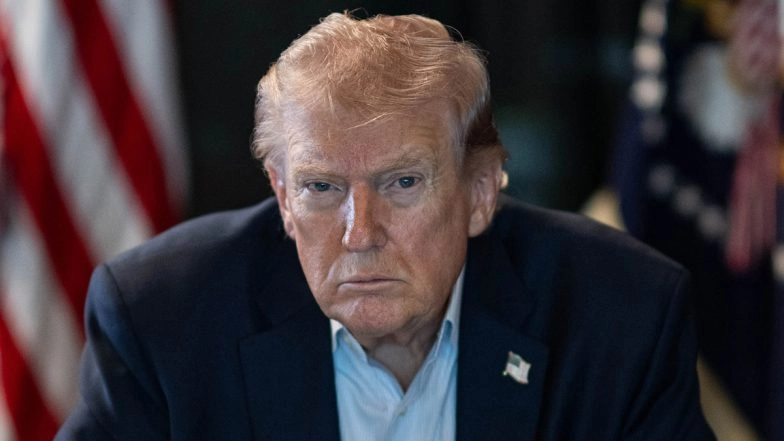
U.S. President Donald Trump has recently reviewed comprehensive military options for large-scale strikes against Iran but has chosen to maintain current diplomatic negotiations for the time being. According to a Wall Street Journal report citing U.S. officials, the administration is prioritizing a diplomatic resolution to dismantle Tehran’s nuclear program despite sluggish progress. High-level discussions were reportedly held between President Trump, Secretary of Defense Pete Hegseth, and Chairman of the Joint Chiefs of Staff General Dan Caine. The meetings focused on whether the United States should abandon the ongoing nuclear talks and pivot toward a broader military campaign to "finish the job" following a recent series of escalations.
However, officials indicated that Trump believes launching renewed military operations at this juncture would severely disrupt negotiations. To give diplomacy more time, the President has informed aides that he is willing to allow the talks to extend past the upcoming August 18 deadline originally set for a final nuclear pact. While a broader military campaign remains on hold, the administration has not ruled out targeted actions. Trump continues to endorse limited retaliatory strikes if Tehran breaches the fragile ceasefire brokered earlier this month, which was briefly jeopardized by a recent volley of regional attacks. Iran Says ‘No Plans’ To Meet US in ‘Next Few Days’ at Any Level.
"They're agreeing to everything that I want, and they have to," Trump told reporters last week regarding the pressure on Tehran. "Otherwise, we just go back and do what we have to do." Vice President JD Vance echoed this stance during a Fox News interview on Tuesday, emphasizing that while the U.S. will push ahead with negotiations, the administration maintains "a lot of optionality" if diplomatic tracks ultimately collapse. The diplomatic push is currently playing out in Doha, where U.S. Middle East envoys Steve Witkoff and Jared Kushner have arrived for indirect talks with Iranian delegates through Qatari mediators. Iran Seeks ‘Insurance Mechanism’ To Reduce Risks for Ships Transiting Through Hormuz.
Despite the high-level engagement, negotiations remain severely bottlenecked. Major sticking points include a controversial demand by Tehran to levy transit and service fees on maritime vessels passing through the strategic Strait of Hormuz, alongside deep disagreements over the exact limits to be placed on Iran's nuclear infrastructure. Adding to the friction, the Iranian government stated on Tuesday that it would not hold direct meetings with the U.S. envoys who traveled to the region. The refusal injects fresh uncertainty into the talks, even as top Pentagon officials continue to update the White House with structured military contingencies should diplomacy fail completely.
(The above story first appeared on LatestLY on Jul 01, 2026 03:40 PM IST. For more news and updates on politics, world, sports, entertainment and lifestyle, log on to our website latestly.com).