US-Iran War: IRGC Claims Drone, Missile Strikes on US Military Bases in Bahrain, Jordan and Kuwait
Iran’s Islamic Revolutionary Guard Corps (IRGC) announced on Wednesday that it carried out a series of drone and missile strikes targeting U.S. military installations in Bahrain, Jordan, and Kuwait.

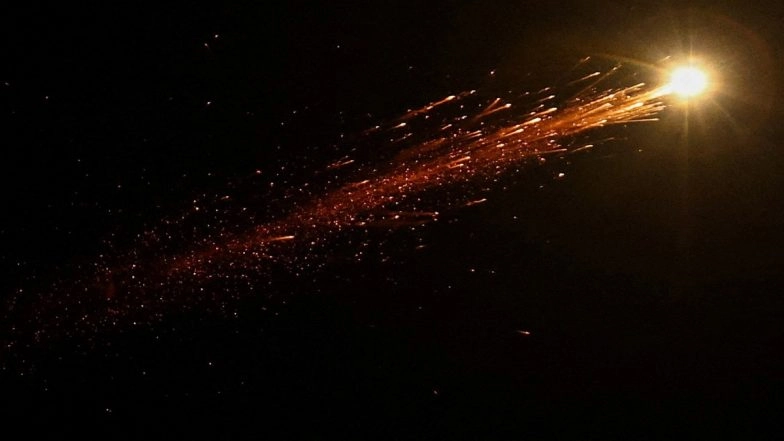
Iran’s Islamic Revolutionary Guard Corps (IRGC) announced on Wednesday that it carried out a series of drone and missile strikes targeting U.S. military installations in Bahrain, Jordan, and Kuwait. The operation, which the IRGC stated was in retaliation for recent American airstrikes on Iranian coastal positions, marks a significant escalation in regional hostilities. U.S. Central Command (CENTCOM), however, reported that the attacks failed to impact their intended targets.
According to statements broadcast by Iranian state media, the IRGC targeted multiple strategic locations utilized by American forces. In Bahrain, the strikes reportedly aimed at command-and-control infrastructure and drone facilities connected to the U.S. Fifth Fleet at the Sheikh Isa Air Base. US Strikes Iran's Greater Tunb Island, Targets Missile Sites in Strait of Hormuz.
Additional phases of the Iranian operation targeted the Prince Hassan Air Base in Jordan and the Ali Al Salem and Ahmad Al Jaber air bases in Kuwait. The IRGC claimed the strikes successfully destroyed fuel depots, radar installations, and Patriot air defense systems. Military officials from the targeted nations disputed Tehran's claims of widespread destruction. The Bahrain Defense Force and the Kuwaiti military confirmed that air defense systems were activated early Wednesday, successfully intercepting the incoming drones and missiles.
The Jordanian Armed Forces also confirmed the interception of several rockets inside their airspace, reporting no casualties or significant infrastructure damage at their facilities. The escalatory exchange follows a fresh wave of precision airstrikes launched by U.S. Central Command against Iranian military targets on Tuesday evening. According to CENTCOM, the U.S. strikes utilized fighter jets, naval vessels, and unmanned systems to degrade Iran’s ability to disrupt commercial shipping lanes in the Strait of Hormuz.
Tensions in the region have intensified significantly following recent U.S. naval blockades and maritime standoffs. Iran has threatened to keep the strategic Strait of Hormuz closed to international transit, warning that regional energy exports would be halted if Iranian trade faces continued Western restrictions. Donald Trump Threatens To Target Iran’s Power Plants, Bridges Unless Tehran Returns to Talks (Watch Video).
International monitors and the United Nations have urged maximum restraint from all parties involved, warning that continued retaliatory strikes risk pushing the region into a broader conflict.
(The above story first appeared on LatestLY on Jul 15, 2026 06:53 PM IST. For more news and updates on politics, world, sports, entertainment and lifestyle, log on to our website latestly.com).