What Are the Conditions of the Israel and Lebanon Ceasefire Agreement?
Israel and Lebanon have agreed to implement a conditional ceasefire following intensive, U.S.-led diplomatic talks at the State Department, according to a joint statement released Wednesday night. The breakthrough agreement establishes a framework to halt months of devastating cross-border hostilities.

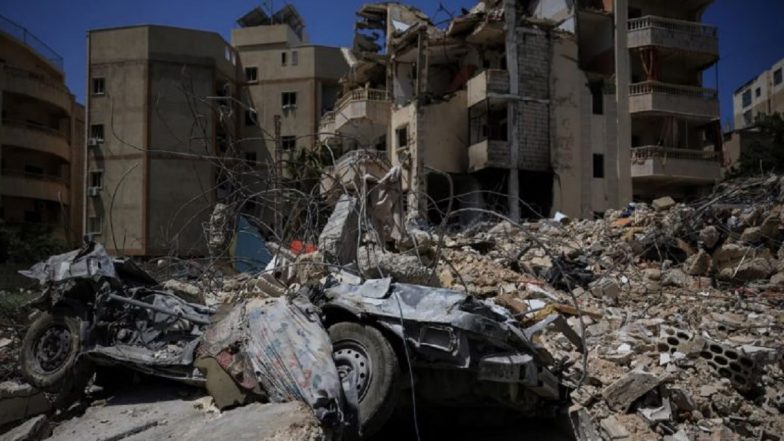
Israel and Lebanon have agreed to implement a new ceasefire framework aimed at ending months of cross-border hostilities and creating conditions for broader peace negotiations. The agreement, reached through U.S.-mediated talks, is tied to specific security and political commitments, particularly concerning Hezbollah's military presence in southern Lebanon. While both governments have endorsed the arrangement, its success depends largely on implementation on the ground.
Conditions of Israel and Lebanon Ceasefire Agreement
Under the agreement, the ceasefire will take effect only if Hezbollah completely halts attacks against Israel and withdraws its fighters and operatives from the area south of Lebanon's Litani River. The withdrawal requirement is one of the central provisions of the deal and is intended to reduce the risk of renewed clashes along the border. Israel-Lebanon War: Iran Halts Contact With International Mediators After Israeli Threats to Bomb Beirut.
The accord also calls for the Lebanese Armed Forces to assume exclusive security control in designated areas of southern Lebanon. This would limit the presence of non-state armed groups and place responsibility for security in the hands of Lebanon's official military institutions.
Creation of Security Zones
A major feature of the agreement is the establishment of pilot security zones inside Lebanon. These zones are expected to be free of Hezbollah military activity and will be monitored through mechanisms agreed upon by the participating parties. Officials involved in the negotiations say the zones are intended to serve as confidence-building measures and help prevent future confrontations. Donald Trump Says Israel, Hezbollah Agreed To Stop Fighting.
Commitment to Further Negotiations
Beyond ending immediate hostilities, Israel and Lebanon have agreed to continue direct political and security discussions. The two sides are expected to hold additional talks later this month to address unresolved issues and explore the possibility of a broader and more permanent agreement.
The joint statement released after the negotiations emphasized that the future relationship between the two countries should be determined by their sovereign governments and not by armed groups operating outside state control.
Hezbollah's Role Remains Critical
Although Hezbollah has previously indicated a willingness to support a full ceasefire, questions remain about whether the group will fully comply with all conditions, particularly the requirement to withdraw from southern Lebanon. Lebanese officials have stated that Hezbollah supports a mutual cessation of hostilities, provided Israel also refrains from military operations. Analysts view Hezbollah's response as the most significant factor in determining whether the agreement can hold over the long term.
Connection to UN Resolution 1701
Many elements of the current agreement reflect principles contained in the long-standing United Nations Security Council Resolution 1701, which ended the 2006 Israel-Hezbollah war. The resolution calls for an area south of the Litani River to be free of armed groups other than the Lebanese military and UN peacekeepers, while also emphasizing Lebanese sovereignty and border security.
The latest ceasefire similarly seeks to strengthen state control in southern Lebanon and reduce the military presence of non-state actors in the border region.
Fighting between Israel and Hezbollah intensified during the broader regional conflict involving Iran, leading to repeated missile attacks, drone strikes, and Israeli military operations in Lebanon. Previous ceasefire arrangements reduced violence temporarily but failed to end hostilities completely. The new agreement represents the most comprehensive effort in recent weeks to stabilize the Israel-Lebanon front and support wider diplomatic initiatives in the Middle East.
Whether the ceasefire develops into a lasting peace arrangement will depend on compliance with its security provisions, continued diplomatic engagement, and the willingness of all parties to avoid further escalation.
(The above story first appeared on LatestLY on Jun 04, 2026 07:37 AM IST. For more news and updates on politics, world, sports, entertainment and lifestyle, log on to our website latestly.com).