Why EU Chief Ursula von der Leyen Proposed Banning Children Under 13 From Social Media, Games and Chatbots
European Commission President Ursula von der Leyen has proposed banning children under 13 from accessing social media, online games and chatbots as part of a wider push to protect minors online. Under the plan, children aged 13-15 could use 'mini accounts' chaperoned by guardians. The proposal will now go to the EU’s 27 member nations for consideration.

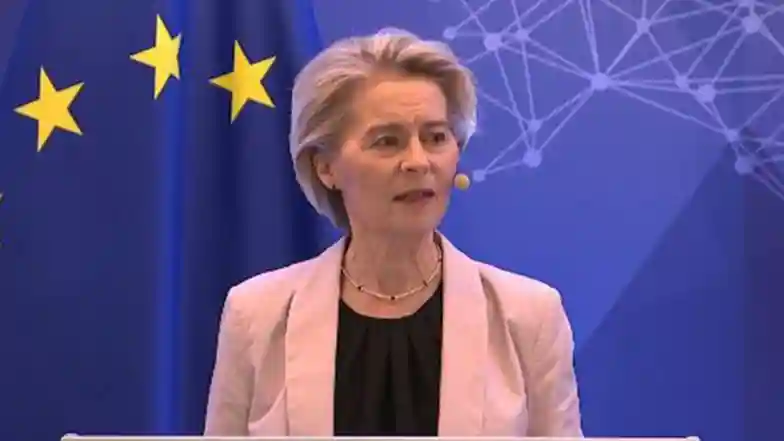
European Commission President Ursula von der Leyen has proposed banning children under 13 from accessing social media, online games and chatbots, putting child safety and Big Tech regulation at the centre of her annual State of the European Union speech in Strasbourg on Wednesday, September 16.
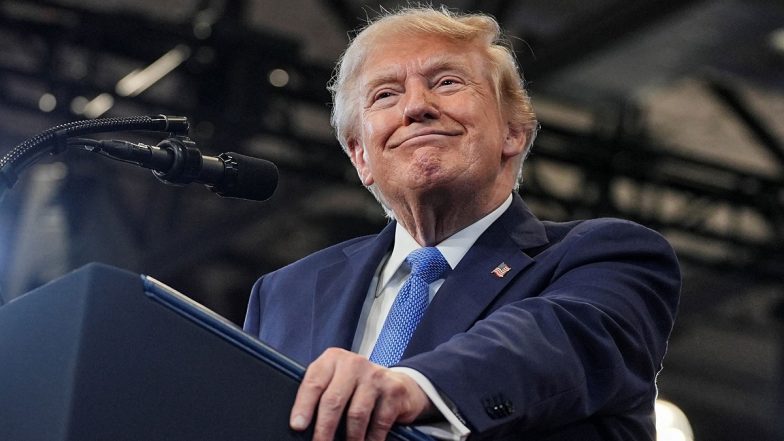
Under the proposal, children aged 13 to 15 would be allowed to use “mini accounts” chaperoned by guardians, AP reported. The proposal is now expected to be considered by the European Union’s 27 member nations and could add to existing tensions between Brussels and US President Donald Trump, who has repeatedly criticised European technology regulations. Australia Social Media Ban Update: Country Plans Mandatory Switch Off Button for Feeds, Says Report.
Von Der Leyen Targets Addictive Online Features
“I am aware that many perceive the power of Big Tech as overwhelming and impossible to roll back. I disagree,” said the EU executive. “We do not have to accept addictive features. We do not have to accept children being drawn into ever more extreme content. We do not have to accept that girls have their photos used for AI-generated sexualized images,” she said.
Von der Leyen said her proposal would introduce stronger age-based protections for children using online platforms. She said “mini accounts” chaperoned by guardians would be granted to children aged 13-15. Has PM Narendra Modi Decided To Shut Down Instagram in India? Fact Check Reveals Truth About Viral Reel.
EU Debate Over Children’s Online Access
The proposal builds on a position von der Leyen signalled earlier this year, when she said children should be exposed to social media in a “phased and gradual” way.
The European Commission’s plan comes amid a broader international debate over how governments and technology companies should protect young people from potential risks online.
Questions around addictive platform design, exposure to extreme content and the use of artificial intelligence have become central to that debate.
Europe And Australia Take Different Approaches
Several European countries have already considered or introduced measures aimed at restricting young people’s access to social media. Australia has also moved toward age-based restrictions, while New Zealand has considered similar measures.
However, such policies have faced legal and practical challenges. France’s top court last month struck down a law banning children under 15 from social media, saying it infringed on fundamental freedoms. French President Emmanuel Macron subsequently vowed to rework the proposal.
The developments illustrate the difficulty governments face in balancing child-protection measures with questions surrounding privacy, access to information and individual freedoms.
US Tech Industry Faces Child-Safety Pressure
The debate is also playing out in the United States. Social media company Meta Platforms last month agreed to pay up to $18 billion and add stronger child-safety measures to Facebook and Instagram to resolve a trial over teen social media addiction and settle claims filed by nearly every state.
The US and European approaches differ, with the EU continuing to pursue broad technology regulation while US policymakers and courts address child-safety issues through a combination of legislation, litigation and company measures.
EU Parliament Leader Calls For Algorithm Controls
Manfred Weber, head of the largest group in the European Parliament, spoke after von der Leyen and proposed that the EU follow Australia’s lead in allowing citizens to switch off social media algorithms.
His proposal adds another dimension to the EU’s debate over how platforms determine what content users see. The European Commission’s proposed age restrictions will now face further discussion among EU member states before any new rules can take effect.
DISCLAIMER: This article is strictly for informational and educational purposes to raise awareness about the said topic. LatestLY DO NOT host, distribute, or provide links to sexually explicit content, leaked videos, or pirated material. Any search terms or keywords mentioned are solely for the purpose of explaining the viral trend and its associated dangers. We strongly condemn the circulation of non-consensual intimate imagery (NCII) and advise all readers to refrain from searching for or sharing such content, as doing so may lead to severe legal consequences.
(The above story first appeared on LatestLY on Sep 16, 2026 03:47 PM IST. For more news and updates on politics, world, sports, entertainment and lifestyle, log on to our website latestly.com).