Why Is Pakistan Blaming India for Water Shortage?
Pakistan has accused India of reducing water flows under the Indus Waters Treaty after New Delhi suspended its participation in the agreement following the April 2025 terror attack. Islamabad claims India is violating the treaty and warns against the "weaponisation of water," while India has not commented on the latest allegations.

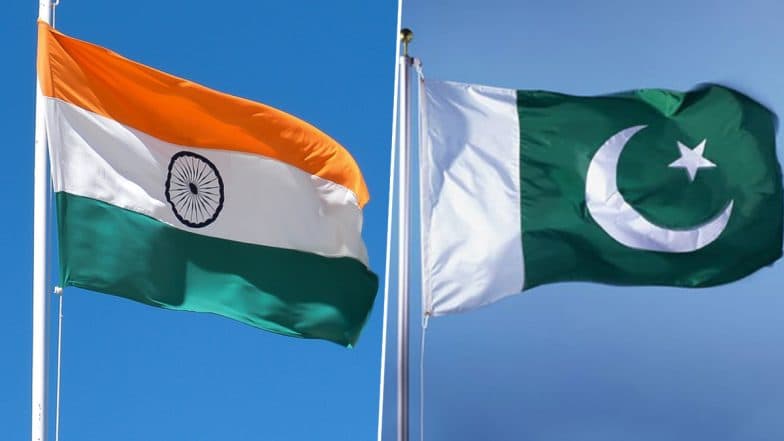
Pakistan has accused India of reducing water flows into the country following New Delhi's decision to suspend its participation in the Indus Waters Treaty after the April 2025 terror attack in Jammu and Kashmir. Islamabad alleges that India has restricted water from rivers allocated to Pakistan under the treaty, an accusation on which there has been no immediate response from New Delhi.
The issue has renewed focus on the Indus Waters Treaty, a World Bank-brokered agreement signed in 1960 that governs the sharing of water from the Indus river system between the two countries. Pakistan maintains that the treaty remains legally binding and cannot be suspended unilaterally, while India announced the suspension after blaming Pakistan-based militants for the April attack that killed 26 tourists. Pakistan denied the allegation and offered to participate in an independent investigation. India Expands Terrorist List: 23 New Pakistan-Based Operatives Added Under UAPA; Check Full List Here.
Why Is Pakistan Blaming India?
Speaking at an international seminar on the Indus Waters Treaty, Pakistan's Foreign Minister Ishaq Dar said any attempt to deprive Pakistan of its allocated share of water would amount to the "weaponisation of water" and could have serious consequences for regional peace and security.
Dar said: "Shared waters must never be weaponised. They should remain a bridge between nations, guided by cooperation, dialogue, and respect for international law for the benefit of present and future generations." ‘The Moment We Feel’: Pakistan Threatens War Against India Over Indus Water Treaty As Water Crisis Exposes Domestic Failure.
He described water as vital for human dignity, food security, economic development and environmental sustainability, adding that international rivers should promote cooperation rather than confrontation.
Pakistan Calls India's Move 'Illegal'
Dar also criticised India's decision to suspend the treaty, calling it unlawful. "No party can unilaterally suspend or terminate obligations under a treaty that contains no such provision," he said, adding that international agreements should be implemented in good faith.
Pakistan has also reiterated that any attempt to divert, interrupt or reduce water allocated to it under the treaty would be treated as an "act of war," reflecting a position adopted by the country's National Security Committee after India announced the suspension.
Allegations Over Chenab River
At the seminar, Mehar Ali Shah, chairman of Pakistan's Indus River System Authority, alleged that India had reduced water flows in the Chenab River in recent months in violation of the treaty.
Earlier, Pakistan's Information Minister Attaullah Tarar said the treaty could not be amended, revoked or suspended unilaterally. He argued that preserving the agreement was becoming increasingly important as climate change, shrinking glaciers and growing water scarcity posed long-term challenges for the region.
What Is the Indus Waters Treaty?
Brokered by the World Bank and signed in 1960, the Indus Waters Treaty governs the distribution of water from the Indus river system between India and Pakistan.
Under the agreement: India controls the eastern rivers, Ravi, Beas and Sutlej.
Pakistan receives the waters of the western rivers, Indus, Jhelum and Chenab. The treaty remained in force through multiple wars between the two countries, including the conflicts of 1965, 1971 and the 1999 Kargil conflict, and has long been regarded as one of the few enduring agreements between the neighbours despite decades of tensions over Kashmir.
Relations between India and Pakistan deteriorated sharply after the April 2025 terror attack in Jammu and Kashmir, in which 26 tourists were killed. India blamed Pakistan-based militants, while Pakistan rejected the accusation.
The two countries subsequently downgraded diplomatic ties, suspended trade, closed their main land border crossing and revoked visas. Tensions later escalated into missile strikes in May 2025 before a ceasefire was announced. Relations have remained strained since.
(The above story first appeared on LatestLY on Jul 04, 2026 02:05 PM IST. For more news and updates on politics, world, sports, entertainment and lifestyle, log on to our website latestly.com).