













 Quickly
 Socially
 Trending
 Crypto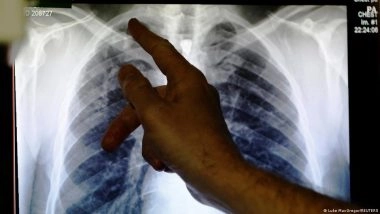
Africa is making progress in reducing tuberculosis (TB). But experts say missed cases and drug-resistant infections are complicating the fight, particularly in South Africa and Mozambique.Southern Africa remains one of the regions hardest hit by tuberculosis (TB), with countries such as South Africa and Mozambique still bearing a significant share of the global disease burden. Experts say that while some progress has been made, much more needs to be done to reduce infections and deaths.
Also Read | Business News | Rupee May Weaken to 97/USD in H1FY27 if West Asia Crisis Continues: Report.
South Africa continues to be a global hotspot for TB. According to the World Health Organization (WHO), an estimated 54,000 people died from the disease in 2024. And while that figure is lower compared to previous years, experts warn that the epidemic is far from over.
"South Africa definitely has a higher burden because of the co-HIV infection [rates]," Helen Hallstrom, Senior Partnership Officer at ADPP Mozambique, told DW.
The country is listed among the world's top 30 high-burden TB nations, with a co‑infection rate of 54% among people living with HIV.
"People who are living with HIV get often a lower immune system if they are not adhering to the treatment," Hallstrom explained.
Undiagnosed cases in Mozambique
Mozambique also faces a TB crisis. In 2023 alone, an estimated 112,000 people contracted the airborne disease, yet about 17,400 cases remain undiagnosed, reflecting ongoing obstacles in accessing care. In addition, the Southern African nation has long battled drug-resistant TB (DR-TB).
Despite being preventable and curable, TB is one of Mozambique's leading causes of death, especially among people living with HIV. Like South Africa, the country is among the world's top 30 high-TB-burden nations. Hallstrom noted that economic disparities play a key role. "We also have high chronic malnutrition, and still a lot of people living in poverty [are] also part of what is driving it," she said.
Beyond HIV, malnutrition, drug-resistant TB (DR‑TB), stigma and discrimination, weak healthcare systems also prevent many from seeking timely diagnosis and treatment. Experts advise that early diagnosis and adherence to treatment remain critical to battling the epidemic. "Weak health systems, which impact late diagnosis, are undermining progress," Hallstrom added.
A patient in Johannesburg told DW she only discovered her TB status after being hospitalized for feeling unwell. "When I came back for the results, they told me I have TB, but it was just after they told me I have TB that I started to have symptoms like sweating, I couldn't eat and I lost a lot of weight," she said.
Recognizing early symptoms
Health professionals say limited knowledge about continues to drive infections. "When you start to lose weight, you start to cough, some may think they've got some allergic reactions, and you have night sweats. These are the most common symptoms… some [people] do have TB but are not showing symptoms immediately," Hallstrom explained.
In South Africa, activists, health workers, and government officials have intensified campaigns to encourage testing and treatment. "[We are] encouraging individuals to take charge of their lives. Year after year we continue to see a steady decline in the number of people contracting TB," said Deputy President Paul Mashatile at an event marking World TB Day on March 24. "Our national TB program has achieved remarkable success in reducing the TB incident rate, which is the number of new cases each year," he added.
Experts say both countries should train more community communicators to spread awareness about TB.
In Mozambique, 67‑year‑old community leader Modesta Antonio has become an influential voice despite having no medical background. Trained through a local health initiative, she is now one of the most effective TB educators in her district. Such efforts, Hallstrom noted, are highly effective in encouraging testing and treatment.
Digital tools help fight stigma and improve access
Alongside education and treatment programs, digital innovation is proving valuable in helping change mindsets about the illness. "Stigma is very high among people. By ensuring that people get more access to information to know what TB is and how can you prevent it [is key]," Hallstrom emphasized.
Her organization uses the OneImpact platform, a community‑led monitoring app developed by the Stop TB Partnership, which is active in more than 23 countries. Local communicators receive training on using the platform, which offers low‑cost social-technology support. In Mozambique, the app has enabled TB patients to report discrimination, understand their rights, and stay connected to care.
Its first formal evaluation in an African context found the platform highly acceptable and associated with improved provider communication, treatment adherence, and rights awareness. Despite ongoing challenges, Southern Africa has made notable progress in reducing TB infections and deaths. According to the WHO, improved integration of HIV treatment has led to TB deaths falling by 42% between 2015 and 2023 across Africa. Hallstrom said this shows real potential for eliminating TB.
"There are progress and this is very much also because of strong community engagement. So with communities taking ownership and working on localized solutions [will help us] eliminate TB," she said.
This article was compiled with material from the AfricaLink Podcasthosted byEddy Micah Jr.
Edited by: Chrispin Mwakideu
(The above story first appeared on LatestLY on Apr 01, 2026 07:00 PM IST. For more news and updates on politics, world, sports, entertainment and lifestyle, log on to our website latestly.com).
 Share Now
 Google Trends



 Live Bot