EPFO Advance Rules: Check Withdrawal Limits for Illness, Education, Marriage and Housing
The Employees' Provident Fund Organisation (EPFO) has rolled out simplified guidelines for EPF advances, bringing withdrawal provisions for illness, education, marriage and housing-related expenses under a clearer, easy-to-understand structure.

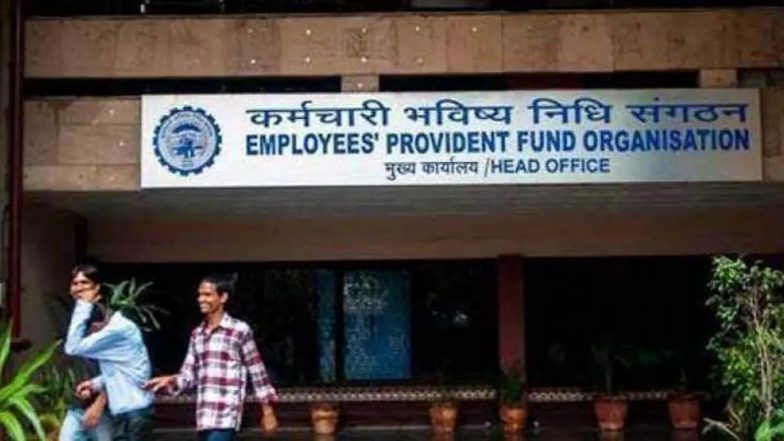
The Employees' Provident Fund Organisation (EPFO) has rolled out simplified guidelines for EPF advances, bringing withdrawal provisions for illness, education, marriage and housing-related expenses under a clearer, easy-to-understand structure. The new framework divides withdrawals into three broad categories and lays down specific limits on how often members can access their EPF balance for each purpose, according to the EPFO's smart guide.
No Limit For Illness-Related Withdrawals
Under Category I, which covers essential needs, EPF members can withdraw funds for illness of themselves or their family members without any specified limit.
For education, members can avail an advance of up to 10 times during their entire membership. This provision covers education-related needs of the member as well as their family. EPFO: What Are the 5 EPF Services Available on Umang App?
An EPF advance for marriage can be taken up to five times during membership, applicable to the marriage of the member or eligible family members.
Housing-Related Withdrawals Under Category II
Category II deals with housing-related needs. Members can use EPF advances for the purchase of a flat or site, construction of a house, repayment of a home loan, and renovation, alteration or improvement of a house.
For these purposes, members can withdraw funds up to five times during their membership, as per the EPFO's guidelines. EPFO Passbook: How To Check Your Monthly PF Contributions and Balance Online.
Special Circumstances And Withdrawal Cap
The third category covers special circumstances as notified by the Central Board, EPF. Members can avail this provision up to two times in a financial year.
The EPFO guide also sets out a uniform withdrawal rule, under which members can withdraw up to 75 percent of their EPF balance, including both the employee's and employer's share. However, such withdrawals can only be made after completion of 12 months of EPF membership.
The revised framework brings multiple withdrawal provisions under a simpler structure, giving EPF members clearer limits for different financial needs. By distinguishing essential, housing-related and special circumstances categories, the new guidelines outline how frequently members can access their accumulated EPF balance for specific requirements.
(The above story first appeared on LatestLY on Sep 09, 2026 03:10 PM IST. For more news and updates on politics, world, sports, entertainment and lifestyle, log on to our website latestly.com).