UPI Charges Above INR 2,000: Supreme Court Declines Stay on New MDR Framework
The Supreme Court has declined to stay the Centre’s new UPI MDR framework for specified transactions above INR 2,000, allowing it to proceed towards its October 15 rollout. The court has sought responses from the Centre, RBI and NPCI within four weeks on the legal basis of the proposed charges.

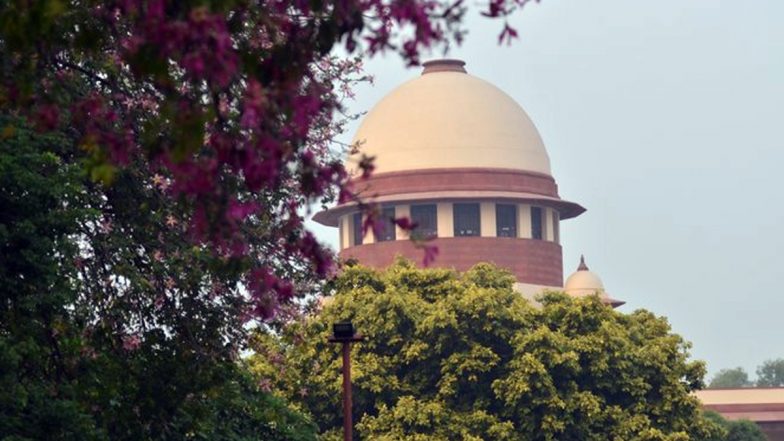
New Delhi, September 28: The Supreme Court on Monday declined to grant an interim stay on the Union Government's new Merchant Discount Rate (MDR) framework for specified Unified Payments Interface (UPI) transactions above INR 2,000. The three-judge bench has allowed the proposed framework to proceed towards its scheduled implementation on October 15 while seeking responses from the Centre, Reserve Bank of India (RBI) and National Payments Corporation of India (NPCI).
The petition, filed by advocate Anjan Datta, challenges the constitutional and statutory validity of introducing MDR charges on higher-value UPI merchant transactions, PTI reported.
Supreme Court Questions Legal Basis
A three-judge bench comprising Chief Justice of India Surya Kant, Justice Joymalya Bagchi and Justice V Mohana heard the public interest litigation. During the hearing, the bench questioned the legal basis for the proposed MDR. UPI New Rules From October 15: Govt Clarifies MDR, GST and RuPay Charges.
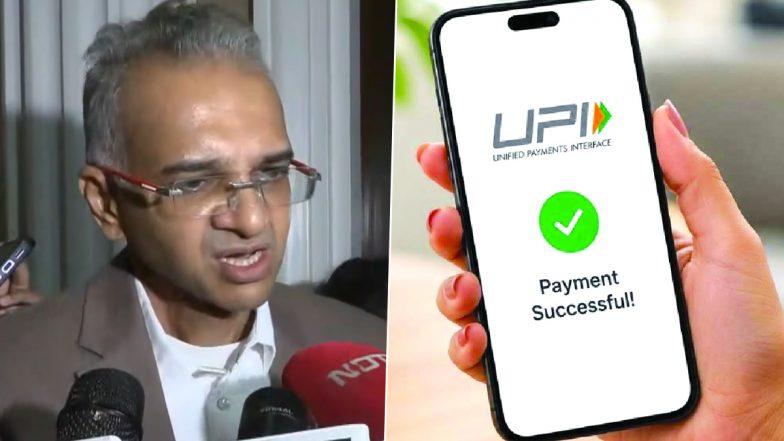
Additional Solicitor General N Venkataraman, appearing for the Centre, told the court that MDR is neither a sovereign tax nor an administrative fee collected by the government. The Centre said the amount remains within the payments ecosystem and is distributed among acquiring banks, issuing banks, payment service providers and clearing operators to meet transaction processing and infrastructure costs. UPI MDR From October 15: Who Will Pay 0.4% Charge? NPCI CEO Dilip Asbe Explains (Video).
Justice Bagchi questioned the executive authority under which such a charge could be imposed if it was neither a tax nor a fee. The court directed the respondents to explain the policy and legal basis of the framework on affidavit and gave them four weeks to submit their responses.
What Is The New UPI MDR Framework?
Under the proposed framework, eligible person-to-merchant (P2M) transactions above INR 2,000 will attract a standard MDR of 0.4%. The charge will be capped at INR 300 for transactions worth INR 75,000 or more. For example, a transaction of INR 10,000 would attract an MDR of INR 40.
Certain essential sectors, including fuel, railways, telecommunications, insurance and agricultural inputs, will have a flat MDR of INR 5 for transactions above INR 2,000. Transactions involving mutual funds, stockbrokers, securities houses and registered dealers will attract a lower rate of 0.02%, subject to the specified cap.
Consumers To Remain Exempt
The government has maintained that consumers will not be directly charged for UPI transactions. Person-to-person transfers will remain free, while merchant transactions up to INR 2,000 will continue without MDR.
Small merchants receiving up to INR 1 lakh per month through standard UPI QR codes will also remain exempt. According to official estimates cited in the framework, around 96% of daily UPI merchant transactions will remain unaffected.
With the Supreme Court declining an interim stay, the proposed MDR framework remains scheduled for implementation from October 15, subject to further judicial proceedings.
(The above story first appeared on LatestLY on Sep 28, 2026 03:33 PM IST. For more news and updates on politics, world, sports, entertainment and lifestyle, log on to our website latestly.com).