Why Are Newspapers Unsafe for Food? FSSAI Reveals Health Risks Behind a Common Practice, Orders Immediate Stop
The FSSAI’s Western Region has directed all food businesses to immediately stop using newspapers for packing, wrapping or serving food. The food regulator warned that the practice can expose consumers to harmful chemicals and contamination, posing serious long-term health risks.

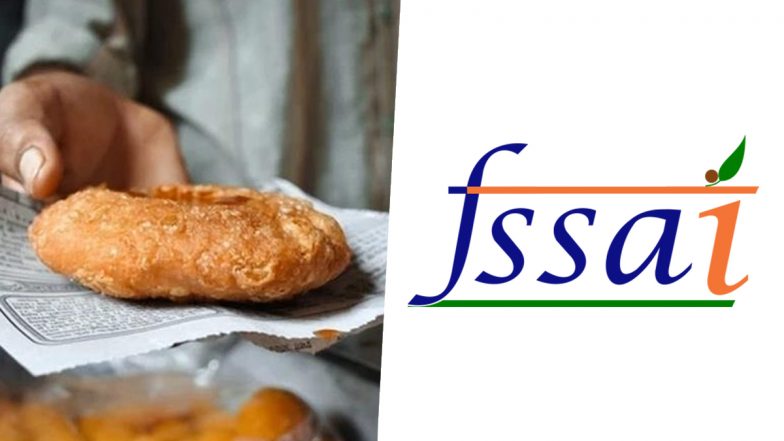
The Food Safety and Standards Authority of India (FSSAI) Western Region has issued a strict directive ordering all food business operators to immediately stop using newspapers for packing, wrapping, or serving food. The apex food regulator warned that the widespread practice poses severe, long-term health risks to consumers due to chemical contamination and unhygienic distribution channels.
Crackdown Sparks Regional Directive
The directive follows a recent joint enforcement action in Mumbai by FSSAI officials and the Municipal Corporation of Greater Mumbai (MCGM). Authorities clamped down on a well-known local vada pav vendor who was found using newspapers to serve food to customers. In light of the incident, the FSSAI renewed its regional warning to prevent similar practices across cities and towns, aiming to enforce uniform hygiene standards. FSSAI Bans Misuse of ORS Labelling Across India, Orders Strict Compliance for Food Business Operators.
Why Newspapers Are Considered Unsafe
According to the FSSAI, newspapers are fundamentally unsuitable for direct contact with food items due to the chemical makeup of printing ink. The regulator highlighted several critical safety hazards:
-
Chemical Migration: Printing inks contain a complex mixture of chemicals, pigments, and binders that often include lead and other heavy metals. When hot, fried, or oily food comes into contact with the printed surface, these toxic substances easily dissolve and migrate into the food.
-
Chronic Health Issues: The food watchdog warned that consistent, long-term ingestion of these chemical contaminants can accumulate in the body, potentially contributing to chronic health problems over time.
-
Microbial Contamination: Beyond chemical toxicity, newspapers accumulate dust, dirt, and pathogens during printing, transport, and manual distribution. Because they are handled by multiple people before reaching food stalls, they act as active carriers for disease-causing microorganisms, significantly increasing the risk of food-borne illnesses.
Existing Regulations Enforced
The FSSAI noted that this practice is already a legal violation under the Food Safety and Standards (Packaging) Regulations, 2018. The law strictly prohibits using newspapers or any printed material for storing, wrapping, or serving food products. The current enforcement applies broadly across the food services sector. It covers street food vendors, traditional restaurants, cloud kitchens, caterers, quick-service restaurants (QSRs), food stalls, petty retailers, mobile vendors, and hawkers. Food Authority Vacant, FSSAI in Limbo? PIB Fact Check Clarifies Claims, Says Regulator Fully Functional.
Furthermore, the regulator clarified that newspapers must not be used at any stage of food preparation. This includes using them to absorb excess oil from fried foods, lining storage containers, or covering raw ingredients.
(The above story first appeared on LatestLY on Jun 06, 2026 02:22 PM IST. For more news and updates on politics, world, sports, entertainment and lifestyle, log on to our website latestly.com).