Asupan Link Video Viral: Meaning, Risks and How to Avoid the Phishing Scam
A surge in 'asupan link video viral' spam across Indonesian social media has evolved into a dangerous phishing tactic, experts warn. The phrase mimics local slang to lure users with trending videos, but the links actually route victims to malicious sites. These pages steal personal data and deploy malware disguised as media files.

- Read in
- हिंदी
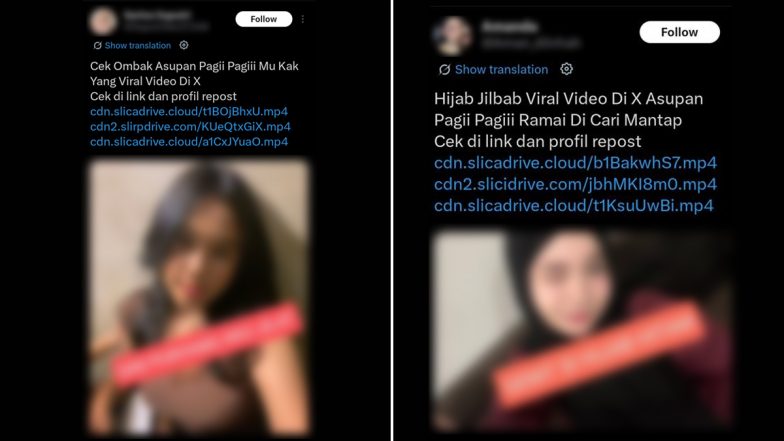
Social media platforms across Indonesia are experiencing a massive influx of automated spam featuring the phrase "asupan link video viral" (daily dose of viral video links). While framed as harmless entertainment or exclusive leaks, cybersecurity experts warn that the trend has evolved into a highly coordinated clickbait and phishing campaign designed to compromise personal data and infect devices with malware.
The phrase has become a staple of comment sections on TikTok, X (formerly Twitter), and Telegram. However, digital security firms report that behind the allure of trending multimedia lies a sophisticated network of cybercriminals exploiting human curiosity to bypass modern device security. Sarwendah Viral Video: Why Indonesian Singer Faces Mass Boycott Threats Post-Divorce.
Understanding the Terminology
In Indonesian internet culture, the word asupan translates literally to "intake" or "nutrition." Online, netizens use it colloquially to mean a "daily dose" of media consumption to feed one's curiosity or alleviate boredom.
When paired with link video viral, the phrase explicitly promises access to highly sought-after, trending, or scandalous footage - often involving public figures, local influencers, or controversial events. Cybercriminals weaponize this specific vocabulary because it mirrors authentic community slang, effectively lowering the digital defenses of unsuspecting users. Guru Bahasa Inggris Viral Video: Alleged English Teacher-Student Clip Sparks Concern in Indonesia.
Anatomy of the Scam
The execution of the campaign relies heavily on social engineering rather than technical exploits alone. Automated bot networks flood high-traffic public posts with messages redirecting users to landing pages.
According to a recent threat analysis by global cybersecurity researchers, the infection chain typically follows a distinct structural pattern:
- The Clickbait Lure: Users click a promised "Watch Here" link, which frequently utilizes URL shorteners or custom link-in-bio landing pages to disguise the destination.
- The Redirect Loop: Victims are routed through a succession of bridge websites laden with high-frequency advertisements, fake browser notifications, and predatory online gambling banners.
- The Payload Delivery: Instead of a video playback, the final page prompts the user to download a file - often disguised as a media player update, a compressed .ZIP file, or an Android Application Package (.APK).
Security logs indicate that executing these files installs data-stealing trojans or malicious scripts capable of extracting saved passwords, financial credentials, and session cookies directly from the victim's device.
A Rising Regional Threat
The surge in video-centric phishing aligns with broader digital security challenges in Southeast Asia. Indonesia’s Ministry of Communication and Digital Affairs (Komdigi) recently noted that digital fraud attempts have reached a critical baseline, with hundreds of thousands of fraudulent domains registered annually.
Local data privacy advocates point out that the threat is amplified by a regional deficit in digital literacy. Because younger demographics are highly active on video-first platforms, they remain prime targets for sophisticated phishing kits that mimic legitimate login portals or video streaming applications.
Best Practices
Security agencies advise internet users to exercise strict skepticism when encountering promotional links in public forums. Standard protective protocols include avoiding any downloadable links that require manual file extraction, verifying the core domain name of a website before entering personal information, and utilizing multi-factor authentication (MFA) to secure accounts against automated credential harvesting.
DISCLAIMER: This article is strictly for informational and educational purposes to raise awareness about the said topic. LatestLY DO NOT host, distribute, or provide links to sexually explicit content, leaked videos, or pirated material. Any search terms or keywords mentioned are solely for the purpose of explaining the viral trend and its associated dangers. We strongly condemn the circulation of non-consensual intimate imagery (NCII) and advise all readers to refrain from searching for or sharing such content, as doing so may lead to severe legal consequences.
(The above story first appeared on LatestLY on Jun 15, 2026 01:46 PM IST. For more news and updates on politics, world, sports, entertainment and lifestyle, log on to our website latestly.com).