White Rabbit Candy Wrapper Goes Viral As Chinese Vintage Design Wins Global Attention (Pic)
White Rabbit candy’s six-decade-old wrapper has gone viral on Western social media, drawing millions of views and renewed interest in vintage Chinese design. Launched in 1959, the candy’s packaging has changed little over the years. Experts say its bold colours, simple composition and distinctive imagery make it accessible globally, while raising questions about authenticity and heritage branding.

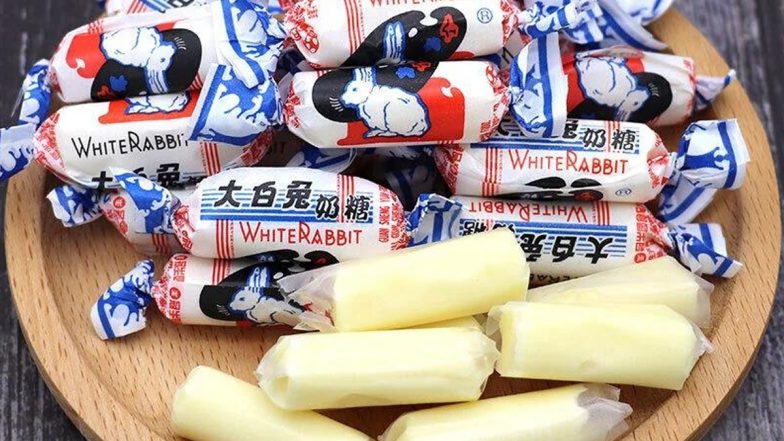
The wrapper of six-decade-old Chinese milk candy White Rabbit has become an unlikely social media sensation in the West, drawing millions of views and renewed interest in vintage Chinese design. Experts say the attention reflects a growing global fascination with Chinese aesthetics that developed largely outside Western design influences.
White Rabbit, a household name in China since its launch in 1959, was born in an era of material scarcity, when sweets were a rare luxury. Although the times have improved, its packaging has remained virtually unchanged. The wrapper’s distinctive design is now attracting a new generation of international audiences. Viral Video Shows ‘7-Star’ Dining Experience at State-Owned Hospital in China, Video Goes Viral.
White Rabbit Candy Wrapper Goes Viral
this absolute masterstroke of graphic design… pic.twitter.com/u7lpMw2IqZ
— ͏weeabob (@weeabob) August 5, 2026
White Rabbit Candy's Vintage Wrapper Finds New Audience Online
The wrapper features a seated white rabbit against a red background, framed by blue-and-white rabbit motifs. The design won a national packaging award in 1983 and has remained closely associated with the brand for decades.
A post made on social media platform X on August 5, describing the wrapper as a “masterstroke of graphic design”, has garnered about six million views and 260,000 likes since. The comments section has been flooded with user creations - tattoos, T-shirts, digital collages and phone cases, all featuring the iconic white rabbit. Typhoon Dolphin: Flooding Hits China, Death Toll Rises as Storm Triggers Landslide Risks.
The trend has also spread to more platforms such as TikTok and Instagram, reviving interest in other vintage Chinese packaging. The author of the X post, weeabob, who joined then-Twitter in 2009 and has more than 13,000 followers, wrote on Thursday: “I’m fine with my most liked tweet being about this wonderful Chinese candy I guess.”
The Global Times editorial also highlighted the broader overseas discussion around Chinese aesthetics, noting that the White Rabbit wrapper dating back to 1959 was praised as a “masterstroke of graphic design.” It said the post attracted 6 million views and 265,000 likes within three days.
Why the Design Resonates Overseas
Zhang Di, a professor at Renmin University of China, who studies cross-cultural content diffusion, attributed the wrapper’s immense appeal to its visual language, bold primary colours, a simple composition and animal motifs, which he said requires no specific cultural knowledge for interpretation and is aesthetically accessible across cultures.
The combination of strong colours, uncomplicated imagery and a recognizable animal character gives the design an immediate visual identity, allowing audiences unfamiliar with Chinese commercial history to engage with it without extensive cultural context.
White Rabbit’s popularity overseas is not without precedent. In 1972, during then United States President Richard Nixon’s visit to China, the candy attracted the attention of US visitors. Shanghai manufacturers later exported it for Easter celebrations in the US, where it became a novelty at the time.
Six Decades of Design Continuity
Shi, from Tsinghua University, noted that the wrapper has changed little over the past six decades, and yet, it continues to resonate with the masses. This staying power, he argued, suggests that original Chinese designs – free of Western stylistic influence - can bridge both generational and cultural divides.
Foreign audiences are accustomed to US or European packaging, but White Rabbit’s aesthetics, by contrast, stands apart as something distinctly its own, he said.
The discussion comes as Chinese aesthetics are gaining greater visibility on overseas social media. The Global Times editorial cited the spread of Chinese visual culture through products, entertainment, technology and lifestyle as part of a broader increase in international exposure.
Authenticity vs Market Adaptation
Shi contended that heritage brands are better served by preserving their originality. He pointed to Beijing’s Arctic Ocean soda, which faltered after a joint venture with PepsiCo in the 1990s sidelined the brand, but rebounded after returning to its vintage glass-bottle packaging in 2011.
Rather than seeking novelty, such companies should remain true to their classic designs and let authenticity drive their appeal, Shi added.
Zhang, from Renmin University of China, struck a more pragmatic note. He said that short-term online buzz does not guarantee lasting market recognition and that product fundamentals – taste, quality, convenience and adaptability – are what ultimately retain customers. He advised heritage brands to use any current attention to study target markets and, accordingly, adjust their offerings.
The contrasting views point to a broader challenge for heritage brands: preserving a distinctive visual identity while adapting products and marketing strategies for audiences in different markets.
From Candy Wrapper to Cultural Conversation
The White Rabbit moment illustrates how familiar domestic products can acquire new meaning when rediscovered by international audiences.
For the brand, the renewed attention provides an opportunity to introduce its history and design heritage to consumers who may know the wrapper as a striking piece of vintage graphic design rather than as a symbol of generations of Chinese consumers.
The Global Times editorial similarly framed the phenomenon as part of a wider global interest in Chinese aesthetics, arguing that everyday objects such as candy packaging can become accessible vehicles for cultural exchange.
Whether the current social media attention translates into sustained overseas demand remains uncertain. But the viral response has demonstrated that a package designed decades ago can still attract attention in a global digital culture increasingly interested in visual styles beyond conventional Western design.
(The above story first appeared on LatestLY on Aug 10, 2026 04:04 PM IST. For more news and updates on politics, world, sports, entertainment and lifestyle, log on to our website latestly.com).