Total Solar Eclipse on August 2, 2027: How the ‘Eclipse of the Century’ Will Darken Earth for Over 6 Minutes
The August 2, 2027 total solar eclipse is expected to be one of the most remarkable astronomical events of the century, with up to 6 minutes and 23 seconds of darkness across parts of Europe, North Africa and West Asia. The rare eclipse will offer major scientific opportunities and boost astro-tourism, while experts advise safe viewing methods.

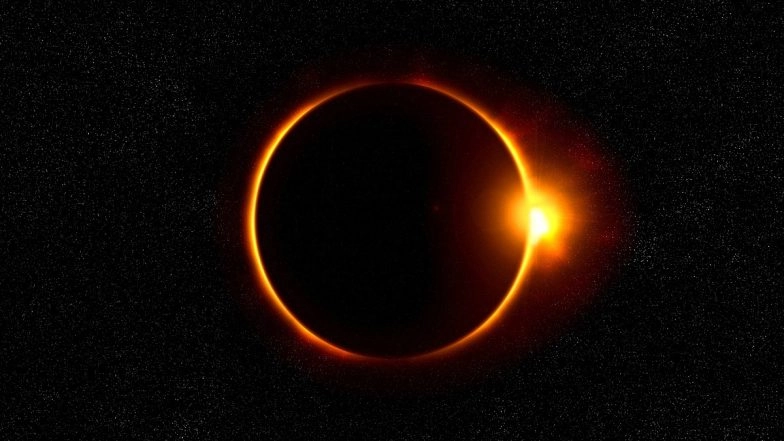
A rare astronomical event is set to take place on August 2, 2027, when a total solar eclipse will sweep across parts of Europe, North Africa and West Asia, creating more than six minutes of darkness in some locations. The event, widely described as the “eclipse of the century”, is expected to attract millions of skywatchers and researchers because of its unusually long duration and visibility across populated regions.
During the eclipse, the Moon will completely cover the Sun for up to 6 minutes and 23 seconds, making it one of the longest total solar eclipses visible over land in the 21st century. Unlike many long-duration eclipses that occur over oceans, much of the 2027 eclipse’s longest phase will be visible from populated areas. Total Solar Eclipse 2026 on August 12: Will It Be Visible From India? Check Details.
What Makes the 2027 Solar Eclipse Special
Total solar eclipses occur when the Moon moves directly between the Earth and the Sun, blocking sunlight and casting a shadow across the planet. The duration of totality varies depending on the alignment of the Earth, Moon and Sun. The August 2027 eclipse will last longer because of favourable orbital conditions, with the Moon appearing large enough to cover the Sun completely and the eclipse path allowing the shadow to remain over land for an extended period.
For comparison, the longest total solar eclipse of the 21st century occurred in July 2009 and lasted nearly 6 minutes and 39 seconds, but much of that eclipse was visible over the ocean. Spain's Solar Eclipse Trilogy: Spectacle Starting August 12.
Path of Totality Across Europe, Africa and West Asia
The eclipse’s path of totality will begin over the Atlantic Ocean before moving across southern Spain and Gibraltar.
It will then pass through parts of North Africa, including:
- Morocco
- Algeria
- Tunisia
- Libya
- Egypt
The shadow will continue into West Asia.
Several cities are expected to experience extended periods of darkness, including Cádiz, Tangier, Benghazi, Luxor and Jeddah. Luxor in Egypt is expected to be among the best locations to observe the maximum duration of totality. Outside the narrow path of totality, a partial solar eclipse will be visible across large parts of Europe, Africa and parts of Asia.
Why the Sky Will Turn Dark During the Eclipse
A total solar eclipse occurs when the Moon blocks direct sunlight from reaching Earth. During totality, daylight briefly changes into twilight, temperatures can fall and some stars and planets may become visible.
The 2027 eclipse will have an extended period of darkness because of the precise alignment of celestial bodies and the Moon’s position closer to Earth during the event.
Rare Opportunity for Skywatchers
Astronomers consider long-duration total solar eclipses uncommon, especially when their longest phases occur over populated land areas.
The 2027 eclipse will give observers an opportunity to experience an extended period of totality without travelling to remote locations. For many viewers, the event could become a once-in-a-lifetime astronomical experience.
Scientific Research and Tourism Expected to Grow
The eclipse will also provide researchers with an opportunity to study the Sun’s outer atmosphere, known as the corona, along with solar winds and changes in Earth’s atmosphere during totality.
Countries along the eclipse path are also preparing for increased astro-tourism, with visitors expected to travel to locations offering the longest and clearest views.
How to Watch the Solar Eclipse Safely
Experts have warned that looking directly at the Sun without proper protection can cause serious eye damage.
Observers should use certified eclipse glasses or approved solar filters when viewing the partial phases of the eclipse. Indirect viewing methods can also be used as a safe alternative.
(The above story first appeared on LatestLY on Aug 02, 2026 10:50 AM IST. For more news and updates on politics, world, sports, entertainment and lifestyle, log on to our website latestly.com).