Ebola Outbreak in DR Congo: Death Toll Surpasses 2,500 As UN Warns of Funding Crisis
The Ebola outbreak in the Democratic Republic of Congo has killed more than 2,500 people and is spreading exponentially across an area larger than France, UN coordinator Julien Harneis said. Aid funding may last only a few more weeks without new support, while attacks on health workers are complicating the response. Congo is also set to receive 70,000 vaccine doses.

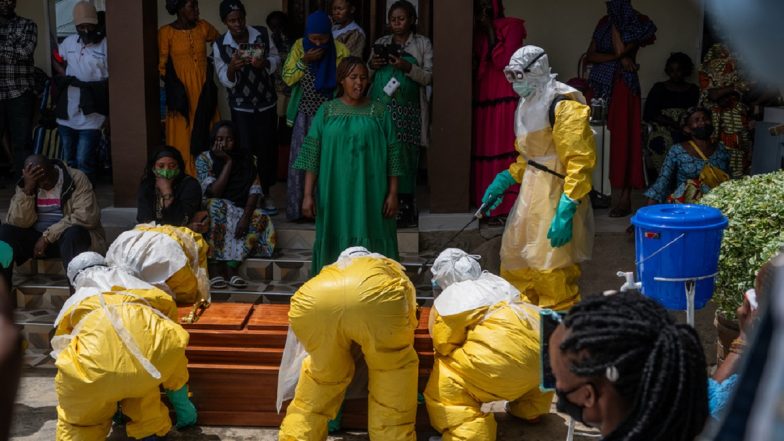
The Ebola outbreak in the Democratic Republic of Congo has killed more than 2,500 people and is spreading exponentially across an area larger than France, senior United Nations Ebola coordinator Julien Harneis said on Friday, August 21. The escalating outbreak is putting pressure on an already stretched response, with humanitarian funding expected to last only a few more weeks unless additional money is provided.
Harneis also warned of an "unacceptable" series of attacks on health workers, adding another obstacle to efforts to contain the disease, Reuters reported. The warning comes as the outbreak has expanded across eastern parts of the country, where conflict, displacement and limited access to communities are complicating the public-health response. DR Congo Ebola Outbreak: WHO Warning, Deaths and Bundibugyo Strain Risks.
Ebola Outbreak Spreading Faster Than Response
The current outbreak is being driven by the Bundibugyo virus, a less common Ebola species. According to recent figures reported by health authorities, more than 5,200 confirmed cases had been recorded by August 18, with nearly 2,500 deaths.
Harneis has previously warned that cases are increasing exponentially, with the epidemic expanding faster than the response capacity being deployed on the ground. The outbreak has been concentrated in eastern provinces including Ituri, North Kivu and South Kivu, while cases linked to Ituri have also been detected in neighbouring provinces. Congo Ebola Outbreak Could Surpass 2014-16 Epidemic That Killed Over 11,000, WHO Warns.
Funding Could Run Out Within Weeks
The United Nations says the response faces an immediate financing gap.
Harneis said aid funding currently covers only the next few weeks and could run out without additional contributions. A funding shortfall would threaten activities such as disease surveillance, contact tracing, treatment, laboratory testing and the deployment of specialised health workers.
The warning comes as humanitarian agencies are already working in difficult conditions, including areas affected by conflict and displacement.
Health Workers Face Growing Security Risks
Attacks and hostility directed at health workers are adding to the operational difficulties.
The UN has previously reported attacks on health facilities and described community mistrust as a major barrier to Ebola interventions. In June, for example, a health facility in Bafwabango in Ituri was set on fire during protests, with local authorities reporting that one civilian was killed.
Harneis described the attacks on health workers as "unacceptable", stressing the need for responders to be able to reach patients and communities safely.
Vaccine Supplies Being Expanded
There has been a new effort to increase vaccine availability.
The World Health Organization and its partners said Congo will receive 70,000 doses of the Ervebo Ebola vaccine. Of those, 20,000 doses are earmarked for a Phase 3 clinical trial to assess whether the vaccine can provide protection against the Bundibugyo virus, while 50,000 doses are intended for frontline and health workers.
Ervebo is licensed against the Zaire species of Ebola, not the Bundibugyo virus responsible for the current outbreak. WHO said early laboratory and animal data suggest the vaccine may nevertheless offer some protection, but its effectiveness against Bundibugyo Ebola remains uncertain.
Conflict And Displacement Complicate Response
The outbreak is unfolding in a region already affected by prolonged conflict.
Ituri, the current epicentre, includes communities displaced by violence and areas where humanitarian access is difficult. In July, the UN said an Ebola treatment centre was being established at a displacement site in Bunia hosting about 15,000 people. Health agencies were also expanding community outreach, disease-prevention measures and free healthcare services for displaced people.
Community trust remains a major challenge. The UN has said misinformation and a lack of confidence in health interventions have hindered efforts to identify cases, trace contacts and encourage people to seek treatment.
International Support Remains Critical
The UN's latest warning places funding and security alongside medical capacity as the central challenges facing the response.
The immediate priority is to slow transmission while maintaining treatment, surveillance and contact-tracing operations. The arrival of additional vaccine doses provides another tool, but the response still depends on sufficient financing, safe access for health workers and cooperation from affected communities.
With the outbreak continuing to spread exponentially, Harneis is urging international donors to provide additional resources before existing funding runs out.
(The above story first appeared on LatestLY on Aug 21, 2026 03:48 PM IST. For more news and updates on politics, world, sports, entertainment and lifestyle, log on to our website latestly.com).