France Student Protests Escalate Nationwide; What’s Fueling the Growing Unrest?
France is facing a growing wave of high school student protests, with demonstrations spreading nationwide and turning violent in several places. Prime Minister Sébastien Lecornu convened an interministerial crisis meeting on Thursday and asked ministers to cancel planned trips as the government sought to contain the unrest.

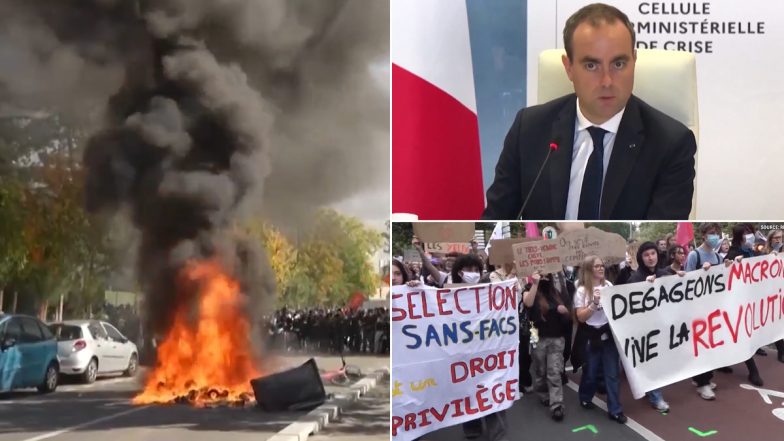
France is facing a growing wave of high school student protests, with demonstrations spreading nationwide and turning violent in several places. Prime Minister Sebastien Lecornu convened an interministerial crisis meeting on Thursday and asked ministers to cancel planned trips as the government sought to contain the unrest. The protests, which began in schools in the Paris region last week, have expanded to cities including Lille, Marseille, Nantes and other parts of the country. Students are demanding more resources, additional teachers, better school infrastructure and improved learning conditions.
Authorities said hundreds of people have been detained during clashes linked to the protests. The unrest has also left dozens of people injured, including police officers, while several schools have been affected by fires and other incidents. French Higher Education Minister Philippe Baptiste Visits ILBS, Supports InFLiMeN’s Indo-French Research Vision.
France School Protests Turn Violent as Hundreds Detained
France Student Protests Escalate, PM Meets Ministers Amid Rising Tensions | Gen-Z | Education https://t.co/A7WqKshqpI
— ANI (@ANI) October 1, 2026
France Student Protests Spread Across Schools
The demonstrations have centered on complaints about overcrowded classrooms, teacher shortages, inadequate resources and demanding school schedules. Students have also raised concerns about the pressure associated with France's university admissions system.
France's Education Ministry said 356 high schools were affected by blockades or disruptions on Wednesday, up from 338 the previous day. More than 600 people were detained during Wednesday's actions, according to Interior Minister Laurent Nuñez, while 83 police officers and gendarmes were reported injured. The protests have included school blockades, demonstrations and clashes with police. In some locations, garbage containers were set on fire and projectiles were thrown at officers, who used tear gas in response.
Fires and Violence Raise Concern
The unrest intensified on Thursday with reports of fires at schools in Marseille and Nantes. At Marseille's Saint-Exupéry high school, protesters reportedly surrounded a fire truck responding to a blaze and set the vehicle on fire after firefighters were forced to leave. At the city's Victor Hugo high school, a school official was attacked and reportedly doused with petrol. A separate fire was also reported at the Nelson Mandela high school in Nantes. France Social Media Ban: Top Court Blocks Under-15 Law Over Freedom of Expression.
Education Minister Edouard Geffray said authorities would allow schools to shift classes online where blockades or damage created safety concerns. “Violence will not deprive our students of their fundamental right to education,” Geffray said in a statement posted on X.
PM Lecornu Holds Crisis Meeting
Lecornu's office said the prime minister had called the crisis meeting to coordinate the government's response as demonstrations continued to spread. He also asked ministers to cancel official trips planned for the coming days so that the government could focus on the situation and authorities could concentrate on managing the protests.
The government has condemned violence and vandalism while acknowledging that the concerns raised by students about conditions in high schools need to be addressed. Interior Minister Laurent Nuñez has said authorities were also concerned about individuals moving between schools and encouraging violent incidents. Police have been ordered to intervene where blockades prevent students from attending classes.
Students and Teachers Voice Concerns
Students have described long school days, staff shortages and insufficient resources as key reasons for the protests. Some teachers have also joined demonstrations, saying they want to support students and prevent confrontations. At the same time, authorities have stressed that demonstrations must not prevent other students from receiving an education or put school staff and pupils at risk.
The protests have therefore combined demands over education policy with a growing dispute over how police should respond to school blockades and unrest. Some protesters have accused police of excessive force, while government officials have condemned attacks and vandalism.
Protests Add Pressure Ahead of 2027 Budget
The student unrest comes at a sensitive time for Lecornu's government, which on Thursday presented its proposed 2027 budget focused on reducing France's deficit through tax increases and spending cuts. The budget announcement has already generated opposition from unions and other groups, adding to the broader political pressure surrounding the government.
The protests are also taking place months before France's next presidential election, in which President Emmanuel Macron cannot seek a third consecutive term under the constitution. The student demonstrations have consequently become part of a wider political debate over public services, government spending and education.
For now, the government is seeking to restore access to schools while addressing the concerns behind the protests. Education officials have announced plans for consultations with student and teacher representatives as authorities continue to monitor the situation nationwide.
(The above story first appeared on LatestLY on Oct 01, 2026 10:38 PM IST. For more news and updates on politics, world, sports, entertainment and lifestyle, log on to our website latestly.com).