Iran Warns US Over Strait of Hormuz Interference, Demands Ships Follow Iranian Routes
Iran's central military command issued a sharp warning on Thursday, stating that any U.S. interference in the Strait of Hormuz will face a "decisive and swift" response from Iranian armed forces.

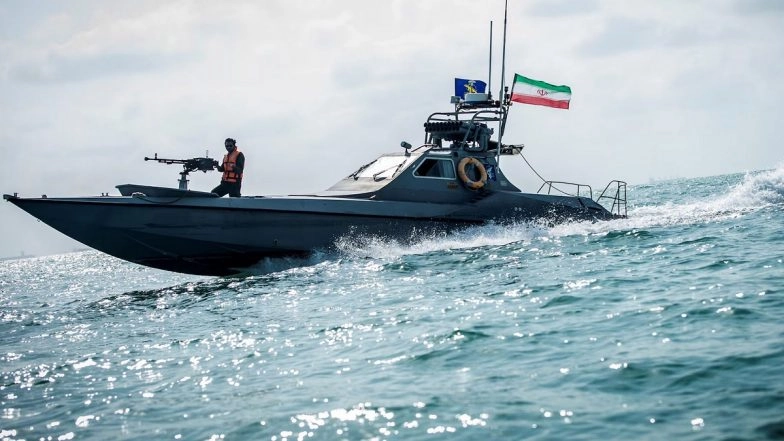
Iran's central military command issued a sharp warning on Thursday, stating that any U.S. interference in the Strait of Hormuz will face a "decisive and swift" response from Iranian armed forces. The Khatam al-Anbiya Central Headquarters declared sovereignty over the strategic waterway, warning that foreign military presence is actively undermining regional maritime stability. In a state media broadcast, the military command asserted that the Strait of Hormuz is not an "aggressive U.S. playground" but rather a "red line" for Iran's national security. The statement also mandated that all commercial vessels and oil tankers passing through the corridor must strictly adhere to shipping lanes designated by Tehran.
“Any failure to comply, deviation from the designated route, or disregard for the navigation protocols of the Islamic Republic of Iran... will be met with an immediate and forceful response,” the military command stated, adding that non-compliant vessels would risk their own safety. The warning specifically targeted U.S. aerial operations, claiming that the persistent presence of manned and unmanned American fighter aircraft over the Gulf corridor creates persistent insecurity. On the same day, Kazem Gharibabadi, Iran's deputy foreign minister for legal and international affairs, posted on social media that the strait is defined under Iranian command, "not the U.S. Central Command (CENTCOM)." Iran Says ‘No Plans’ To Meet US in ‘Next Few Days’ at Any Level.
Gharibabadi’s remarks followed a CENTCOM-led regional security dialogue held in Bahrain on Wednesday with military officials from 12 countries. The coalition meeting focused on maintaining the free flow of global commerce through the strategic passage, which handles roughly a fifth of the world's petroleum liquid consumption. These escalating verbal exchanges come despite fragile diplomatic efforts to resolve deep-seated maritime friction. Under an interim memorandum of understanding mediated by Qatar and Pakistan following a wave of military conflicts earlier this year, Iran and the U.S. agreed to ease naval blockades and pause shipping charges for a 60-day window. US-Iran Conflict: Donald Trump Reviews Military Strike Options Against Tehran, Sticks With Nuclear Talks for Now.
However, disputes remain over long-term control. While Washington and its Gulf Arab allies reject unilateral fee collections and alternate shipping lanes near Oman, Tehran continues to assert absolute control over navigation paths as indirect technical negotiations continue in Doha.
(The above story first appeared on LatestLY on Jul 02, 2026 11:20 PM IST. For more news and updates on politics, world, sports, entertainment and lifestyle, log on to our website latestly.com).