North Korea Rapidly Expanding Nuclear Capabilities Beyond US Defence Preparedness
North Korea’s expanding nuclear arsenal is raising concerns among global security experts and US allies, with fresh assessments suggesting Pyongyang’s weapons programme may be outpacing existing American missile defense systems. IAEA chief Rafael Grossi warned that North Korea has made “very serious” progress in nuclear development amid increased activity at key facilities including Yongbyon.

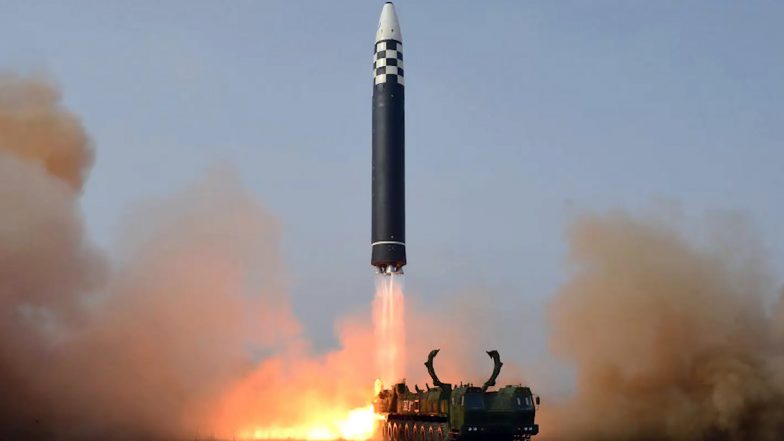
North Korea’s rapidly expanding nuclear programme is raising fresh concerns that Pyongyang’s growing arsenal could increasingly challenge the effectiveness of existing US missile defense systems, Bloomberg reported. International Atomic Energy Agency (IAEA) chief Rafael Grossi said this week that North Korea had made “very serious” progress in its ability to produce nuclear weapons, amid signs of intensified activity at key nuclear sites, The Guardian reported.
The warning comes as new satellite imagery and intelligence assessments point to expanding uranium enrichment operations at North Korea’s Yongbyon complex, suggesting the regime may be increasing its capacity to produce weapons-grade nuclear material at a faster pace.
Speaking during a visit to Seoul, Grossi confirmed reports of heightened operations at North Korea’s main nuclear complex in Yongbyon. He said work had intensified at the site’s 5MW reactor, reprocessing unit, light water reactor and other facilities. The IAEA chief added that North Korea was believed to possess several dozen nuclear warheads.
North Korea is estimated to have assembled around 50 nuclear warheads, although experts continue to debate whether the regime has fully developed the technology required to miniaturise warheads for long-range ballistic missiles capable of reaching the US mainland.
Security analysts have increasingly warned that North Korea’s growing stockpile of nuclear weapons and intercontinental ballistic missiles (ICBMs) could eventually overwhelm parts of the US missile defense network, particularly if Pyongyang significantly expands production.
The concern is not only about missile range, but also the possibility of North Korea deploying multiple warheads, decoys, and more advanced launch systems that could complicate interception efforts.
Since its first nuclear test in 2006, North Korea has steadily expanded its strategic weapons programme. Under Kim Jong-un, who assumed power in 2011, the country has accelerated missile and nuclear development despite international sanctions and diplomatic pressure.
Grossi’s remarks followed a report by Beyond Parallel, a project run by the Washington-based Center for Strategic and International Studies (CSIS), which said North Korea appeared to have completed a new building intended for uranium enrichment at Yongbyon.
According to South Korea’s Yonhap news agency, satellite imagery suggested the facility was nearing operational readiness. The thinktank also said another suspected enrichment site near Kangson, outside Pyongyang, had not been declared to international nuclear authorities.
It noted that production of enriched uranium “would significantly increase the number of nuclear weapons North Korea could possess”. The assessment aligns with an IAEA report issued last year that warned Pyongyang was constructing an enrichment facility capable of producing weapons-grade material.
Diplomatic efforts to curb North Korea’s nuclear ambitions have largely stalled since the collapse of talks between Kim Jong-un and then-US President Donald Trump during his first term. At the same time, tensions between North and South Korea have worsened despite attempts by Seoul to reopen dialogue channels.
Earlier this year, South Korean President Lee Jae Myung warned that North Korea could be producing enough fissile material annually to build between 10 and 20 nuclear weapons.
“At some point, North Korea will have secured the nuclear arsenal it believes it needs to sustain the regime, along with ICBM capabilities capable of threatening not only the United States but the wider world,” Lee said in January. “And once there is excess, it will go abroad – beyond its borders. A global danger will then emerge.”
North Korea has dismissed Seoul’s engagement efforts and continued to strengthen its military posture.
Grossi also reiterated that North Korea’s nuclear activities remain a “clear violation” of UN Security Council resolutions.
Although Pyongyang has not conducted a nuclear test since 2017, the IAEA says facilities such as the Punggye-ri test site remain operational and capable of supporting future tests if ordered by the regime. The agency said it continues to maintain “enhanced readiness” to verify North Korea’s nuclear programme should international inspections resume.
(The above story first appeared on LatestLY on May 22, 2026 04:42 PM IST. For more news and updates on politics, world, sports, entertainment and lifestyle, log on to our website latestly.com).