‘Eliminated’: Israeli Defence Forces Confirm Death of Senior Iran Military Chief Gholamreza Soleimani
Israeli Defence Forces (IDF) on Tuesday confirmed the killing of Gholamreza Soleimani, the commander of Iran's Basij Unit. According to the Jerusalem Post, the IDF confirmed the death of the head of the Islamic Revolutionary Guard Corps' Basij paramilitary militia, Gholamreza Soleimani, and his deputy, Seyyed Karishi.

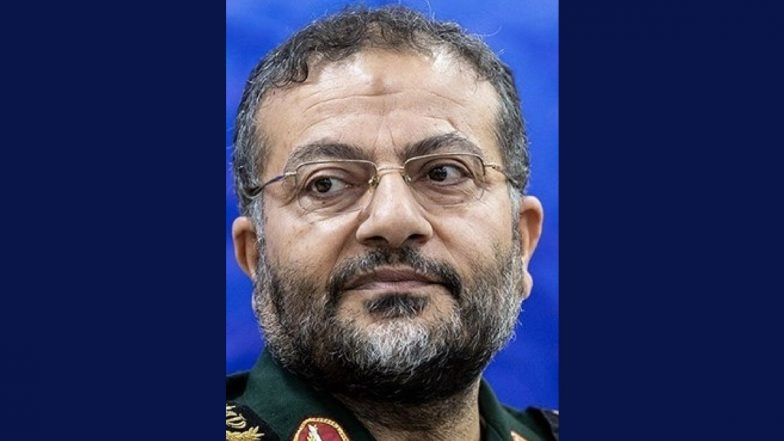
Tel Aviv, March 17: Israeli Defence Forces (IDF) on Tuesday confirmed the killing of Gholamreza Soleimani, the commander of Iran's Basij Unit. According to the Jerusalem Post, the IDF confirmed the death of the head of the Islamic Revolutionary Guard Corps' Basij paramilitary militia, Gholamreza Soleimani, and his deputy, Seyyed Karishi. As per the report, the two were killed in a makeshift tent area, which had been set up to make it harder to follow them as opposed to in a known headquarters.
Providing the details in a post on X, the IDF said that under Soleimani, the Basij Unit employed severe violence and the use of force against civilian demonstrators. It said, "Yesterday, the IDF targeted & eliminated Gholamreza Soleimani, who operated as commander of the Basij unit for the past 6 years. Under Soleimani, the Basij unit led the main repression operations in Iran, employing severe violence, widespread arrests, and the use of force against civilian demonstrators." Ali Larijani Killed in Israeli Airstrikes, Claims Israel; Iran Yet To Confirm.
In another report, TPS news agency said that Israel carried out an airstrike in Iran overnight, targeting Ali Larijani, secretary of Iran's National Security Council and a former top aide to the late Supreme Leader, Ayatollah Ali Khamenei, according to Israeli officials. It is unclear whether Larijani was killed or injured, according to Israeli defense sources. Larijani is widely regarded as a key power broker in Tehran, described as Iran's "de facto leader." He recently delayed the formal declaration of Mojtaba Khamenei as the next Supreme Leader, a move that highlighted his significant influence within Iran's political establishment.
Israel also said it killed Soleimani, commander of Iran's Basij paramilitary force, in the same wave of attacks. Speaking on Tuesday morning, Israel's military chief, IDF Chief of Staff Lt. Gen. Eyal Zamir, appeared to reference the strikes in a broader assessment of Israeli operations. "The IDF continues to operate vigorously against a number of targets in Iran," Zamir said. "Alongside ongoing damage to military and industrial capabilities, we are operating against elements of the Revolutionary Guards and the regime's repressive apparatus. Significant counter-terrorism achievements were also recorded last night, with the potential to affect the campaign's objectives and the IDF's missions", TPS reported.
Zamir added that recent operations also targeted Palestinian Islamic Jihad (PIJ) figures in Iran. "Foreign elements connected to the Palestinian arena, including senior figures involved in terrorist activity from Gaza and Judea and Samaria who were hiding in a safe house, were eliminated in Tehran," he said. Among those targeted were deputy chief Akram Ajouri and senior figure Muhammad al-Hindi. Ajouri previously survived an Israeli assassination attempt in Syria in 2019. ‘Which Side Are You on?’: Ali Larijani Slams Muslim Countries for Silence As Iran Faces US-Israel ‘Aggression’.
Larijani had emerged from hiding last Friday during Iran's Jerusalem Day marches in Tehran, where he spoke alongside President Masoud Pazakhian and other senior officials. "Trump does not understand that the Iranian people are brave and strong, and he does not understand that our people are determined. The more the United States pressures us, the stronger our will becomes. The attacks by the United States and Israel against the Jerusalem Day marches demonstrate their desperation and helplessness," Larijani said.
Ajouri, long regarded as close to Iran, has overseen the PIJ's international operations and finances. He has been linked to figures such as the late Quds Force commander Qassem Soleimani and Hezbollah leader Hassan Nasrallah. The attacks mark one of the most audacious Israeli strikes inside Iran in recent years. Officials have not confirmed whether the operation fully achieved its objectives, but the targeting of Larijani signals a willingness by Israel to directly confront senior political and security figures in Tehran. Analysts warn that the developments could further escalate tensions across the Middle East, where both Israel and Iran maintain aggressive postures in regional conflicts, TPS said.