What Happens When Stocks Exit the Nifty 50?
The Nifty 50 is designed to represent 50 large and actively traded companies across different sectors. Its composition is reviewed periodically so that it continues to reflect the eligible market universe.

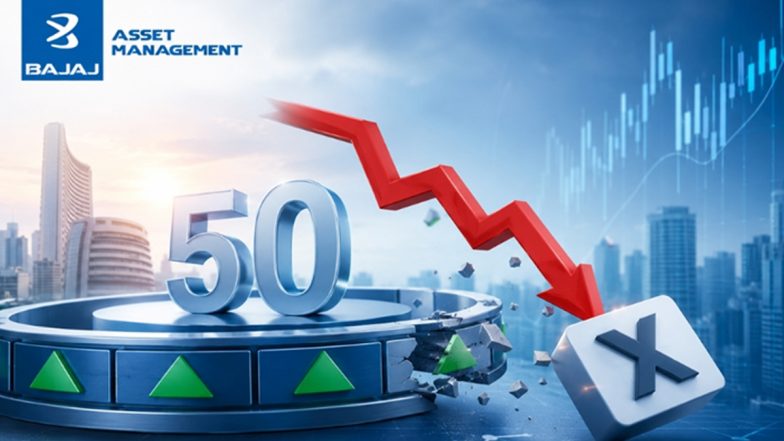
New Delhi [India], July 16: A place in a major stock market index can bring a company considerable attention. It may be widely tracked by investors, fund managers and financial platforms. However, index membership is not permanent. As companies and markets evolve, some stocks enter the index while others leave.
An exit may trigger trading activity and affect the stock’s visibility in the near term. However, it does not mean the company has been delisted or that its business has suddenly become unsuitable. Understanding what happens can help distinguish an index-related event from a change in the company itself.
Why Are Stocks Removed From the Index?
The Nifty 50 is designed to represent 50 large and actively traded companies across different sectors. Its composition is reviewed periodically so that it continues to reflect the eligible market universe.
A stock may exit because another eligible company ranks higher under the applicable selection criteria. These criteria may include factors such as free-float market capitalisation, liquidity, trading history, listing record and derivatives eligibility.
A company may also be removed following events such as a merger, demerger, delisting, trading suspension or corporate restructuring. In some cases, this may lead to an index review outside the usual schedule.
An exit is therefore generally a rules-based change rather than a judgement on whether the company is suitable to hold.
What May Happen to The Stock After Its Exit?
When a company leaves the index, index funds and exchange-traded funds tracking the benchmark may sell its shares and buy the incoming stock. This process, known as index rebalancing, often takes place close to the effective date.
The resulting selling activity may place short-term pressure on the outgoing stock’s price. However, the extent of the movement may vary based on liquidity, market expectations, company developments and broader conditions. Since investors may also trade after the change is announced, part of the expected impact may already be reflected in the price before the rebalancing date.
Does The Company Stop Trading?
Removal from an index is different from removal from a stock exchange. In most routine cases, the company’s shares continue to trade on the NSE and any other exchange where they are listed, while existing shareholders retain their holdings.
The stock may also remain part of other indices, depending on its eligibility and ranking. The change only affects its place in a particular benchmark and does not, by itself, alter the company’s operations, assets, earnings or ownership.
What Happens to Funds Tracking the Index?
Passive funds seek to replicate the composition and performance of their chosen benchmark, subject to expenses and tracking difference. When the index changes, their portfolios generally need to change as well.
The fund may sell the outgoing stock, buy the incoming stock and adjust the weights of other holdings. Investors in the fund do not usually need to carry out these transactions themselves because the portfolio is rebalanced at the scheme level.
The change may lead to transaction costs within the portfolio. There may also be a temporary difference between the fund’s performance and that of the index while the adjustments are being completed.
Actively managed funds are different. A fund manager may continue holding an outgoing company if it remains consistent with the scheme’s investment objective and strategy. Leaving the index does not require every market participant to sell the stock.
Can an Outgoing Stock Perform Differently Afterwards?
An outgoing stock may recover after short-term selling pressure, remain subdued or decline further. Its longer-term movement is likely to depend on factors such as financial performance, valuation, management decisions, industry conditions and investor expectations rather than the index change alone.
Similarly, inclusion in an index does not guarantee potential growth for an incoming company. Historical outcomes may vary, and past performance may or may not be sustained in the future. Index entry or exit should therefore not be treated as a stand-alone signal to buy or sell shares.
Past performance may or may not be sustained in future.
Does The Index Itself Change?
Yes, although it continues to contain 50 companies. The incoming company replaces the outgoing one, and the weights are recalculated according to the applicable methodology. This may slightly change the index’s sector exposure, valuation profile and the contribution of individual stocks.
The index is adjusted to maintain continuity. The replacement itself is not intended to create an artificial gain or loss simply because one company has been exchanged for another.
Conclusion
When a stock exits the index, passive funds may sell it, trading volumes may rise and its price may face short-term pressure. However, the company usually remains listed and continues operating as before.
An index exit is mainly a change in benchmark membership. While it may affect demand, visibility and market sentiment, it does not determine the company’s future performance. Looking at the reason for the change and the company’s underlying position may provide more context than viewing the exit in isolation.
Mutual Fund investments are subject to market risks, read all scheme related documents carefully.
This document should not be treated as endorsement of the views/opinions or as investment advice. This document should not be construed as a research report or a recommendation to buy or sell any security. This document is for information purpose only and should not be construed as a promise on minimum returns or safeguard of capital. This document alone is not sufficient and should not be used for the development or implementation of an investment strategy. The recipient should note and understand that the information provided above may not contain all the material aspects relevant for making an investment decision. Investors are advised to consult their own investment advisor before making any investment decision in light of their risk appetite, investment goals and horizon. This information is subject to change without any prior notice.
The content herein has been prepared on the basis of publicly available information believed to be reliable. However, Bajaj Asset Management Limited (formerly known as Bajaj Finserv Asset Management Limited) does not guarantee the accuracy of such information, assure its completeness or warrant such information will not be changed. The tax information (if any) in this article is based on prevailing laws at the time of publishing the article and is subject to change. Please consult a tax professional or refer to the latest regulations for up-to-date information.
(All articles published here are Syndicated/Partnered/Sponsored feed, LatestLY Staff may not have modified or edited the content body. The views and facts appearing in the articles do not reflect the opinions of LatestLY, also LatestLY does not assume any responsibility or liability for the same.)