Why Did West Bengal Order Closure of 252 Madrassas? Statewide Survey Reveals Key Reasons
The West Bengal administration has ordered the immediate closure of 252 madrassas and issued formal show-cause notices to around 100 others following a comprehensive statewide survey.

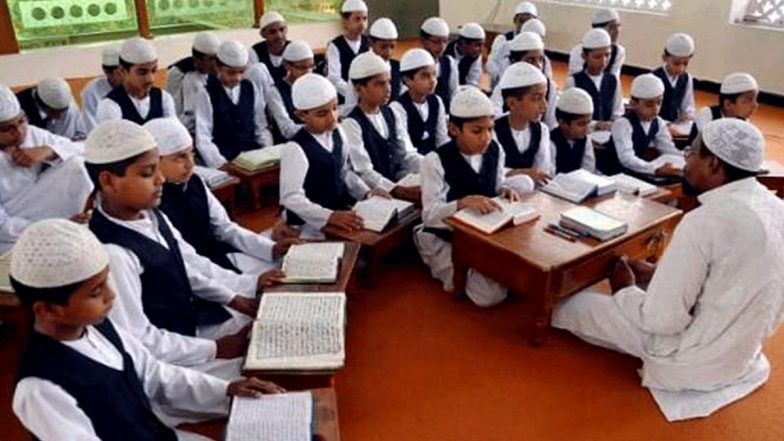
The West Bengal administration has ordered the immediate closure of 252 madrassas and issued formal show-cause notices to around 100 others following a comprehensive statewide survey. Conducted by the Minority Affairs and Madrasah Education Department, the field-level audit revealed that hundreds of institutions were operating without mandatory government recognition, lacked basic physical infrastructure, or deviated significantly from the prescribed academic curriculum.
Minister-in-Charge for Minority Affairs and Madrasah Education, Kshudiram Tudu, confirmed the administrative action, explaining that institutions targeted for closure were entirely devoid of basic infrastructure standards. Officials emphasized that the objective of the crackdown is to integrate students into mainstream, modern educational systems. State authorities noted that sanctioned institutions with valid approvals will continue to operate normally without disruption. Why Is Uttarakhand Shutting Madrasas? State Crackdown Raises Questions.
The state initiated district-wide administrative assessments across all 22 districts and Kolkata to evaluate structural readiness, registration status, enrollment records, staff details, and funding sources. State verification revealed a sharp split among Islamic educational institutions across West Bengal. Out of the total surveyed, 2,132 madrassas are currently registered and operating with valid government or board affiliations, while 2,396 madrassas were found operating without proper regulatory registration.
Inspection teams focused closely on independent, un-aided institutions known as Khariji madrassas, which run without government aid or statutory oversight and rely strictly on public donations. Beyond inadequate classroom space and low teacher-to-student ratios, inspectors flagged unauthorized syllabus deviations and compliance failures as primary drivers for the closure directives. Can RTE Act Be Applied to Madrasas and Vedic Pathshalas? Supreme Court To Examine Plea.
The administrative orders hit northern and border districts hardest. Malda recorded the highest number of closures at 44 to 45 institutions, followed by North Dinajpur with around 37 closures, South 24 Parganas with 32, and Murshidabad and Nadia with roughly 25 closures each. The 100 institutions served with show-cause notices have been given a mandatory window to respond to state inquiries. Department officials warned that failure to provide satisfactory explanations regarding their authorization and operational status will lead to immediate shutdown proceedings.
(The above story first appeared on LatestLY on Sep 13, 2026 05:23 PM IST. For more news and updates on politics, world, sports, entertainment and lifestyle, log on to our website latestly.com).