Why Gauhati High Court Rejected an Assam Man’s Citizenship Claim Despite 15 Documents?
The Gauhati High Court has dismissed the petition of a daily wage labourer seeking to establish his Indian citizenship, ruling that he failed to provide legally admissible evidence despite submitting 15 documents. The court upheld the earlier order of the Foreigners Tribunal, which had declared him a foreigner.

The Gauhati High Court has dismissed the petition of a daily wage labourer seeking to establish his Indian citizenship, ruling that he failed to provide legally admissible evidence despite submitting 15 documents. The court upheld the earlier order of the Foreigners Tribunal, which had declared him a foreigner.
A division bench of Justices Kalyan Rai Surana and Shamima Jahan, in its June 30 order, observed that under Section 9 of the Foreigners Act, 1946, the burden of proving Indian citizenship lies on the individual. The court found no legal or factual error in the tribunal's decision and said the petitioner failed to discharge that burden. Owing to the sensitive nature of the case, the court did not disclose the petitioner's identity. Applying for a Passport After July 1? Check the New Normal vs Tatkaal Fees Here.
Documents Submitted to Prove Citizenship
The petitioner relied on 15 documents and oral testimony, including:
- Copies of the 1951 NRC carrying the names of his father and grandparents
- Electoral rolls from 1966 to 2017
- A 1973 land purchase deed
- A 2017 school certificate
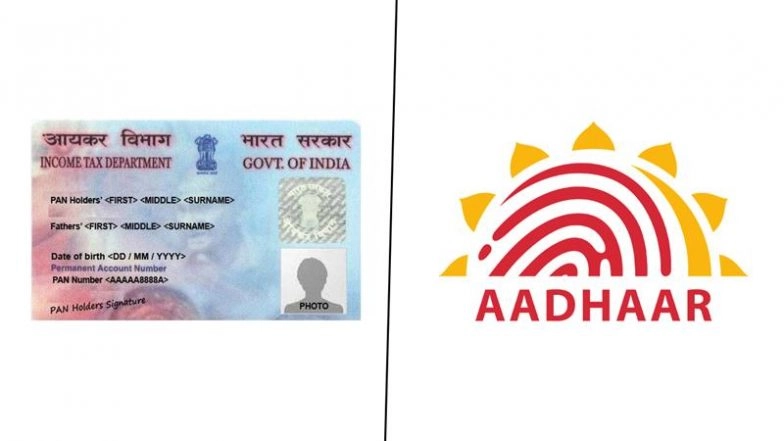
- PAN card
- Voter ID (EPIC)
- Oral testimony of his father
The petitioner claimed he was born in 1988 and worked as a daily wage labourer near Guwahati. He also stated that his family had to relocate multiple times due to erosion caused by the Brahmaputra River. India’s New ePassport Explained: What the Chip-Enabled Passport Is, Features, Benefits and How To Apply.
Why the Court Rejected the Evidence
The High Court held that the copies of the 1951 NRC were merely computer printouts and were not supported by the mandatory certification required for electronic records. The school certificate was also rejected because neither the headmaster testified nor was the original school admission register produced.
The court further observed that the 1973 land deed did not establish a continuous family link, as no inheritance or land revenue records were submitted. It also clarified that a PAN card and Voter ID are not proof of Indian citizenship but serve as identity and tax-related documents.
The bench also noted inconsistencies in the electoral rolls, including discrepancies in recorded ages, family members appearing in different villages and the absence of reliable documentary evidence establishing family lineage.
The court concluded that oral testimony alone could not establish citizenship without legally valid documentary proof and upheld the Foreigners Tribunal's order declaring the petitioner a foreigner.
(The above story first appeared on LatestLY on Jul 02, 2026 03:39 PM IST. For more news and updates on politics, world, sports, entertainment and lifestyle, log on to our website latestly.com).