Good Friday 2026: Date, History, Importance and Key Facts About the Holy Day
Good Friday 2026 falls on April 3, marking the crucifixion of Jesus Christ. Despite its somber nature, it is called 'good' because the word historically meant 'holy' and represents the sacrifice leading to salvation. Observed with fasting and prayer, it remains a gazetted holiday in India, reflecting a global day of spiritual introspection.

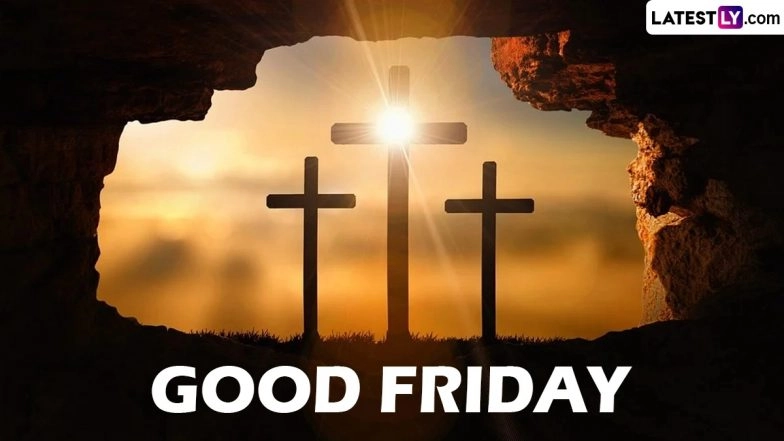
Mumbai, April 1: This week, millions of Christians worldwide are preparing to observe Good Friday, a pivotal day of reflection and penance leading up to Easter Sunday. In 2026, Good Friday falls on April 3, marking the anniversary of the crucifixion of Jesus Christ. Unlike many holidays characterized by celebration, Good Friday is defined by its solemnity, traditionally observed through fasting, church services, and the "Stations of the Cross" processions.
When Is Good Friday 2026?
The date of Good Friday changes annually because it is tied to the lunar calendar. It is always observed on the Friday immediately preceding Easter Sunday.
In 2026, the Western Christian calendar marks the day on Friday, April 3. For Orthodox Christians, who follow the Julian calendar, Good Friday will be observed later, on April 10, 2026. In India, it is recognized as a gazetted holiday in many states, with banks, schools, and government offices remaining closed. Good Friday 2026: Why You Should Not Say ‘Happy Good Friday’ and What To Say Instead.
History of Good Friday
Good Friday commemorates the biblical account of the trial, crucifixion, and death of Jesus Christ at Calvary. According to the Gospels, Jesus was betrayed by Judas Iscariot, sentenced by Pontius Pilate, and forced to carry a wooden cross to his execution site.
Historically, the observation of this day dates back to the early centuries of the Church. By the 4th century, Christians in Jerusalem began holding special services to retrace the steps of Jesus' final hours, a tradition that evolved into the modern liturgical practices seen today. How Is Good Friday Observed? Things You Can Do To Remember Jesus Christ's Sacrifice.
Why Is It Called 'Good' Friday?
To many, the name "Good Friday" seems contradictory for a day centered on suffering and death. However, linguists and theologians offer two primary explanations for the terminology:
- Holy and Pious: In older forms of English, the word "good" was often used as a synonym for "holy." Therefore, "Good Friday" historically translates to "Holy Friday."
- Theological Significance: Within the Christian faith, the day is considered "good" because the death of Jesus is viewed as the ultimate sacrifice that led to the "good news" of salvation. It is seen as the necessary precursor to the joy of the Resurrection on Easter Sunday.
Good Friday: Religious and Cultural Significance
For believers, Good Friday is a time of deep spiritual introspection. It is the most somber day of "Holy Week," which also includes Maundy Thursday and Holy Saturday.
- Church Liturgy: Many churches hold services between noon and 3:00 PM, the hours during which Jesus is believed to have hung on the cross. These services often involve the reading of the "Passion" and the veneration of the cross.
- Fasting and Abstinence: Many observers fast or abstain from eating meat on this day as a sign of penance.
- Community Processions: In various parts of the world, including parts of India like Goa and Kerala, massive processions are held where participants reenact the "Way of the Cross."
Modern Observance in 2026
In 2026, the day remains a time for quietude. While the digital world often remains active, many individuals use the day for a "digital fast," stepping away from social media to focus on prayer or family reflection.
While businesses in major financial hubs like the New York Stock Exchange (NYSE) and Indian stock markets (BSE and NSE) remain closed, the day serves as a global reminder of the values of sacrifice and resilience that underpin the holiday.
(The above story first appeared on LatestLY on Apr 01, 2026 03:33 PM IST. For more news and updates on politics, world, sports, entertainment and lifestyle, log on to our website latestly.com).