Allegations vs Analytics: What Independent Data Actually Shows About Binance’s Compliance Record
Media coverage lately suggests severe compliance gaps at the world's largest cryptocurrency exchange.

Media coverage lately suggests severe compliance gaps at the world's largest cryptocurrency exchange. The actual metrics tell another story. We’re talking about independent verification data, regulatory milestones, and on-chain analytics. These together contradict claims of systemic vulnerabilities at Binance.
That’s why building a storyline around isolated anecdotes or draft internal documents misses the broader operational facts. Real risk management assessment relies on concrete evidence. We look past the headlines to see what independent market data, third-party audits, and regulatory inspections demonstrate about Binance's compliance infrastructure. Testing allegations against measurable outcomes highlights the disconnect between published rumors and established facts. Hard numbers provide a more accurate gauge of market integrity.
The Independent Verification Layer
You cannot build enterprise-grade compliance on self-reporting. Outside entities must continuously review the infrastructure. To ensure operational security, Binance operates under a verification framework built to stress-test its systems regularly. "Binance has undergone a series of independent external reviews, internal audits, regulatory inspections, and supervisory feedback processes across multiple markets over the past 18 months,” Binance noted in a blog post.
This level of oversight challenges allegations of careless compliance. Binance maintains licenses and regulatory registrations across 20 distinct jurisdictions. Securing and keeping these approvals means passing rigorous and ongoing assessments of both user protection standards and anti-money laundering controls.
The recent full authorization of Binance’s global entities from the Financial Services Regulatory Authority of Abu Dhabi Global Market (ADGM) provides a clear example. The regulator did not just quietly pass the application through. Regulators spent over a year conducting deep dives into the exchange's core operations.
Having these independent verification layers and regulatory oversight shows Binance’s commitment to compliance. This came into question recently when media allegations arose suggesting the exchange allowed Iran backed terrorism groups to funnel money through the platform and covered it up by firing compliance officers who flagged the transactions.
Binance Co-CEO Richard Teng addressed those allegations directly during an interview on The David Lin Report, “The truth was the investigation continued after the departure of the said investigators who are disgruntled. We completed those investigations. We offboarded the relevant entities. We cooperated with the relevant law enforcement agencies and complied with our disclosure obligations as we always do.”
Teng continued, “What is not being compromised — and we will never compromise — is our upholding of global standards, working with global regulators, upholding the rule of law including on sanctions and counterterrorism financing. Those are extremely important and we continue to invest very heavily.” The exchange’s compliance initiatives are increasingly reflected in its illicit-activity metrics. Binance reports that sanctions-related exposure as a share of total exchange volume fell 96.8% between January 2024 and July 2025, dropping from 0.284% to just 0.009%.
What Independent Industry Data Shows
Looking at the platform's performance versus industry benchmarks highlights concrete improvements. Independent industry data shows the exchange's sanctions-related exposure as a percentage of total volume dropped 96.8% from January 2024 to July 2025. Direct exposure to the four largest Iranian platforms fell 97.3% over the same period.
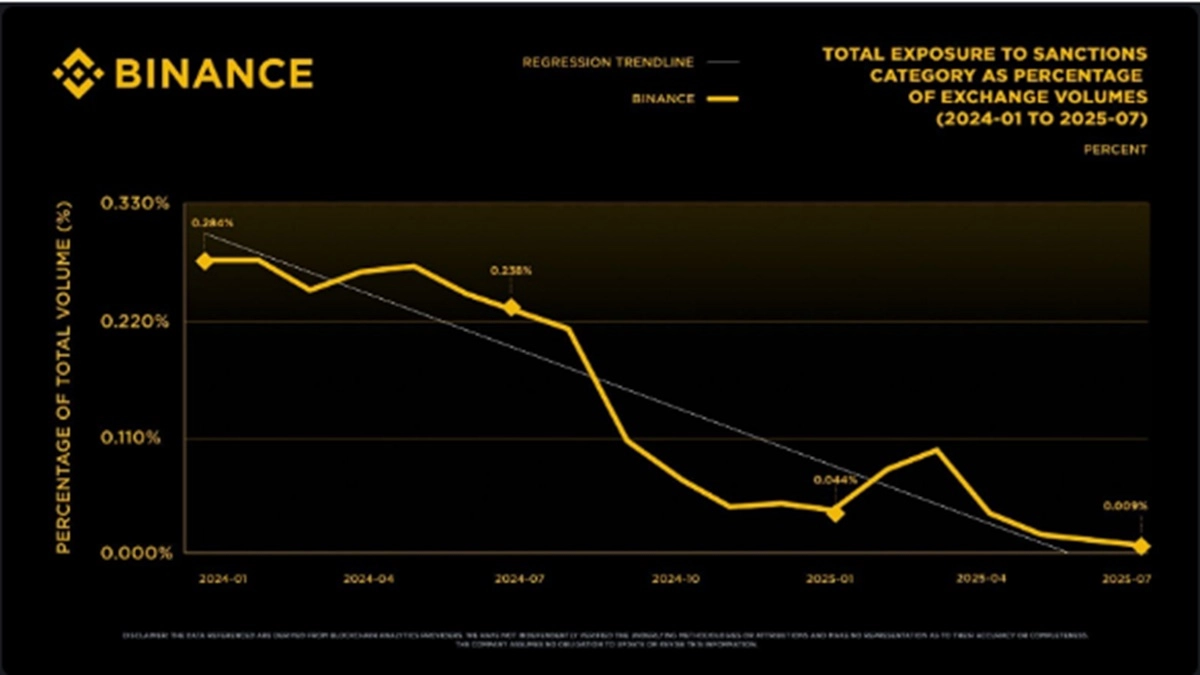
Binance outperformed 10 major global exchange peers in managing this direct exposure. Addressing the recent media claims directly, a Binance spokesperson detailed their enforcement reality: "Binance detected and reported suspicious activity, and this is evidence that our controls are working. We have strict know-your-customer and compliance procedures in place."
Market participants clearly recognize this structural stability. According to data from CryptoQuant, the exchange currently holds $47.5 billion in stablecoins. This represents 65% of total stablecoin reserves across centralized platforms.
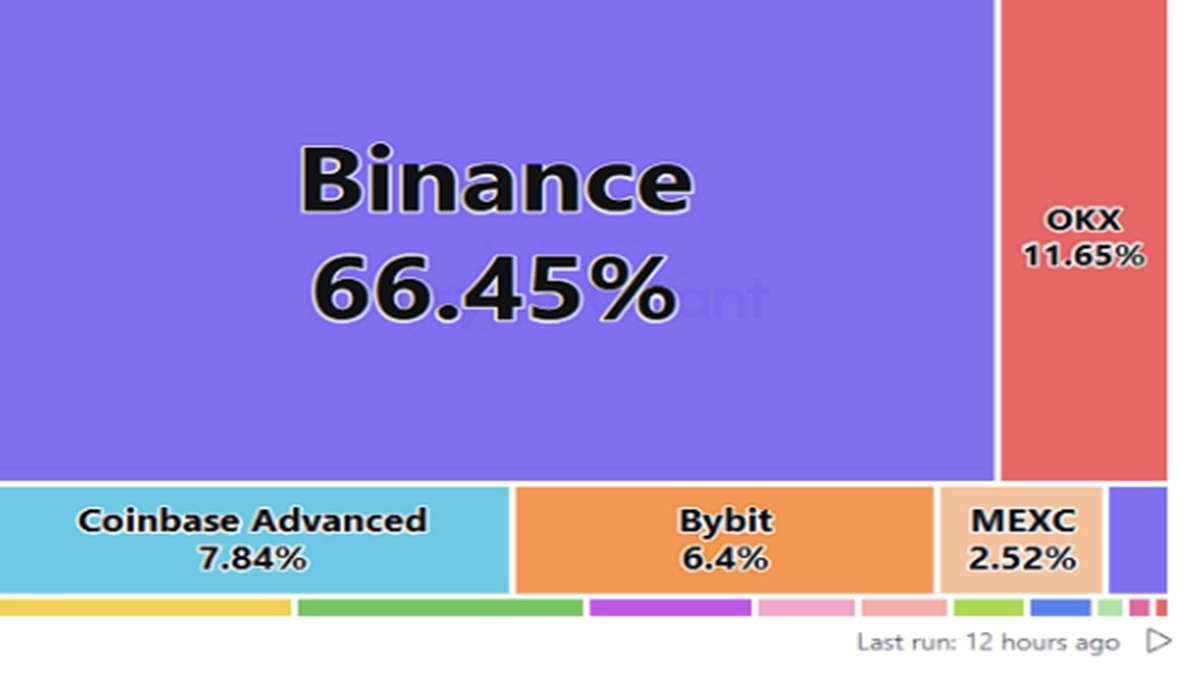
This massive concentration of capital is roughly five times larger than its closest competitor. It indicates sustained institutional and retail confidence. Capital tends to consolidate where liquidity is deep and risk controls function exactly as intended.
The Regulatory Approval Evidence
Actions taken by global financial authorities offer another objective measure of operational integrity. If an exchange harbored systemic vulnerabilities, regulators would restrict access. Instead, they continue approving the platform's expansion.
In December 2025, the company became the first crypto exchange to secure full global authorization under the ADGM's regulatory framework. Securing this status required passing an exhaustive review by the FSRA. They scrutinized policies, risk management, and operational procedures to ensure alignment with traditional financial market architectures. Teng emphasized that the regulators looked at every single aspect of the business, assessing everything from transaction monitoring to governance.
With the globally recognized ADGM license secured, the exchange recently marked its 20th global regulatory milestone by registering with Argentina's National Securities Commission. These milestones demand continuous compliance assessments by local authorities. The difference is clear. While some media reports push allegations of weak oversight, national regulators across two dozen markets continue to vet and approve the platform's operations.
Separating Signal from Noise
Assessing market integrity requires focusing on verifiable facts. Third-party reviews, independent data, and ongoing regulatory approvals contrast sharply with recent media allegations.
The results are quantifiable and difficult to dispute. A 97% reduction in sanctions exposure, alongside law enforcement partners seizing $131 million in illicit funds in 2025, underscores a proactive and operationally effective approach to risk mitigation. The company is unequivocal in its position: "Binance's compliance program is effective and it worked here. Any statement to the contrary is simply wrong." When evaluating operational standards, verifiable metrics and ongoing regulatory oversight provide the only concrete evidence needed to separate signal from noise.
(The above story first appeared on LatestLY on Apr 04, 2026 12:14 PM IST. For more news and updates on politics, world, sports, entertainment and lifestyle, log on to our website latestly.com).