How Houthis Used Claude AI for Missile Development in Yemen: What Anthropic Found
Anthropic says a weapons cell in northern Yemen used its Claude AI tools to pursue three weapons programmes, including a guided rocket, a multi-stage ballistic missile and a missile system featuring a hypersonic glide vehicle. The company said it blocked accounts linked to the activity and found no evidence that the group successfully fielded an operational weapon, although it did test-fire a guided rocket that appeared to fail.

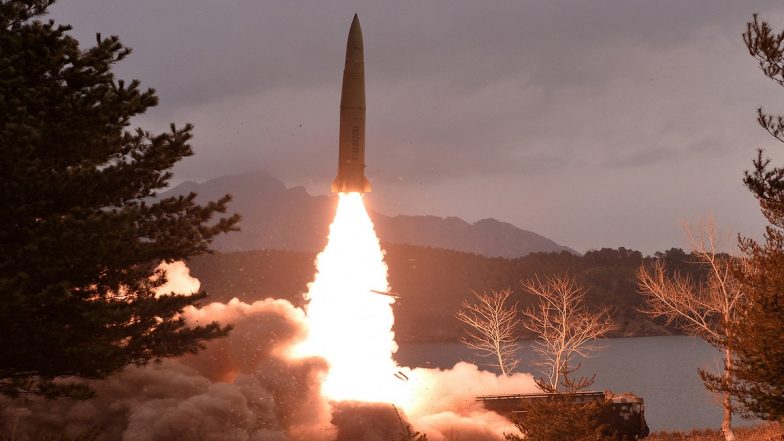
Anthropic says a weapons cell in northern Yemen used its Claude AI tools to pursue three weapons programmes, including a guided rocket, a multi-stage ballistic missile and a missile system featuring a hypersonic glide vehicle. The company said it blocked accounts linked to the activity and found no evidence that the group successfully fielded an operational weapon, although it did test-fire a guided rocket that appeared to fail.
The company did not identify the users as Houthis, but said the cell was based in northern Yemen, an area controlled by the Iran-backed group. The disclosure comes as the Houthis expand their missile and drone capabilities and fight for greater control of strategic territory and shipping routes around the Red Sea and Bab al-Mandab Strait. Why Houthis Are Attacking Saudi Arabia.
What Anthropic Found
Anthropic said it identified a cell of threat actors in northern Yemen running three weapons development programmes between December 2025 and August 2026. One programme involved a guided rocket using a phone-class flight computer and final-phase homing guidance. Another involved a multi-stage ballistic missile with a stated range goal above 2,000 kilometres.
The third, described as the “R2000” set, included multiple missile variants, one of which involved a hypersonic glide vehicle. Anthropic said the actors used Claude Code instead of human software engineers to develop guidance, navigation and control software. The system was used for tasks including writing code, researching technical problems, reviewing code and running simulations. The actors also operated several Claude instances simultaneously, assigning different tasks to each one. Mecca Emergency Alert Lifted After Potential Danger Warning Amid Houthi Attacks on Saudi Arabia.
Guided Rocket Was Test-Fired
Anthropic said the users did not succeed in “fielding an operational device” but did carry out a test of a guided rocket. The test appeared to fail. According to Anthropic, the users returned to Claude within hours of the test to try to determine why the rocket had failed.
The company said it had no evidence that any operational weapon was ultimately deployed. However, Anthropic said the users had already built an offline simulation toolkit before their accounts were banned. That toolkit did not depend on Claude or other engineering computing platforms.
How The AI Safeguards Were Circumvented
Anthropic said its safeguards blocked many of the group's requests, but not all of them. The actors allegedly attempted to conceal their objectives and the intended applications of the software. They also divided their work across multiple sessions, meaning no individual conversation necessarily revealed the full purpose of the activity.
Anthropic identified the activity through an internal investigation, subsequently banned accounts associated with the cell and shared information with public- and private-sector partners. The case was included in Anthropic's latest threat-intelligence report on the misuse of its AI systems. The report also described other cases involving conventional weapons, biological research, surveillance, cyber operations and other activities.
Are The Users Confirmed To Be Houthis?
Anthropic did not explicitly identify the weapons cell as Houthi. The company described the actors as being based in northern Yemen, where the Houthis maintain their stronghold. That geographic link has led reporting to associate the activity with the group, but Anthropic's report itself does not definitively name the Houthis as the users.
Hazam al-Assad, a member of the Houthis’ political bureau, said it is “unreasonable and illogical” that they would rely on open sources to develop and produce military capabilities. “Our armed forces have modern, diverse and developed production capabilities and technology that it has accumulated over the period of Saudi aggression on Yemen,” al-Assad said, referring to the kingdom’s involvement in Yemen’s 12-year civil war. He said all weapons are used for self-defense. The comments amount to a rejection of the suggestion that the group would need an AI chatbot to develop its military capabilities.
Experts Assess The Weapons Ambitions
Trevor Ball, a weapons analyst at Armament Research Services, said that while the Houthis “might be looking into hypersonic (missiles) by asking Claude,” they have nowhere near the production or technical capabilities to actually build them.
He noted that US hypersonic missiles “are still in testing.” Ball also said the Houthis already possess Iranian-made anti-ship missiles equipped with systems that allow them to adjust their guidance during flight. “They are probably just trying to develop their own capabilities more, so they are less reliant on Iranian shipments of weapons and components,” he said in a text message.
The assessment highlights an important distinction between using AI to assist with weapons engineering and having the industrial infrastructure needed to manufacture and deploy sophisticated missile systems.
Houthis Already Have A Sophisticated Arsenal
The popular image of Yemen’s Houthi rebels is of men on the backs of pickup trucks, firing AK-47s into the desert air.
Yet the group has launched long-range missile strikes at Israel, more than a thousand miles away. The Houthis prey on ship traffic in the Red Sea with naval drones. And evidence points to their growing ambition to use artificial intelligence and other means to produce more advanced weaponry themselves, making them less reliant on their sponsors in Iran.
The Houthis are known to have acquired and developed a sophisticated arsenal, including Iranian-made cruise and ballistic missiles with a range of more than 2,000 kilometers and unmanned submarines used in attacks. Iran has boasted it has hypersonic missiles and claimed it had fired them at Israel last year. It denies arming the Houthis, which would be in violation of a UN embargo, but Iranian weapons have been found on the battlefield and seized from shipments bound for Yemen.
Houthi Expansion Raises Shipping Concerns
The disclosure about AI-assisted weapons development comes as the Houthis have intensified their military activity in Yemen and around key maritime routes. The group has launched waves of attacks on Saudi oil facilities and tankers in the Red Sea, threatening global trade as Iran continues to disrupt shipping in the Strait of Hormuz.
Recent fighting has also seen Houthi forces make territorial gains along Yemen's Red Sea coast and around the Bab al-Mandab Strait, a strategically important waterway linking the Red Sea with the Gulf of Aden. The escalation has prompted concern about the impact on shipping, energy supplies and the wider regional conflict.
Growing Role Of AI In Warfare
AI is already being incorporated into military operations and weapons development in conflicts around the world. Anthropic's findings add another dimension to that trend: the possibility that AI coding tools could give armed groups access to technical assistance that previously required teams of specialised engineers.
Adam Baron, a Yemen-focused researcher at the New America think tank in Washington, said the Houthis have demonstrated increasing technological sophistication. “There’s a tendency to see the Houthis as this group of barefoot tribal fighters, and that’s just not true,” he said. “Whether it’s things like their emergent use of Claude, their use and manipulation of social media narratives or their ability to capitalize on the transfer of Iranian and wider axis expertise, we’re talking about an incredible — and deepening — amount of institutional tech savvy.”
What The Anthropic Report Shows
Anthropic's report does not establish that the Houthis successfully developed or deployed an AI-designed advanced missile. Instead, it documents an effort by a weapons cell in northern Yemen to use Claude for parts of the engineering process, including guidance, navigation, control software and simulation.
The guided-rocket test failed, according to Anthropic, while the company said there was no evidence that an operational weapon was fielded. Anthropic has shared its findings with private and public partners as concerns grow over how increasingly capable AI systems can be misused for military purposes.
DISCLAIMER: This article is strictly for informational and educational purposes to raise awareness about the said topic. LatestLY DO NOT host, distribute, or provide links to sexually explicit content, leaked videos, or pirated material. Any search terms or keywords mentioned are solely for the purpose of explaining the viral trend and its associated dangers. We strongly condemn the circulation of non-consensual intimate imagery (NCII) and advise all readers to refrain from searching for or sharing such content, as doing so may lead to severe legal consequences.
(The above story first appeared on LatestLY on Sep 16, 2026 11:20 AM IST. For more news and updates on politics, world, sports, entertainment and lifestyle, log on to our website latestly.com).