Meta Faces Legal Challenge From Australian Businessman Andrew Forrest Over Deepfake Crypto Scam Ads in US Court
Billionaire Andrew Forrest is suing Meta in California, arguing that the company should not be protected by Section 230 immunity for its role in distributing fraudulent ads. The suit claims Meta’s AI tools helped optimise scams using Forrest’s likeness to promote fake cryptocurrency schemes. Following recent rulings in Massachusetts and Los Angeles that focused on platform design rather than content.

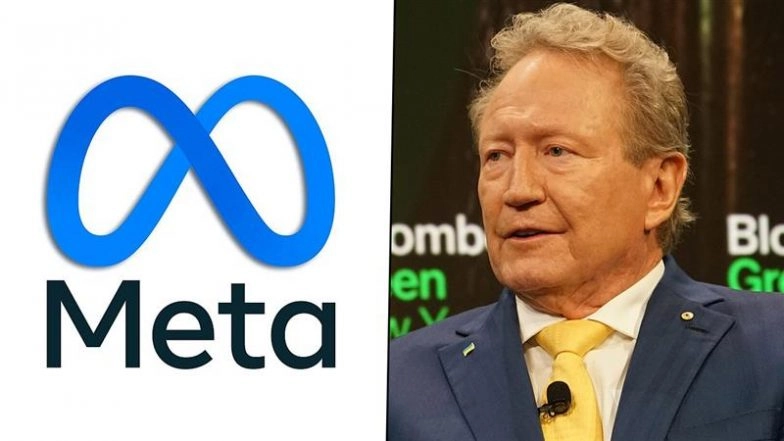
Australian mining magnate Andrew Forrest has approached a US federal court in Silicon Valley to hold Meta accountable for a surge of fraudulent advertisements that used his likeness without permission. The legal team for the billionaire is seeking a ruling that would prevent the social media giant from using Section 230 of the Communications Decency Act, a law that typically shields internet platforms from liability for content posted by users, as a legal defence for its advertising business.
The case, which held a significant hearing on Thursday, focuses on whether Meta’s advertising tools and artificial intelligence go beyond mere hosting to become active participants in the creation and optimisation of scams. A judge is expected to rule on the motion in the coming weeks, potentially setting a precedent that could reshape how social media platforms are held accountable for their commercial revenue streams. Anthropic Claude Opus 4.7 Launched With Enhanced Software Engineering and Agentic Capabilities.
The Argument by Australian Businessman Andrew Forrest
The crux of Forrest’s legal strategy involves distinguishing between user-generated content and paid advertisements. His attorney, Simon Clarke, argued that Section 230 was never intended to grant immunity to a company’s proprietary advertising business. The lawsuit alleges that since 2019, thousands of deceptive ads on Facebook have used Forrest’s image to promote fraudulent cryptocurrency schemes, resulting in thousands of victims.
Forrest’s team argues that Meta’s AI tools do not just display these ads; they optimise and personalise them to target vulnerable users. By using these automated systems to increase the effectiveness of fraudulent marketing, the suit claims Meta acts as a complicit participant rather than a neutral intermediary.
Meta’s Defence and Evidence Dispute
Meta has consistently maintained that it is not responsible for the marketing messages created by third-party advertisers. The company stated it makes reasonable efforts to preserve data and remove offending content once identified. During the recent hearing, Meta’s legal representatives stood behind Section 230, arguing that the law remains a valid shield against liability for the actions of advertisers on its platform.
The Thursday hearing also addressed a motion from Forrest’s team alleging that Meta "wrongly ditched" evidence related to the scams. If the judge finds that Meta failed to preserve necessary data, the company could forfeit its ability to seek shelter under Section 230 for this specific case.
Precedents and Shifting Legal Landscapes
The lawsuit follows a series of recent legal setbacks for social media platforms regarding their business models. Earlier this year, a Los Angeles jury found Meta and YouTube liable for harm caused by the "addictive design" of their platforms. Crucially, that verdict focused on the companies' negligence in design and operation rather than the content itself, providing a roadmap for Forrest's attorneys to bypass traditional Section 230 protections.
Additionally, earlier this month, the Massachusetts Supreme Judicial Court ruled that Section 230 does not protect Meta from state lawsuits concerning Instagram’s impact on children. These rulings suggest a growing judicial trend toward holding tech companies accountable for their internal algorithms and commercial tools.
Impact on Global Figures and Financial Scams
Andrew Forrest has been a prominent target of "deepfake" and likeness-based scams in Australia for years. These fraudulent ads often promise high returns on cryptocurrency investments, leveraging the credibility of well-known business leaders to deceive the public. Starlink Outage Across Globe Disrupts US Navy Drone Tests, Highlights Pentagon’s Mounting Reliance on Elon Musk's SpaceX: Report.
If the California court rules in favour of Forrest, it could open the doors for other public figures and victims of financial fraud to sue social media platforms directly for their advertising practices. This would force a significant shift in how Meta and its competitors vet and distribute paid content globally.
(The above story first appeared on LatestLY on Apr 17, 2026 09:37 AM IST. For more news and updates on politics, world, sports, entertainment and lifestyle, log on to our website latestly.com).