Lyrid Meteor Shower 2026: Will It Be Visible in India? Peak Date, Time and Viewing Tips
The Lyrid meteor shower 2026 is active from April 16-25 and will peak on April 21-22. Skywatchers in India can expect up to 18 meteors per hour, best visible between 3 AM and 5 AM under dark skies. Originating from Comet Thatcher, the Lyrids are known for bright meteors and occasional fireballs visible to the naked eye.

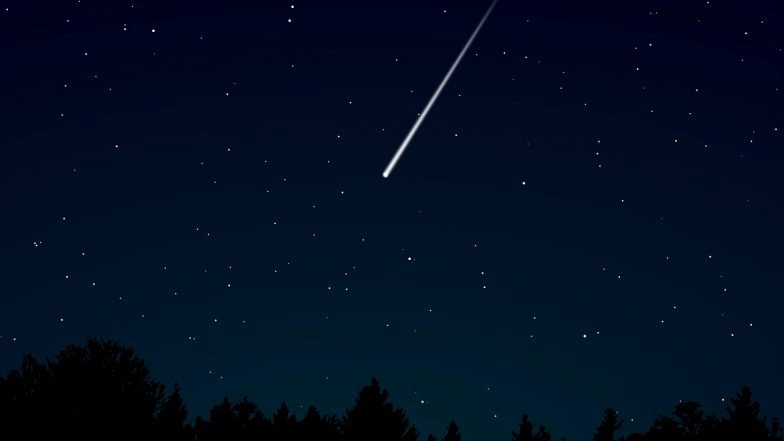
The annual Lyrid meteor shower has begun, offering skywatchers a chance to spot shooting stars across the night sky. Active from April 16 to April 25, the meteor shower is expected to peak on the night of April 21–22, when the highest number of meteors will be visible. Observers in India can witness the event under favourable conditions, particularly during the early morning hours before sunrise.
The Lyrids occur as Earth passes through debris left behind by Comet C/1861 G1 Thatcher, a comet that orbits the Sun roughly every 415 years. While the comet itself will not return until 2283, its dust particles create a consistent annual meteor display. Meteor Fireball Lights Up Northeast Sky in Rare Daytime Sighting in US (Watch Videos).
Peak Date and Best Viewing Time in India
The Lyrid meteor shower will reach peak activity during the late hours of April 21 into the early morning of April 22, 2026. During this period, skywatchers can expect around 10 to 18 meteors per hour under clear, dark skies, with occasional bursts producing higher rates.
In India, the best time to observe the meteor shower is between 3:00 AM and 5:00 AM IST, when the sky is darkest and the radiant point is higher above the horizon. The Moon, which will be partially illuminated, is expected to set after midnight, improving visibility in the pre-dawn hours. Cleveland Ohio Meteor Hit Sparks Global Alarm: Scientists Warn of ‘Blind Spot’ Threat and Urge Better Space Monitoring.
Will the Lyrid Meteor Shower Be Visible in India?
Yes, the Lyrids will be visible across most parts of India, provided weather conditions are clear and light pollution is minimal. Areas away from city lights, such as rural regions or hill stations, will offer better viewing opportunities.
Unlike some meteor showers that favour specific hemispheres, the Lyrids can be seen from both the Northern and Southern Hemispheres, making them accessible to observers throughout India.
Where and How to Watch the Shooting Stars
The meteors appear to originate from the constellation Lyra, near the bright star Vega. This point, known as the radiant, rises in the eastern sky during the night.
For the Best Viewing Experience:
- Look toward the eastern sky in the pre-dawn hours
- Avoid staring directly at the radiant; instead, observe darker patches of sky about 30-40 degrees away
- Allow your eyes 20-30 minutes to adjust to the darkness
- Avoid areas with artificial lighting
No special equipment is required, as meteors are visible to the naked eye.
What Makes the Lyrids Unique?
The Lyrids are among the oldest recorded meteor showers, first documented by Chinese astronomers in 687 BCE. They are known for producing fast, bright meteors and occasional fireballs—larger debris fragments that create intense flashes of light as they burn through Earth’s atmosphere.
Alongside the Lyrids, another meteor shower, the Eta Aquarids, is also active from April through May, with its peak expected in early May. This shower is associated with Halley's Comet and typically produces a higher hourly rate of meteors.
(The above story first appeared on LatestLY on Apr 17, 2026 08:49 AM IST. For more news and updates on politics, world, sports, entertainment and lifestyle, log on to our website latestly.com).