Moon, Venus and Jupiter Set to Light Up Night Sky This Week: Date, Time and India Visibility Guide for Rare Triangle in the Sky
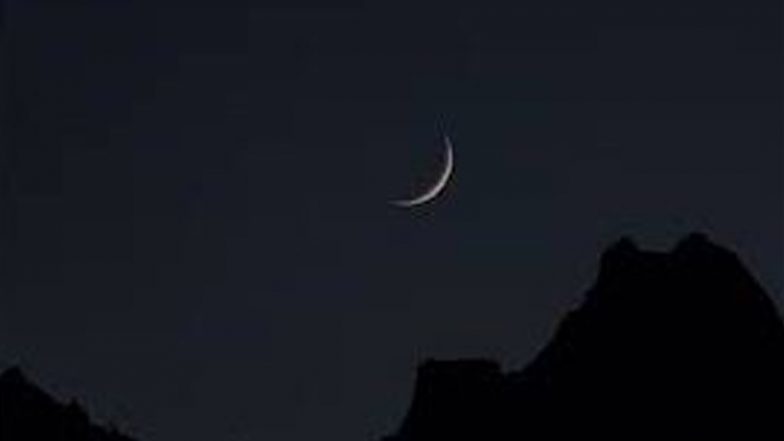
One of the most beautiful naked-eye events of 2026 is unfolding right now. Between May 18 and 20, a thin crescent Moon will drift past Venus and Jupiter in the evening sky, forming a glowing triangle visible to anyone who steps outside just after sunset. No telescope. No special equipment. No dark skies required.

One of the most beautiful naked-eye events of 2026 is unfolding right now. Between May 18 and 20, a thin crescent Moon will drift past Venus and Jupiter in the evening sky, forming a glowing triangle visible to anyone who steps outside just after sunset. No telescope. No special equipment. No dark skies required.
What You Will See and When
The best viewing window is roughly 30 to 60 minutes after sunset, between 7 pm and 8 pm IST. Step outside and face west-northwest. You will spot a blazing white point of light low on the horizon: that is Venus, shining at an apparent magnitude of minus 3.9, making it the brightest object in the sky after the Moon itself. A steady golden glow nearby marks Jupiter. Between them, a delicate silver crescent completes the triangle. Four-Planet Parade 2026 Date: When and How To Watch Rare Planetary Alignment Featuring Mercury, Mars, Saturn and Neptune in India.
Night by Night
The show changes each evening as the Moon moves roughly 13 degrees across the sky per day. On May 18, the crescent Moon sits closest to Venus. On May 19, it hangs directly between Venus and Jupiter, forming the most striking triangle of the three nights. By May 20, it climbs higher toward Jupiter, with the twin stars of Gemini, Castor and Pollux, flanking the group and adding to the spectacle. Four-Planet Parade 2026: How This Rare Astrological Event Affects Your Zodiac Sign.
Why This Happens
This is what astronomers call an apparent conjunction, a line-of-sight alignment rather than a true gathering in space. The Moon is roughly 3,58,000 kilometres from Earth. Venus sits tens of millions of kilometres beyond that. Jupiter is hundreds of millions of kilometres further still. All three travel along the ecliptic, the shared orbital highway across the sky's dome, which is what makes them appear to cluster together.
The Science Behind the Beauty
Venus outshines everything because its thick clouds of sulphuric acid reflect about 70 per cent of all incoming sunlight. Jupiter, though farther from the Sun, compensates with sheer size, its diameter roughly 11 times that of Earth.
The crescent Moon's golden tint comes from Rayleigh scattering: its low position on the horizon means its light travels through more atmosphere, stripping away blue wavelengths and leaving warm gold tones behind. Look carefully at the Moon's dark side and you may spot earthshine, sunlight reflected off Earth's oceans and clouds, softly illuminating the lunar surface.
Something Bigger Is Coming
This week is only the preview. Venus and Jupiter have been slowly drawing closer throughout May and on June 9, they will be separated by just 1.6 degrees, close enough to share a single binocular view.
For now, step outside tonight, look west and let the sky do the rest.
(The above story first appeared on LatestLY on May 18, 2026 07:33 PM IST. For more news and updates on politics, world, sports, entertainment and lifestyle, log on to our website latestly.com).