Iran Offers 7-Day Plan to Restart US Talks, Reopen Strait of Hormuz
Iran has offered a seven-day plan to the United States aimed at creating a pathway back to negotiations, with the proposal involving the reopening of the strategically important Strait of Hormuz and the resumption of talks on Tehran’s nuclear programme.

Iran has offered a seven-day plan to the United States aimed at creating a pathway back to negotiations, with the proposal involving the reopening of the strategically important Strait of Hormuz and the resumption of talks on Tehran’s nuclear programme. Iranian Foreign Minister Abbas Araghchi outlined the proposal in New York amid diplomatic efforts on the sidelines of the United Nations General Assembly. According to reports, Tehran has conveyed the plan to Washington through intermediaries.
Under the proposal, Iran would reopen the Strait of Hormuz at the end of the seven-day period if certain conditions are met, after which negotiations would resume with the aim of reaching a broader agreement. US-Iran Talks at UNGA: Steve Witkoff Calls Mediated Discussions ‘Constructive and Promising’.
Iran's Seven-Day Plan For US Talks
Araghchi said the proposal was similar in several respects to the memorandum of understanding reached between the US and Iran in June. Iran has been seeking an end to US military pressure and the blockade affecting Iranian ports as part of efforts to restart diplomacy. Earlier reports said Tehran had offered to reopen the Strait of Hormuz within seven days if Washington eased military pressure and lifted the blockade.
The latest proposal adds a clearer diplomatic sequence: conditions would be met, the waterway would be reopened, and talks would then restart on outstanding issues, including Iran's nuclear programme.
Strait of Hormuz At Centre Of Negotiations
The Strait of Hormuz, a major global energy route, has become a central issue in the negotiations between Washington and Tehran. Reuters reported on September 24 that US and Iranian negotiators were exploring a phased arrangement under which Iran would reopen the waterway while the United States would lift its economic blockade of Iran. The discussions were taking place in New York through diplomatic channels. Iran has previously linked the reopening of the strait to the easing of US military and economic pressure. Tehran has also demanded an end to what it describes as US intervention and attacks against Iran. Iran Sets 7 Conditions for US Talks: What Are Tehran’s Demands To End War?.
Nuclear Talks Could Restart
A key element of the seven-day proposal is the possibility of restarting negotiations over Iran's nuclear programme. Araghchi said the proposal would create a pathway for comprehensive discussions after the Strait of Hormuz is reopened. The initiative comes after months of conflict and diplomatic deadlock between Washington and Tehran. Iran has maintained that a return to diplomacy requires concrete steps from the US, while Washington has continued to seek assurances over Iran's actions and the broader regional security situation.
UN General Assembly Provides Diplomatic Opening
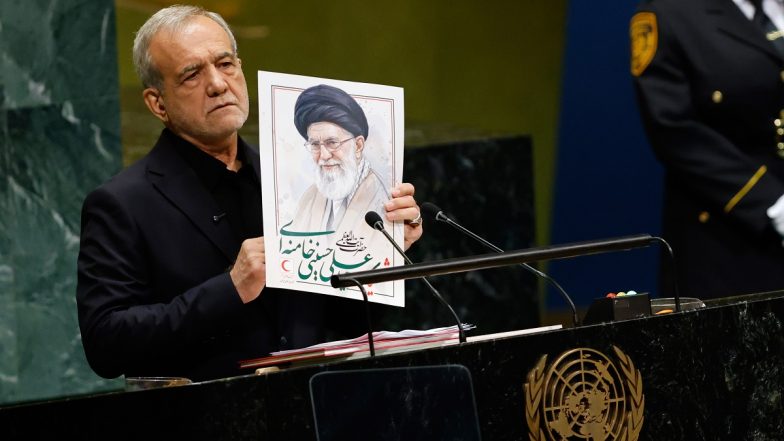
The proposal comes as Iranian President Masoud Pezeshkian and senior officials are in New York for the UN General Assembly. US and Iranian officials have held indirect discussions through mediators during the gathering. Qatar, Pakistan and Egypt have been involved in diplomatic efforts aimed at narrowing differences between the two sides. Earlier reports said Pezeshkian was not expected to hold a direct meeting with US President Donald Trump, although Iranian officials indicated that negotiations could advance if Washington demonstrated sufficient commitment.
US-Iran Talks Remain Uncertain
The seven-day proposal represents a new diplomatic initiative, but major differences remain unresolved. The Strait of Hormuz, the US blockade, military operations, economic pressure and Iran's nuclear programme are all part of the broader dispute. Reuters reported that both sides remain cautious about giving up negotiating leverage while exploring a possible phased arrangement. For now, the proposal provides a framework for renewed negotiations rather than a concluded agreement. Further discussions through mediators are expected to determine whether Washington and Tehran can agree on the conditions needed to implement the seven-day plan.
(The above story first appeared on LatestLY on Sep 25, 2026 07:59 AM IST. For more news and updates on politics, world, sports, entertainment and lifestyle, log on to our website latestly.com).