
Business News | AI Demand to Keep Memory Tight Through 2027, Chipflation to Squeeze Consumer Hardware and Cloud Costs
Get latest articles and stories on Business at LatestLY. Memory storage is set to remain a structural bottleneck through 2027 as AI demand continues to absorb Dynamic Random-Access Memory (DRAM), High Bandwidth Memory (HBM) and enterprise Solid-State Drive (SSD) supply.

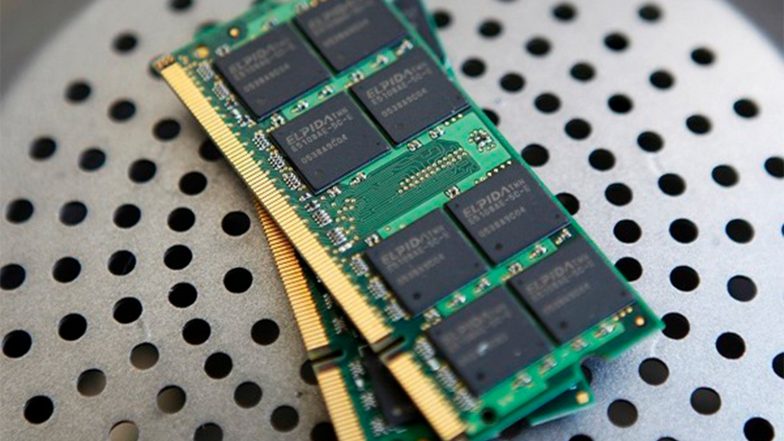
New Delhi [India], June 10 (ANI): Memory storage is set to remain a structural bottleneck through 2027 as AI demand continues to absorb Dynamic Random-Access Memory (DRAM), High Bandwidth Memory (HBM) and enterprise Solid-State Drive (SSD) supply. Morgan Stanley expects allocation-based supply chains, not spot pricing, to dominate, leaving non-AI buyers with tighter pools, higher costs and weaker access. Even with total DRAM wafer capacity expanding 30% by 2027, supply available for smartphones, PCs, autos and industrial markets is projected to fall 12-15% short as suppliers prioritize high-margin HBM and server memory.
Policy responses like US or China subsidies, tax credits or permitting reform could ease pressure eventually, but supply responses take years to build, qualify and ramp. With US policy assumed to stay restrictive, near-term relief looks unlikely. The result is a durable supply-demand reset rather than a typical semiconductor upcycle.
Also Read | Harry Kane ‘Always Ready’ for England Cricket and RCB Amidst Ben Stokes Nightclub Controversy.
The crisis began as an AI infrastructure constraint but is now spreading across the digital economy. AI demand has pushed memory prices up six-fold in the past year. Hyperscalers and AI buyers are locking in capacity through long-term agreements, prepayments and strategic commitments. That replaces commodity-market pricing and leaves a smaller, more volatile supply pool for traditional OEMs.
Morgan Stanley defines "Chipflation" as the shift from historical deflation in microelectronics toward sustained price increases, with memory inflation no longer just a component-price issue. HBM is essential for AI accelerators but consumes disproportionate advanced DRAM capacity. As suppliers crowd HBM, server DRAM and enterprise SSDs, less remains for smartphones, PCs, autos, networking and industrial markets.
The divide is sharpening between memory suppliers and downstream hardware companies. Memory chip producers benefit from stronger pricing, margins and visibility. OEMs and cloud buyers outside AI must absorb higher COGS, pass costs through, cut specs, delay launches, or face demand destruction in price-sensitive consumer markets. Large cloud buyers can secure supply and capitalize costs, while non-AI buyers face allocation stress.
Macro impact extends beyond CPI. Headline consumer inflation effects may be modest due to small basket weights, but pressure is visible in PPI, corporate margins, cloud bills, capex budgets and delayed technology deployment. Insufficient chip supply can slow data center projects, cloud development and productivity growth. Chipflation is now demand-driven by AI infrastructure rollout, making this cycle broader than a normal semiconductor upturn. (ANI)
(The above story is verified and authored by ANI staff, ANI is South Asia's leading multimedia news agency with over 100 bureaus in India, South Asia and across the globe. ANI brings the latest news on Politics and Current Affairs in India & around the World, Sports, Health, Fitness, Entertainment, & News. The views appearing in the above post do not reflect the opinions of LatestLY)