












 Quickly
 Socially
 Trending
 Crypto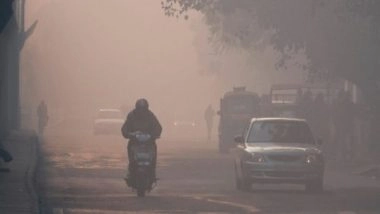
New Delhi [India], August 1 (ANI): Aided by favourable meteorological conditions and coordinated efforts by multiple stakeholders, Delhi recorded its best average Air Quality Index (AQI) for the month of July since 2018.
The average AQI for July 2025 stood at 78, falling under the 'Satisfactory' category, and was even cleaner than July 2020, the year marked by COVID-19 lockdown restrictions.
According to official data, the average AQI for July in previous years stood at 104 (2018), 134 (2019), 84 (2020), 110 (2021), 87 (2022), 84 (2023), and 96 (2024).
July 2025 also recorded the highest number of 'Satisfactory' air quality days, 29 in total, as compared to 16 days in 2018, 12 in 2019, 25 in 2020, 20 in 2021, 25 in 2022, 26 in 2023, and 17 in 2024.
The January-July average AQI for 2025 also showed marked improvement, with the period recording an average AQI of 184. In comparison, the figures for previous years were: 204 (2024), 183 (2023), 209 (2022), 205 (2021), 159 (2020), 215 (2019), and 217 (2018).
Notably, no day in the January-July 2025 period witnessed an average AQI in the 'Severe' or 'Severe+' category (AQI >400). In contrast, there were such high-pollution days in earlier years: 6 (2018), 7 (2019), 2 (2020), 6 (2021), 1 (2022), 3 (2023), and 3 (2024).
This period also recorded the highest number of 'Satisfactory' days, totalling 42, on par with 2023 (excluding 2020 due to the nationwide lockdown).
Further, the PM2.5 concentration (January-July 29) in Delhi stood at a running average of 79 ug/m³, the lowest for this period since 2018 (excluding 2020). The comparative PM2.5 values for previous years were: 94 (2024), 83 (2023), 93 (2022), 97 (2021), 73 (2020), 99 (2019), and 103 (2018).
Similarly, PM10 concentration during this period was also the lowest (barring 2020), at a running average of 180 ug/m³, compared to 209 (2024), 184 (2023), 218 (2022), 210 (2021), 147 (2020), 224 (2019), and 234 (2018).
The Commission for Air Quality Management (CAQM) continues to coordinate with various agencies to implement effective measures for the prevention, control, and abatement of air pollution in Delhi-NCR. Officials have stated that intensified efforts will be undertaken in the coming months to further improve the air quality.
Earlier, on June 29, Delhi Environment Minister Manjinder Singh Sirsa announced plans to install outdoor air purifiers at Nehru Park under a pilot project aimed at establishing the city's first clean air zone.
The initiative targets pollution control in public areas with high footfall, such as parks. "AQI is a big challenge in Delhi. We are working to lower the AQI... We are conducting a study in Nehru Park. As many people come to this area for morning walks and exercise, we are trying to determine if we can lower the AQI in a particular location," said Sirsa. (ANI)
(The above story is verified and authored by ANI staff, ANI is South Asia's leading multimedia news agency with over 100 bureaus in India, South Asia and across the globe. ANI brings the latest news on Politics and Current Affairs in India & around the World, Sports, Health, Fitness, Entertainment, & News. The views appearing in the above post do not reflect the opinions of LatestLY)
 Share Now
 Google Trends



 Live Bot