
World News | Baloch Yakjehti Committee Condemns Pakistan's Anti-terrorism Laws Targeting Peaceful Activists
Get latest articles and stories on World at LatestLY. BYC criticised the decision to place Shahgi Sibghatullah, a BYC member, on the Fourth Schedule of the Anti-Terrorism Act-1997.

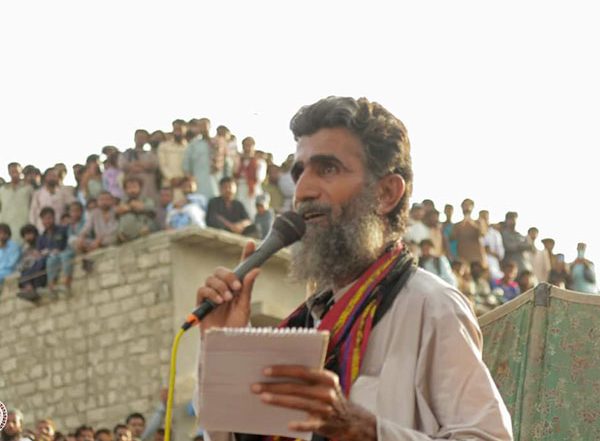
Quetta [Pakistan], October 1 (ANI): The Baloch Yakjehti Committee (BYC) condemned the Pakistani government's use of anti-terrorism laws against peaceful political activists, labelling it discriminatory and indicative of an authoritarian mindset.
BYC criticised the decision to place Shahgi Sibghatullah, a BYC member, on the Fourth Schedule of the Anti-Terrorism Act-1997.
In a post on X, the Baloch Yakjehti Committee stated, "Leveraging the State's Anti-Terrorism laws on part of the government against peaceful political workers is both discriminatory and unacceptable. Placing Shahgi Sibghatullah, a central member of BYC in the Fourth Schedule of the Anti-Terrorism Act-1997, reflects the authoritarian and colonial mindset of the State towards the Baloch and Balochistan."
https://x.com/BalochYakjehtiC/status/1840774845761745326
Also Read | Israel-Lebanon Conflict: Hezbollah Denies Israeli Troops Have Entered Lebanon; Says Ready to Fight Them.
The BYC further stated, "The struggle of Shahgi through the platform of BYC is primarily focused to resist such policy and practices of the State that are resulting in genocide of the Baloch. Every citizen has the right to freedom of expression, movement and peaceful assembly under the country's constitution and International Human Rights Law. Equating peaceful political struggle with terrorism is contrary to global democratic norms and putting human lives on threat."
Asserting that such tactics are part of a broader state strategy to suppress Baloch voices and their grievances, BYC stated, "Moreover, such tactics aimed at curtailing fundamental rights of political workers in Balochistan is a recurring State strategy to curb peaceful voices empowered by Baloch masses and highlighting their genuine grievances."
Calling on the global community and human rights organizations to address these violations, BYC likened the state's actions to apartheid and urged Baloch society to resist oppressive laws.
They stated, "The discriminatory use of law by the state against political workers without concrete evidence is not only a violation of International Convention on Civil and Political Rights (ICCPR) but also equates to apartheid. We urge the global community and Human Rights Organisations to raise concern against such practices. All segments of the Baloch society must resist such colonial laws."
The Fourth Schedule of the Anti-Terrorism Act, 1997, in Pakistan is a legal provision that allows the government to list individuals associated with terrorism-related activities. Those placed on this list can face significant restrictions, including limitations on their freedom of movement, surveillance, and potential arrest.
The designation typically involves individuals suspected of being involved in terrorist activities or organisations, but it has often been criticised for its broad and sometimes arbitrary application, leading to concerns about misuse against political activists and dissenters. (ANI)
(The above story is verified and authored by ANI staff, ANI is South Asia's leading multimedia news agency with over 100 bureaus in India, South Asia and across the globe. ANI brings the latest news on Politics and Current Affairs in India & around the World, Sports, Health, Fitness, Entertainment, & News. The views appearing in the above post do not reflect the opinions of LatestLY)