Mumbai Comedian Shridhar V Nearly Falls for E-Challan SMS Scam, Exposes Fake Website Mimicking Government Portal (View Post)
Shridhar V, a Mumbai-based stand-up comedian, recently took to social media to alert his followers about a new e-challan fraud that is tricking citizens into believing it is genuine. The comedian shared a couple of screenshots and revealed his own experience, stating that it all began with an SMS.

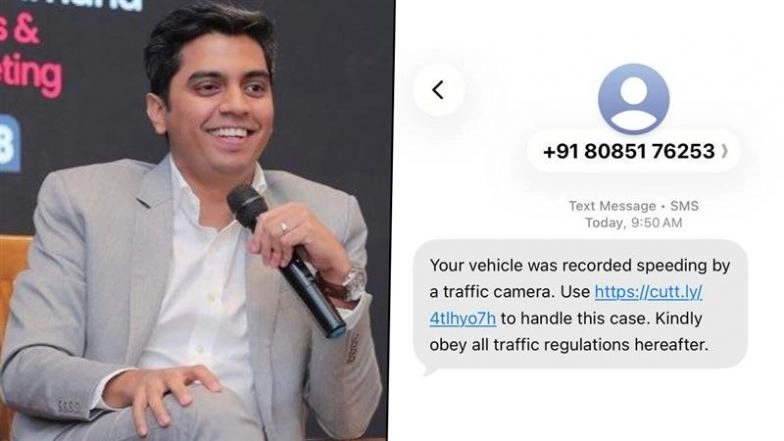
Stand-up comedian Shridhar V has issued a public warning regarding a new fraudulent scheme targeting vehicle owners through deceptive SMS notifications. The scam involves e-challan alerts that direct users to a sophisticated phishing website designed to mimic the official government traffic portal. Delhi Traffic Challan News: National Lok Adalat Scheduled for January 10, Step-by-Step Guide to Settling Your Dues.
Comedian Shridhar v Exposes ‘Sophisticated E-Challan Scam’
In a recent post on X (formerly Twitter), Shridhar shared a screenshot of a text message he received, which claimed he had a pending traffic fine. He noted that the message included a link to a website that appeared strikingly official. By publicising the incident, Shridhar aimed to prevent his followers from falling for the trap, emphasising how easily one could be misled by the professional-looking layout of the fake site.
Check Out Shridhar V’s Post Here:
Who says Indians are not innovative? Look at the sophistication of this scam 😱 I almost entered my card details before googling the domain. Insane amount of fraud must be happening with so many people. By the time police starts acting on it, they’d make millions! Terrible 😠 pic.twitter.com/KZyg6R4RnI
— Shridhar V (@iimcomic) January 17, 2026
The Mechanics of the Scam
The fraudulent activity begins with a text message informing the recipient of a pending traffic violation. The SMS typically includes a link that appears legitimate at first glance. However, Shridhar pointed out that the link leads to a fake domain which closely resembles the official Ministry of Road Transport and Highways (MoRTH) website.
By using a URL that incorporates official-sounding keywords like "echallan" and "parivahan," scammers hope to catch users off guard. Once on the site, victims are prompted to enter vehicle details and make payments for non-existent fines, allowing fraudsters to harvest sensitive banking information or steal funds directly.
Identifying the Fake Portal
Distinguishing between the real and fake websites is simple if you know where to look. The primary identifier is the URL (web address). Digital security experts note that all authentic Indian government services are hosted on the .gov.in or .nic.in domains. If a "government" link ends in just ".in" or ".com," it is a major red flag.
Growing Trend of SMS Phishing
This incident is part of a broader rise in smishing, SMS phishing attacks across India. Scammers frequently exploit high-stress scenarios such as electricity bill arrears, bank account blocks, or traffic violations to provoke a quick, unthinking response from the recipient. What Is Smishing Scam? Know How You Can Protect Yourself and Take Safety Measures To Avoid SMS Phishing.
In the case of e-challans, the automation of traffic enforcement in major cities has made vehicle owners more accustomed to receiving digital notifications, making them more susceptible to this specific type of fraud.
(The above story first appeared on LatestLY on Jan 19, 2026 06:58 PM IST. For more news and updates on politics, world, sports, entertainment and lifestyle, log on to our website latestly.com).