What Is Hydrogen Train? Key Features of India’s First Hydrogen-Powered Trainset Built by Indian Railways
One of the most significant aspects of the hydrogen train is its environmental impact. The hydrogen train produces zero carbon dioxide emissions during operation. Its only by-product is water vapour, making it a cleaner alternative to diesel-powered trains, which are still widely used on non-electrified routes across the country.

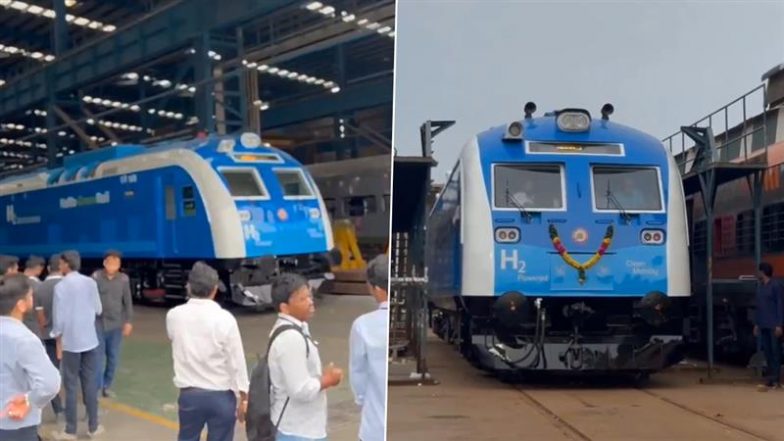
New Delhi, December 15: The hydrogen train project is being implemented on a pilot basis, meaning it is designed primarily to test performance, safety, and operational viability rather than immediate large-scale deployment. According to a written reply by Railways Minister Ashwini Vaishnaw, both the trainset and its supporting infrastructure have been developed from the ground up, making this the first instance of hydrogen traction technology being designed and built within Indian Railways.
The train has been manufactured domestically, aligning with the government’s "Atmanirbhar Bharat" (self-reliant India) initiative. The project reflects Indian Railways' effort to explore cleaner propulsion systems as part of its long-term sustainability goals. Railway Accidents at Record Low; Safety Budget, Technology Upgrades Boost Passenger Security.
Hydrogen Production Plant Planned at Jind
To support the operation of the hydrogen-powered train, Indian Railways has conceived a dedicated hydrogen generation plant at Jind in Haryana. The plant will produce hydrogen using the electrolysis process, a method in which water is split into hydrogen and oxygen using electricity.
Electrolysis is considered a key component of green hydrogen generation, particularly when powered by renewable energy sources. While the Railways Ministry did not specify the energy source for the electrolysis process, officials noted that the plant has been planned to ensure a steady and controlled supply of hydrogen fuel for the pilot train’s operations.
India’s First Hydrogen Train
First ever video of India’s HYDROGEN TRAIN 🇮🇳🇮🇳
➡️10 coach
➡️140kmph
➡️1609HP
➡️600-700 pax capacity https://t.co/LD6nSI9hCu pic.twitter.com/h5Is8FzSF3
— 🇮🇳India Infra & Economy 🇮🇳 (@INDinfraeconomy) August 11, 2025
Key Features of Hydrogen Train
According to details shared in Parliament, the hydrogen trainset stands out both in scale and capacity. It is currently described as the world’s longest hydrogen-powered train on a broad gauge platform, consisting of 10 coaches. It is also among the most powerful hydrogen trains globally, with a total installed power of 2,400 kilowatts.
The trainset includes two Driving Power Cars (DPCs), each rated at 1,200 kilowatts, along with eight passenger coaches. This configuration is intended to support longer routes and higher passenger capacity compared to earlier hydrogen train models developed elsewhere.
One of the most significant aspects of the train is its environmental impact. The hydrogen train produces zero carbon dioxide emissions during operation. Its only by-product is water vapour, making it a cleaner alternative to diesel-powered trains, which are still widely used on non-electrified routes across the country. Railways Minister Ashwini Vaishnaw Directs Officials To Serve Local Cuisine in Vande Bharat Trains.
Part of Broader Clean Energy Push
Indian Railways has been gradually expanding the use of cleaner energy solutions, including large-scale electrification and increased adoption of renewable energy. The hydrogen train project is seen as an extension of this strategy, particularly for routes where full electrification may not be immediately feasible.
Officials noted that hydrogen traction could offer a viable option for reducing emissions on such routes in the future, depending on the outcomes of the pilot project. The development also places Indian Railways among a small group of rail networks worldwide experimenting with hydrogen-powered passenger trains.
Hydrogen Train Cost
The Railways Ministry clarified that, at this stage, it would not be appropriate to directly compare the costs of hydrogen-powered trains with conventional traction systems such as diesel or electric trains. Since the hydrogen trainset and its associated infrastructure have been developed as prototypes, the costs reflect first-time design, development, and manufacturing rather than mass production efficiencies.
(The above story first appeared on LatestLY on Dec 15, 2025 02:00 PM IST. For more news and updates on politics, world, sports, entertainment and lifestyle, log on to our website latestly.com).