Chinese Manjha Menace Continues in India Ahead of Makar Sankranti 2026, List of Recent Accidents
Makar Sankranti 2026 faces a Chinese manjha crisis, with banned glass-coated strings causing deaths in Indore and severe injuries in Hyderabad and Surat. Despite crackdowns and over 200 arrests, illegal sales persist. Authorities urge using cotton thread and installing bike U-guards to protect lives and birds from this lethal thread.

- Read in
- हिंदी
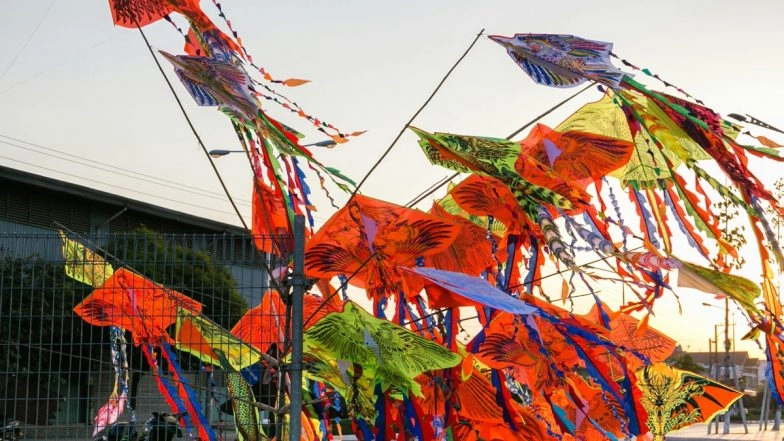
Mumbai, January 12: As India prepares to celebrate Makar Sankranti 2026 on January 14, the festive spirit is once again overshadowed by the persistent danger of Chinese manjha or Chinese manja (kite string), which has led to recent fatalities and severe injuries. Despite a nationwide ban, the razor-sharp, glass-coated synthetic thread continues to be illegally sold and used, posing a significant threat to human lives, particularly two-wheeler riders, and to the bird population. Authorities across various states have intensified their efforts to curb the Chinese manjha menace, but incidents continue to be reported just days before the major kite-flying festival. Chinese Manjha Death: Indore Police Crack Down on Banned Kite Strings After 1 Dead, 2 Injured Ahead of Makar Sankranti 2026.
Chinese Manjha Menace
In a tragic incident reported on Sunday, January 11, 2026, in Indore, Madhya Pradesh, 35-year-old Raghuveer Dhakad, a tile contractor, succumbed to a deep throat injury after his neck was slit by a stray Chinese manjha while he was riding his motorcycle.
This marks at least the second fatality in Indore in recent days, following the death of a 16-year-old boy on the Indore-Dewas bypass a few days prior due to a similar incident. The same day, two other motorcyclists in Indore, 18-year-old NEET aspirant Narendra Jamod and Ashish Raghuvanshi, also sustained severe neck injuries from manjha and are currently undergoing treatment.
In Chhindwara district, a nine-year-old boy, Atharva Karade, required 43 stitches for severe ear injuries caused by the dangerous string.
Other Incidents Linked To Chinese Manjha
- Hyderabad, Telangana (January 11): K. Suryateja, a 33-year-old project manager, suffered a severe 15-inch muscle tear on his arm after hitting a strand on the Kothaguda flyover.
- Jagtial, Telangana (January 8): A four-year-old boy named Srihas required 20 stitches around his neck after a stray Chinese manjha entangled him while he was playing.
- Surat, Gujarat (January 6): A Sarus Crane, the world's tallest flying bird, died after a deep wing cut led to fatal blood loss.
These incidents underscore the lethal nature of the banned kite string, which has historically claimed numerous lives and caused debilitating injuries during festive seasons.
The Peril of Chinese Manjha
The term "Chinese manjha" generally refers to synthetic, non-biodegradable kite strings often coated with powdered glass or metallic particles. Unlike traditional cotton threads, these strings are exceptionally strong and do not break easily, making them highly effective for cutting rival kites during competitions.
However, this very characteristic makes them extremely hazardous. When entangled or left hanging, they can act like razor blades, causing deep lacerations to the necks, faces, and fingers of unsuspecting pedestrians and motorcyclists. Beyond human casualties, these strings also inflict devastating injuries on thousands of birds, often leading to their death.
The Telangana government officially banned Chinese manjha in 2016, with similar prohibitions in place across other states, recognizing the severe environmental and safety risks it entails.
Enforcement Challenges and Public Appeals
Despite the widespread ban, the illegal sale and use of Chinese manjha persist, often through clandestine markets and online platforms. In response, law enforcement agencies are stepping up their efforts. Hyderabad Police, for instance, conducted a four-day special enforcement drive from January 8 to 11, seizing 2,150 bobbins of banned manjha worth approximately INR 43 lakh and arresting 57 individuals. Over the past month, Hyderabad police have registered 132 cases, confiscated 8,376 bobbins valued at INR 1.68 crore, and arrested nearly 200 people.
In Surat, police have launched a proactive safety drive, distributing protective neck collars and "U-guards" for two-wheelers and banning bikes from flyovers on January 14 and 15 to minimize risks. Amritsar police are deploying drones to monitor and curb illegal manjha use ahead of Lohri. Public awareness campaigns, like those by Tata Power in Mumbai and PETA India in Ahmedabad, are also underway to educate citizens about the dangers and promote safer kite-flying practices using traditional cotton strings.
As Makar Sankranti 2026 approaches, the recurring incidents involving Chinese manjha serve as a stark reminder of the urgent need for stricter enforcement and greater public responsibility. While authorities are intensifying crackdowns and promoting safety measures, the onus also lies on individuals to refrain from using these deadly strings and to report illegal sales. Ensuring a safe and joyful festival for all requires a collective commitment to prioritize lives over the thrill of competitive kite flying.
(The above story first appeared on LatestLY on Jan 12, 2026 07:21 PM IST. For more news and updates on politics, world, sports, entertainment and lifestyle, log on to our website latestly.com).