Woman Forgives Husband and In-Laws Who Attempted To Burn Her Alive; Delhi High Court Reduces Sentence
The Delhi High Court reduced the prison sentences of a man and his family for a 2000 dowry-related burning incident after the victim, who was pregnant at the time, reconciled with them. While upholding the conviction, the court modified the penalty to time served, citing her forgiveness as a primary factor for leniency.

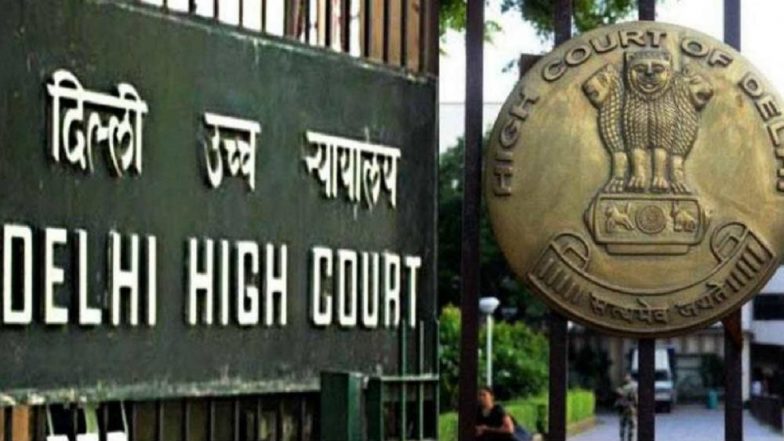
The Delhi High Court has reduced the prison sentence of a man and two family members convicted of setting his pregnant wife on fire over dowry demands more than 25 years ago. While upholding the conviction, the court modified the sentence to the time already served after the victim informed the bench that she had reconciled with her husband and forgiven her in-laws.
Reconciliation Leads to Leniency
Justice Vimal Kumar Yadav passed the order on May 4, addressing the appeals of the husband, Raju, his mother, Bardi Devi, and his brother, Shambhu. The trio had been challenging a 2004 trial court verdict that sentenced them to seven years of rigorous imprisonment for attempted murder and marital cruelty. Delhi High Court Blast Case: NIA Court Records Statement of FBI Digital Analyst Online.
Despite the gravity of the 2000 incident, the woman, Savita, appeared before the court to plead for leniency. She stated that the family had moved past the conflict, and she is currently living with her husband. Consequently, the court upheld the conviction but limited the punishment to the period they had already spent in custody.
Details of the 2000 Incident in Rajapuri,
The case dates back to November 2000 at Savita's matrimonial home in Rajapuri, Delhi. According to the prosecution, Savita was subjected to persistent harassment over dowry. The situation escalated when Bardi Devi and Shambhu allegedly restrained her while Raju set her on fire. At the time of the attack, Savita was pregnant. The court records indicate that she was not taken to a hospital immediately; instead, she was sent to her parental home, where she received Ayurvedic and local treatment for her burns. She later gave birth to a daughter and waited until April 2001 - roughly five months after the incident - to lodge a formal complaint at the Dabri police station.
The ‘Evils of the Dowry System’
While the court granted leniency based on the family's reconciliation, Justice Yadav issued a stern critique of the motivations behind the crime. He noted that the case served as a "painful reminder" of the destructive nature of material greed. "Cases like the instant case are apparently a testament of the evils of dowry system and the extent of greed of materialistic possessions has blinded the humans," the court stated in its judgment. The court also said that courts often come across cases where people who were once fighting bitterly, reconcile later and rebuild their lives together. "Indeed women have very large heart," the judge observed. Delhi High Court Grants Bail to Man Accused of Killing S*x Worker Through ‘Aggressive S*x’.
Legal Background and Trial
The accused were originally charged under Sections 307 (attempt to murder), 498A (cruelty), and 342 (wrongful confinement) of the Indian Penal Code. In January 2004, the trial court found them guilty on all counts. The High Court noted that while the allegations were severe and the injuries substantial, the survivor’s decision to continue her life with the accused was a primary factor in the decision to modify the sentence. The order ensures that while the legal conviction remains on their records, no further jail time will be served.
(The above story first appeared on LatestLY on May 11, 2026 05:03 PM IST. For more news and updates on politics, world, sports, entertainment and lifestyle, log on to our website latestly.com).