Muskan Karia Deepfake Video Controversy: The Dark Reality of AI 'Leaked Viral MMS' Scams
The Muskan Karia viral MMS controversy highlights the rise of AI-generated deepfakes used for cyber scams. From Payal Gaming to Alina Amir, bad actors weaponize synthetic leaks to drive phishing and malware traps. Learn how these deepfake scams work and how to protect your digital accounts.

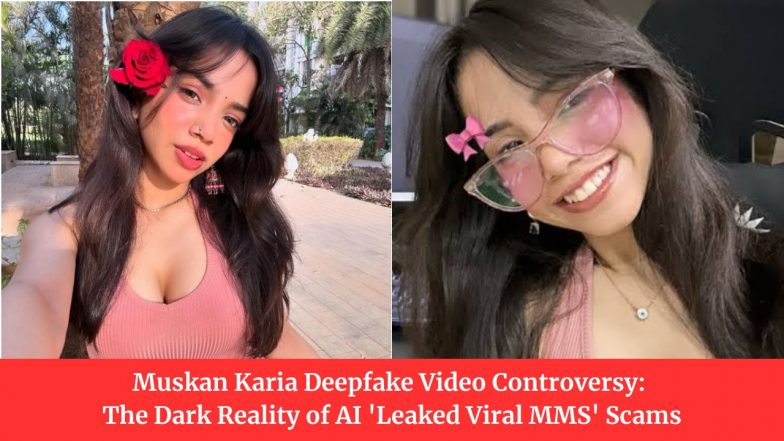
The online community was recently shaken when popular digital influencer Muskan Karia became the target of a viral "leaked MMS" controversy that flooded social media feeds and Telegram channels. Addressing the situation head-on, Muskan Karia ('I bet you didn't know this' fame) publicly called out the circulating explicit video as a completely fabricated AI deepfake, slamming the bad actors who synthesised the media to harass her and tarnish her reputation. Her brave stand highlighted an alarming trend: what appears to be a sudden celebrity "scandal" is almost always a coordinated cyberattack. Malicious networks are increasingly using generative AI face-swapping tools to manufacture explicit clips of popular female creators, using their fame as a "honeytrap" to pull curious users into dangerous digital scams. Also Read: Is the Muskan Karia Viral Video Real? Influencer Calls ‘Leaked MMS’ a Deepfake.
The Rising Wave: Recent Cases of Synthetic 'Viral Leak Video' Scams
The weaponisation of synthetic media and deepfakes is affecting popular figures across global and regional platforms:
Muskan Karia: The digital influencer called out a viral "MMS" circulating in her name, confirming it was a synthetic deepfake engineered to damage her reputation. Also Read: Muskan Karia Leaked Viral Video Links: Clicking Unverified URLs May Lead to Cybercrime.
View this post on Instagram
Payal Gaming (Payal Dhare): India’s top female gaming YouTuber filed a formal police FIR after an AI-generated explicit video featuring her face-swap went viral. Also Read: The Payal Gaming Comeback: From the 19-Minute MMS Video Hoax to Collaborating with MrBeast.
View this post on Instagram
Alina Amir: The popular Pakistani TikTok creator issued a public statement slamming non-consensual AI clips created to harass her and extort her family.
Priti Paswan: The Bhojpuri performer clarified that a viral "1-minute 48-second" explicit video featured a lookalike and was used purely to drive traffic to shady portals. Also Read: Priti Paswan Viral Video Row: List of 5 Influencers Targeted in Recent ‘MMS Leak’ Controversy.
Fatima Jatoi & Sweet Zannat: Both creators faced AI-generated facial reenactments attached to viral timestamp search trends like "19:34" or "6:39" across messaging networks.
The 'Pinay Gold Medalist' Hoax: A persistent international scam claiming an athlete has a leaked video, used as a "honey pot" to deploy banking trojans and gambling redirects.
How the Leaked Video Scam Works: From Clickbait to Account Takeover
Scammers do not create these deepfakes solely for views; they use them as top-of-funnel lures for multi-stage cybercrimes:
- Step 1: The AI Synthesis & Hook: A bad actor uses face-swapping tools to place an influencer's face onto unrelated explicit footage.
- Step 2: The Specific Timestamp Code: Captions use exact runtimes (e.g., "19 Minute 34 Second Full Uncut Clip") or urgency prompts ("Watch before deleted" / "Link in Bio") to bypass filters and trick search engine algorithms.
- Step 3: The Phishing / Malware Payload: Clicking the "full video" link redirects users to:
Fake Social Media Logins: Cloned Instagram or Facebook pages asking users to "Verify Age" or "Log in to watch," which immediately steals account credentials.
Drive-By Downloads: Sites that install mobile banking trojans, keyloggers, or spyware disguised as "HD Codec Updates".
Telegram Bot Chains: Prompts forcing users to forward links to multiple groups, turning victims into unwitting spammers.
How to Avoid Getting Scammed by Deepfake 'Leak Video' Links
Protecting yourself and maintaining digital hygiene requires recognising the red flags behind viral headlines:
1. Spot the Signs of a Phishing Link
Suspicious URLs: Never click shortened links (bit.ly, tinyurl) or strange domain extensions (.xyz, .top) shared in social media comments or Telegram channels.
Demands for Logins: Legitimate video players never ask you to log into Facebook, Instagram, or Google to watch a clip. If a prompt appears, close the tab immediately.
'Human Verification' Traps: If a site asks you to enter your phone number, fill out a survey, or download an APK file to "prove you are human," it is a scam.
2. Verify Before Believing
Check Reputable Media Outlets: If a high-profile video were genuine breaking news, mainstream media and verified fact-checkers like LatestLY would cover the facts without asking for logins or downloads.
Look for Digital Forensics: Deepfakes often feature unnatural blurring around the neck/jawline, inconsistent lighting on the face, unnatural blinking patterns, or distorted audio.
3. Practice Responsible Digital Citizenship
Do Not Share or Retweet: Forwarding unverified "leak" links contributes to the spread of non-consensual media and exposes your contacts to phishing risks.
Report Scam Accounts: Use built-in reporting tools on X, Instagram, and Telegram to flag accounts promoting "full video in bio" links as spam and phishing.
Enable Two-Factor Authentication (2FA): Protect your own accounts with app-based 2FA so that even if you accidentally enter credentials on a phishing page, hackers cannot gain access.
In many jurisdictions, downloading, searching for, or sharing non-consensual explicit media, whether real or AI-generated, is a punishable cybercrime under regional IT and privacy laws. Also Read: 19 Minute 34 Second Viral Video: Jail Term & Legal Risks on Download.
Beyond the severe security risks of malware and identity theft, engaging with these viral link-traps carries real legal consequences. When faced with a sensationalised "leaked video" headline like the Muskan Karia deepfake, the safest option is always to scroll past, avoid clicking external links, and report the scam.
DISCLAIMER: This article is strictly for informational and educational purposes to raise awareness about the said topic.
LatestLY DO NOT host, distribute, or provide links to sexually explicit content, leaked videos, or pirated material. Any search terms or keywords mentioned are solely for the purpose of explaining the viral trend and its associated dangers. We strongly condemn the circulation of non-consensual intimate imagery (NCII) and advise all readers to refrain from searching for or sharing such content, as doing so may lead to severe legal consequences.
(The above story first appeared on LatestLY on Aug 13, 2026 12:02 PM IST. For more news and updates on politics, world, sports, entertainment and lifestyle, log on to our website latestly.com).