Iran Threatens Tolls on Internet Cables in Strait of Hormuz
Amid rising West Asia tensions, Iran has floated a new strategy involving the Strait of Hormuz by proposing licensing fees and a permit system for undersea internet cables passing through the waterway. The move could impact major US tech firms such as Google, Meta, Amazon and Microsoft.

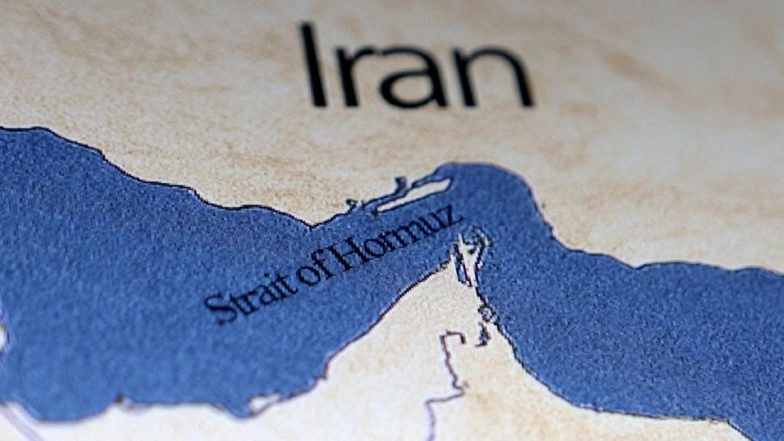
Amid ongoing geopolitical tensions in West Asia, Iran has signaled a new strategy to leverage its position over the Strait of Hormuz. Moving beyond traditional threats to oil shipping lanes, Iranian officials and state-linked media have proposed imposing licensing fees and a regulatory "permit system" on global tech giants utilizing the undersea fiber-optic internet cables running through the strategic waterway.
The proposal, which targets major American technology companies including Google, Meta, Amazon, and Microsoft, has raised concerns over the vulnerability of critical global digital infrastructure. While analysts question the legal and technical feasibility of enforcing such a toll, the rhetoric introduces a fresh layer of risk to an already volatile maritime chokepoint. US-Iran Peace Agreement: Negotiators Agree on Broad Principles of Deal, Including Uranium Disposal.
The Proposed 'Digital Toll Booth'
The diplomatic shift became public following a brief statement on social media platform X by Ebrahim Zolfaghari, a spokesperson for Iran’s military, who wrote, “We will impose fees on internet cables.”
Subsequent reports by Iranian state-linked media outlets, including the Tasnim and Fars news agencies, outlined a multi-part framework for the plan. Under the proposed system, foreign cable operators would be required to pay licensing and annual renewal fees to access what Tehran considers its offshore territory. Furthermore, the proposals suggest that global technology firms must operate under Iranian law and that all underwater repair and maintenance work within the zone be restricted exclusively to Iranian companies.
Iranian state media justified the move by citing Article 34 of the 1982 United Nations Convention on the Law of the Sea (UNCLOS), arguing that Iran retains sovereign rights over the seabed of the strait even if the surface waters are used for international navigation. However, international legal experts point out that Iran has signed but never ratified the treaty, making its legal claims highly contested.
Global Connectivity and Vulnerable Routes
The Strait of Hormuz is primarily known as a chokepoint for global oil transit, but it also functions as a critical digital corridor. At least seven major submarine cable systems, including FALCON, Gulf Bridge International (GBI), and branches of the Asia-Africa-Europe 1 (AAE-1) network, snake through or adjacent to the narrow 25-mile stretch between Iran and Oman. Iran Deal Not ‘Fully Negotiated Yet’: Donald Trump Says No Financial Concessions Will Be Given to Tehran Under Proposed Agreement.
These fiber-optic lines act as the invisible backbone of the modern economy, carrying over 95% of intercontinental data traffic. They handle everything from high-frequency financial transactions and cloud computing architecture to everyday consumer communications across India, the Middle East, Europe, and East Africa.
While the majority of international cable operators intentionally route their systems through Omani-controlled waters to minimize geopolitical risk, systems like FALCON and GBI still cross into Iranian territorial waters. Telecom experts note that while global internet traffic can technically be rerouted in the event of an outage, regional hubs—particularly in the Gulf states and India—remain highly dependent on these specific lines for low-latency connectivity and AI infrastructure development.
Implementation and Enforcement Challenges
Industry analysts and former diplomatic officials remain highly skeptical that Iran can successfully institutionalize a digital toll system. A primary obstacle is the framework of strict U.S. and international sanctions, which legally prohibit American technology firms from conducting financial transactions with Tehran.
Furthermore, separating and identifying the specific data traffic of individual tech firms from the physical cables on the seabed is technologically impossible from an external standpoint. Experts note that Egypt successfully charges transit fees for subsea cables, but those cables cross physically overland across Egyptian territory alongside highways and pipelines, providing a clear mechanism for domestic regulation.
"The only way they could extract tolls for submarine cables is through coercion and threats," said Doug Madory, an expert in internet infrastructure at Kentik.
The U.S.-Iran Diplomatic Angle and Peace Talks
The escalating rhetoric surrounding a "digital toll booth" comes at a highly sensitive moment, overlapping with intense back-channel diplomatic negotiations between Washington and Tehran. Utilizing regional mediators, the U.S. and Iran have been attempting to outline a comprehensive framework aimed at lowering broader regional hostilities, managing sanctions relief, and ensuring the freedom of navigation through critical waterways.
While U.S. officials have noted that certain parameters of a broader peace arrangement have been extensively debated, the governance of the Strait of Hormuz remains a critical sticking point. Iran’s assertions of regulatory jurisdiction over the channel have been met with swift resistance from Washington.
U.S. negotiators have made it clear that any attempt by Tehran to institutionalize tolls, whether on maritime shipping or subsea data cables, is a non-starter that could derail the fragile progress of the talks. The Trump administration has emphasized that the free transit of both commerce and data through international chokepoints remains an absolute requirement. Washington has signaled that if Iran attempts to physically enforce jurisdiction over international digital infrastructure, the U.S. reserves the right to halt diplomatic dialogues and pivot back toward economic and military deterrence.
Holding Maintenance Hostage
Rather than cutting the cables-an act that analysts say could trigger a severe international military response-geopolitical experts suggest Iran's realistic leverage lies in restricting access to physical maintenance.
The subsea cable industry is already facing complications; French firm Alcatel Submarine Networks reportedly issued force majeure notices covering certain Gulf operations due to the regional instability. Because specialized cable repair ships must remain stationary for long periods to mend damaged lines, operating in contested waters without local state approval or insurance coverage becomes nearly impossible.
By demanding "protection fees" and asserting control over maintenance permits, Tehran may be attempting to create a scenario where operators must either comply with licensing demands or risk leaving future technical faults permanently unrepaired. This strategy appears designed to extract maximum diplomatic and economic leverage against Western pressure by targeting the delicate infrastructure underpinning global commerce.
(The above story first appeared on LatestLY on May 25, 2026 12:45 PM IST. For more news and updates on politics, world, sports, entertainment and lifestyle, log on to our website latestly.com).