SpaceX Breaks Launch Record With 2 Falcon 9 Rockets 38.5 Minutes Apart, Carrying Globalstar Satellites and Classified USSF-366 Mission
SpaceX achieved a new operational milestone on Saturday night after successfully launching two Falcon 9 rockets from opposite coasts of the United States just 38.5 minutes apart. The rapid doubleheader began at 9:12 p.m. EDT when a Falcon 9 lifted off from Cape Canaveral Space Force Station in Florida carrying eight satellites for telecommunications provider Globalstar.

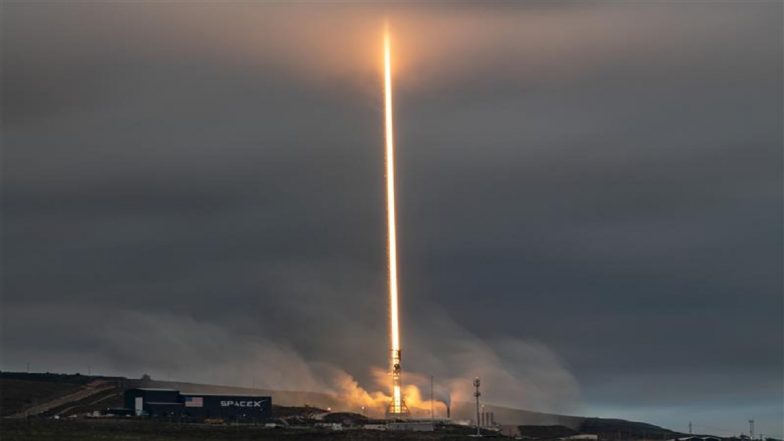
SpaceX achieved a new operational milestone on Saturday night after successfully launching two Falcon 9 rockets from opposite coasts of the United States just 38.5 minutes apart. The rapid doubleheader began at 9:12 p.m. EDT when a Falcon 9 lifted off from Cape Canaveral Space Force Station in Florida carrying eight satellites for telecommunications provider Globalstar. Just minutes later, at 9:50 p.m. EDT, a second Falcon 9 launched from Vandenberg Space Force Base in California carrying the classified USSF-366 mission for the U.S. Space Force. The dual-coast performance broke SpaceX's previous record of 65 minutes between orbital launches set in August 2024.
Commercial Satellite Deployment and Land-Based Booster Recovery
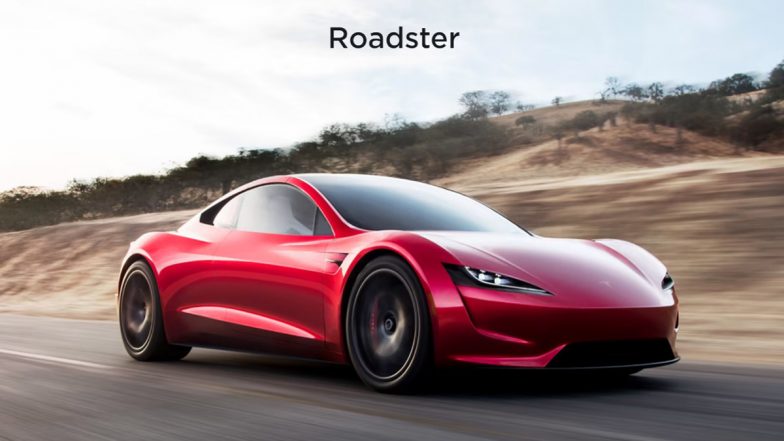
The evening’s primary commercial mission saw the deployment of eight low Earth orbit (LEO) satellites to reinforce Globalstar’s mobile and direct-to-device satellite network. SpaceX confirmed that all eight payloads successfully separated from the rocket's upper stage over a six-minute window starting approximately 56 minutes into the flight. 'You Will Get Flying Cars': Elon Musk Hints at Tesla Likely Bringing Next-Gen Roadster Demo With SpaceX Thrusters; Check All Rumours.
The mission utilized first-stage booster B1090, which was completing its 14th flight. Roughly eight minutes after liftoff, the booster safely returned to Earth and made a vertical landing at Cape Canaveral’s Landing Zone 40. Globalstar Chief Executive Paul E. Jacobs noted that the launch represents a critical step in sustaining the continuous coverage required by the company's direct-to-device network infrastructure.
Classified National Security Launch and Drone Ship Recovery
Thirty-eight minutes after the Florida liftoff, SpaceX launched the national security payload USSF-366 into orbit from California's central coast. Given the classified nature of the U.S. Space Force payload, SpaceX concluded its official webcast shortly after the first-stage separation and booster landing sequence.
The USSF-366 booster, B1088, completed its 18th mission by landing on the autonomous drone ship Of Course I Still Love You stationed in the Pacific Ocean approximately 8.5 minutes after launch. Touchdown of the sea-based platform represented a second milestone for the evening, marking SpaceX's 650th successful Falcon booster landing. SpaceX Acquires AI Coding Platform Cursor in USD 60 Billion Deal to Boost Grok and Expand SpaceXAI Team.
Deployment of all @Globalstar 2-R satellites confirmed pic.twitter.com/w05WLSOyac
— SpaceX (@SpaceX) August 16, 2026
Rapid Launch Cadence and Reusability Achievements
The back-to-back flights highlight the growing operational capacity of SpaceX’s launch infrastructure. Operating multiple launch pads across Florida and California allows the company to support simultaneous commercial, military, and internal broadband missions.
The dual launches brought SpaceX's Falcon 9 mission total for 2026 to 96, with the majority dedicated to expanding its Starlink broadband constellation. By shaving 27 minutes off its previous turnaround record, the company continues to demonstrate the efficiency gains enabled by reusable rocket hardware and parallel pad management.
(The above story first appeared on LatestLY on Aug 16, 2026 04:15 PM IST. For more news and updates on politics, world, sports, entertainment and lifestyle, log on to our website latestly.com).