Geomagnetic Storm Alert: Multiple Solar Eruptions Could Light Up Northern Lights Across US Through March 20
A powerful Geomagnetic Storm is set to hit Earth as multiple solar eruptions approach, boosting chances of Northern Lights across the US through March 20. NOAA says the Aurora may be visible farther south due to strong geomagnetic activity and favorable equinox conditions, with peak viewing overnight.

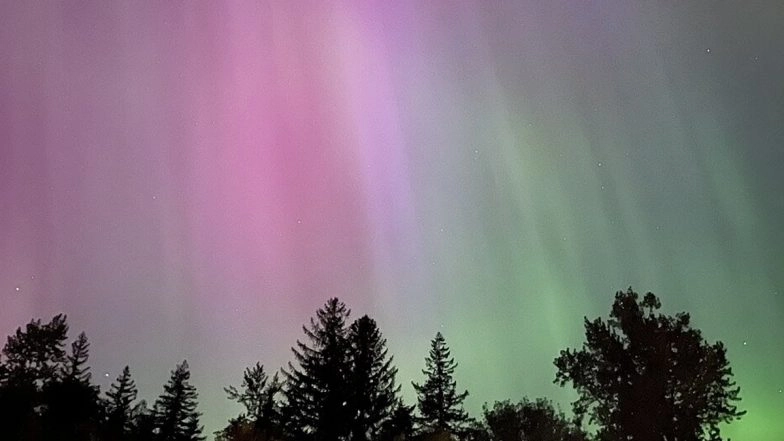
New Delhi, March 18: A powerful Geomagnetic Storm is set to impact Earth as multiple solar eruptions race toward the planet, raising the chances of widespread Northern Lights and Aurora displays across the US through March 20.
According to the National Oceanic and Atmospheric Administration, at least four coronal mass ejections released from the Sun are expected to strike Earth’s magnetic field between March 18 and 19. This rare sequence of solar activity could trigger prolonged geomagnetic disturbances, increasing the likelihood of vivid auroras over several nights. Northern Lights in US: Rare Aurora Borealis Seen Over American States, Including Minnesota and Oklahoma; Photos and Video Go Viral.
Multiple Solar Storms Could Intensify Impact
The current Geomagnetic Storm watch began after a solar flare on March 16, but updated data now confirms a series of incoming CMEs. Scientists warn that these eruptions may merge in space, forming a stronger combined impact. This “cannibal” effect can extend the duration of the storm, making Northern Lights visible for longer periods than usual.
Northern Lights Visibility Expands Across US
If the Geomagnetic Storm reaches G2 to G3 levels, the Aurora Borealis could be seen much farther south than normal. States like Illinois, Iowa, Oregon, and even parts of New York and Northern California may witness the glowing skies, especially during peak hours overnight. Severe G4 Geomagnetic Storm Triggers Global Aurora Alert As Rare Sightings Possible Tonight; Know if Northern Lights Will Be Visible in India.
The strongest activity is expected between late March 18 and early March 19, with peak viewing likely between 2:00 a.m. and 8:00 a.m. EDT.
Why This Geomagnetic Storm Is Special
This event coincides with the spring equinox period, when Earth’s magnetic field is more vulnerable to solar winds. Known as the Russell McPherron effect, this alignment allows charged particles to penetrate deeper into the atmosphere, boosting the intensity and visibility of the Aurora.
Best Tips to Watch the Aurora
To improve your chances of seeing the Northern Lights during this Geomagnetic Storm:
- Move away from city lights and find dark, open skies
- Look toward the northern horizon for green or reddish glows
- Check local weather conditions for clear skies
- Stay updated with real-time alerts from space weather agencies
Experts will continue tracking the solar activity as it approaches Earth, with satellites providing short-term warnings before the Geomagnetic Storm peaks. If conditions align, this could become one of the most impressive Aurora displays visible across the US in recent months.
(The above story first appeared on LatestLY on Mar 18, 2026 09:36 PM IST. For more news and updates on politics, world, sports, entertainment and lifestyle, log on to our website latestly.com).