Mount Kīlauea Erupts: Active Volcano Erupts for 44th Time, Lava Fountains Trigger Closures in Hawaii (Watch Videos)
Mount Kīlauea in Hawaii has erupted for the 44th time, producing large lava fountains and steady flows from its summit crater. Officials have closed parts of Hawaii Volcanoes National Park and nearby roads due to ash, tephra, and Pele’s Hair hazards. Winds may spread volcanic material north as scientists continue to monitor the eruption.

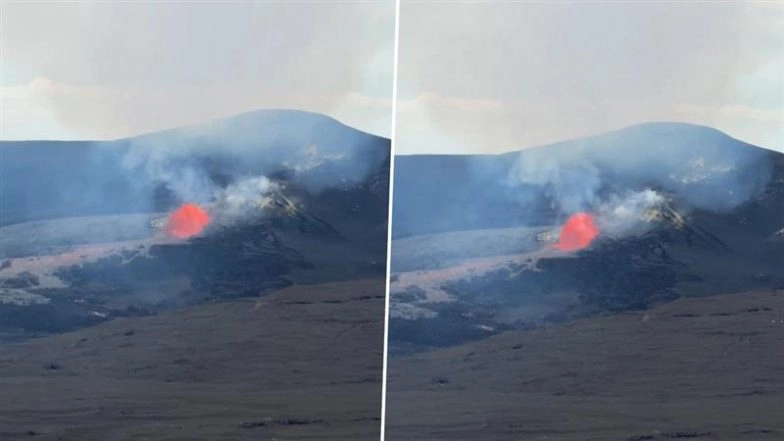
Mount Kīlauea entered its 44th eruptive episode, sending large lava fountains into the air on Thursday, April 9, 2026, in Hawaii. The eruption began late in the morning, with lava flowing steadily from vents near the summit, according to monitoring data from the United States Geological Survey (USGC).
Ground sensors indicate that winds are blowing from the south of the summit, raising concerns that volcanic gases and airborne material could drift northward. Officials say the intensity of the eruption has increased through the day, with lava fountains continuing to strengthen into the evening. Viral Video Shows Lava From Piton de la Fournaise Volcano Severs Key Coastal Road on Reunion Island.
Mount Kīlauea Erupts
Video footage released by the USGS shows significant lava fountaining inside the Halemaʻumaʻu crater, located within Kīlauea’s summit caldera. The eruption is producing sustained bursts of molten rock, contributing to the rapid accumulation of lava and increased volcanic activity in the area.
Kīlauea Volcano Spews Lava
Kīlauea Eruption Update — Episode 44 of Kīlauea summit lava fountaining began at 11:10 a.m. HST today, April 9, and is ongoing.
The National Weather Service has forecast southerly/southwesterly winds, which means that areas to the north/northeast of the active vents could… pic.twitter.com/hwZ1roeZbH
— USGS Volcanoes🌋 (@USGSVolcanoes) April 9, 2026
NEW 🚨 Hawaii’s Kilauea volcano erupts pic.twitter.com/dBSg9YWLDF
— Insider Paper (@TheInsiderPaper) April 10, 2026
Scientists note that as the eruption intensifies, the likelihood of tephra, fragments of volcanic material, being ejected into the air also rises. These materials can travel considerable distances depending on wind direction and eruption strength. Kilauea Erupts Again: Volcano Eruption Shoots Large Columns of Lava Into the Air, Video Surfaces.
Airborne Hazards Raise Safety Concerns
Authorities have warned of growing risks from volcanic ash and Pele’s Hair, fine strands of volcanic glass formed when gas bubbles burst at the surface of molten lava. These fibers can become airborne and pose hazards if they come into contact with skin or eyes. “A combination of fountaining dynamics and wind conditions determines where tephra fall may occur for any given eruption episode,” the USGS said in a statement.
Park Closures and Travel Disruptions in Hawaii
In response to the hazards, officials from National Park Service have closed access points to Hawaii Volcanoes National Park. The move is intended to protect visitors from exposure to dangerous volcanic material. Authorities have also shut down parts of Highway 11 and advised motorists to avoid the area as a precaution. Emergency measures remain in place as the eruption continues.
Lava flows are expected to continue advancing downhill as the eruption persists. Scientists are closely monitoring changes in activity, including shifts in wind direction that could alter the spread of volcanic gases and debris.
Kīlauea is one of the most active volcanoes in the world, with frequent eruptions that are typically closely tracked by geological agencies. While many eruptions are contained within designated areas, officials emphasize that conditions can change quickly, requiring ongoing vigilance.
(The above story first appeared on LatestLY on Apr 10, 2026 07:25 AM IST. For more news and updates on politics, world, sports, entertainment and lifestyle, log on to our website latestly.com).