
Business News | Depleting Iron Ore Quality, Decarbonisation Biggest Challenges for Steel Industry: Former Steel Secretary
Get latest articles and stories on Business at LatestLY. Former Steel Secretary and Director at Jindal Steel Ltd, Sanjay K Singh, on Wednesday said the Indian steel industry is facing major challenges due to rapidly depleting iron ore quality and increasing pressure to reduce carbon emissions as the sector moves towards green steel production.

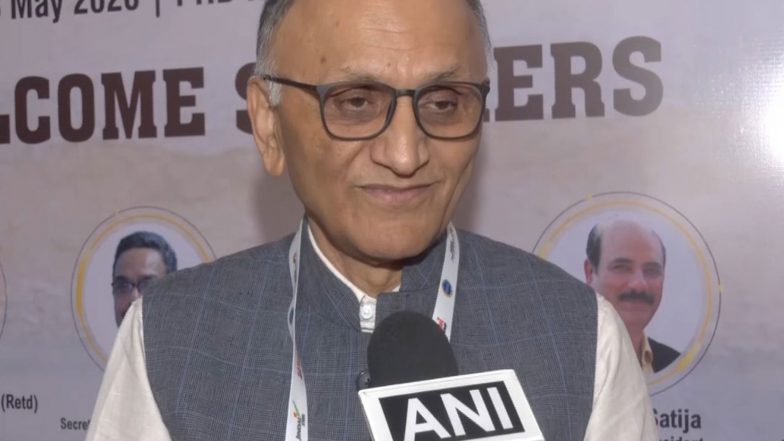
New Delhi [India], May 13 (ANI): Former Steel Secretary and Director at Jindal Steel Ltd, Sanjay K Singh, on Wednesday said the Indian steel industry is facing major challenges due to rapidly depleting iron ore quality and increasing pressure to reduce carbon emissions as the sector moves towards green steel production.
In an exclusive conversation with ANI on the sidelines of the inaugural session of a national conclave on "Raw Material Securitization for Metals & Minerals: Advancing Self-Reliance, Resilience & Resource Security," Singh said availability and quality of raw materials remain critical concerns for the metals industry.
"This is a very, very critical area for metal industry, availability of raw material. The quality of raw material year to year within the country is depleting," Singh told ANI.
He noted that the steel industry depends heavily on iron ore, coking coal and alloy metals for production, but declining iron ore quality is increasing operational and environmental challenges.
Also Read | RCB vs KKR Live Streaming Online and Free Telecast, IPL 2026.
"As the quality is depleting, it adds to the environmental cost. It requires more energy and emits more carbon dioxide," he stated.
According to Singh, decarbonisation and sustainability have now become even bigger challenges than raw material availability for the steel sector.
He said green steel production is currently happening only on a pilot basis and commercial-scale production still faces major limitations.
"Steel is one such metal which cannot be made absolutely green. Some amount of emission it would be doing," he said.
Singh explained that using renewable energy, scrap and electric arc furnaces can reduce current carbon dioxide emission levels by nearly 80 per cent. However, he pointed out that India does not have enough scrap availability to fully shift production methods.
"Only 25 per cent of the steel can be made from scrap," he stated.
Due to limited scrap availability, the industry still depends heavily on iron ore and blast furnace-based steel production.
Speaking on India's steel demand, Singh said both production and consumption are growing at around 7 to 8 per cent annually.
"This year, crude steel production was around 168 to 169 million tons," he said, adding that domestic consumption has also been rising at a similar pace.
He stated that India had briefly become a net steel importing country in recent years but has now returned to being a net exporter. "We are exporting more and importing less," he noted.
Singh also highlighted India's dependence on imported coking coal, mainly sourced from Australia and Indonesia, but said the current geopolitical situation in West Asia is not causing any major disruption to the steel sector.
"Problems are there when this kind of a situation is there, but not something which is unsurmountable," he said.
On green steel initiatives, Singh said discussions are underway regarding a dedicated green steel mission alongside existing missions on green hydrogen and renewable energy.
He also highlighted the importance of the Carbon Credit Trading System (CCTS), which aims to create a carbon market and encourage industries to reduce emissions.
"One ton of carbon dioxide removed will provide you a certificate. And there is a value to that certificate," he explained.
According to Singh, carbon credits globally need to be valued between USD 80 to USD 100 to effectively encourage emission reductions.
"It is some kind of a carrot and stick policy. Those who save carbon dioxide get a credit, and those who emit have to buy a credit," he said.
Meanwhile, Vijay Sharma, Chair of the Minerals & Metals Committee at PHD Chamber of Commerce and Industry and Director at Jindal Stainless, said industry experts at the conclave are discussing practical policy recommendations for the government.
He stressed that achieving resource security and self-reliance in the metals sector would require joint efforts from industry, academia, financial institutions and the government.
Sharma also welcomed initiatives such as the National Critical Mission and other government policies aimed at strengthening the sector. (ANI)
(The above story is verified and authored by ANI staff, ANI is South Asia's leading multimedia news agency with over 100 bureaus in India, South Asia and across the globe. ANI brings the latest news on Politics and Current Affairs in India & around the World, Sports, Health, Fitness, Entertainment, & News. The views appearing in the above post do not reflect the opinions of LatestLY)