













 Quickly
 Socially
 Trending
 Crypto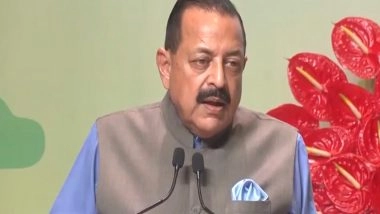
New Delhi [India], November 12 (ANI): Hydrogen has taken centre stage in India's clean energy roadmap, with the government calling it a vital part of the country's journey towards energy independence and sustainability. Speaking at the International Conference on Green Hydrogen 2025, Union Minister Jitender Singh said the National Hydrogen Mission is a key step in building a "whole-of-government plus whole-of-nation" approach to clean energy.
Singh stated that while the Ministry of New and Renewable Energy serves as the nodal body for the mission, its success depends on joint efforts across various ministries and industries. "This is one of the beautiful examples of what Prime Minister Modi often calls the whole-of-government concept," he said. "When we also have stakeholders from industry, it becomes an even better model of collective national effort."
The minister added that the mission's broader aim is not only to push clean energy adoption but also to strengthen India's scientific and industrial base. He highlighted how the Department of Science and Technology played a central role in the birth of the National Hydrogen Mission, which later merged with other renewable initiatives in a bid to work "out of silos in a more integrated fashion."
Singh explained that the focus now is on reducing oil dependence and addressing pollution through scientific innovation. "In terms of hydrogen, addressing pollution remains a critical part of our roadmap. While the concept of clean energy sounds idealistic, we must approach it scientifically and strategically," he said. He pointed out that oil-exporting nations themselves are now shifting their economies away from petroleum, reflecting a major shift in global energy dynamics.
The minister further said that India's progress in renewable and emerging technologies, such as electric vehicles, biotechnology, and nuclear energy, has set the stage for what he described as the country's "next industrial revolution." He noted that the government's decision to open the nuclear sector to private players was a bold move, reflecting a willingness to encourage innovation and investment.
Referring to the financial structure of the National Hydrogen Mission, Singh shared that the project has drawn strong support from non-government entities. "Of the total Rs 485.32 crore, Rs 315.43 crore will come from non-government sources, while the government's contribution will be around Rs 170 crore," he said. He added that this model mirrors other research-led initiatives such as the National Research Foundation, where a large share of funding also comes from private and institutional partners.
"The global 'Mission Innovation 2.0' aims to reduce the cost of green hydrogen to two dollars per kilogram, a goal India is actively working towards," he said. Singh concluded that India's collective approach, combining government resolve and private participation, is key to achieving a clean and self-reliant energy future. (ANI)
(The above story is verified and authored by ANI staff, ANI is South Asia's leading multimedia news agency with over 100 bureaus in India, South Asia and across the globe. ANI brings the latest news on Politics and Current Affairs in India & around the World, Sports, Health, Fitness, Entertainment, & News. The views appearing in the above post do not reflect the opinions of LatestLY)
 Share Now
 Google Trends



 Live Bot