Flipkart's 'OnlyFans' Ad: Too Hot For Indian Audience or Cool Advertising?
Flipkart’s new ‘OnlyFans’ ad is going viral for its provocative wordplay. Featuring a sweaty girl and a surprising family twist, the ad pivots from adult content cues to a literal sale on fans and ACs. Is it clever attention-hacking or too much for Indian audiences? Read the full analysis.

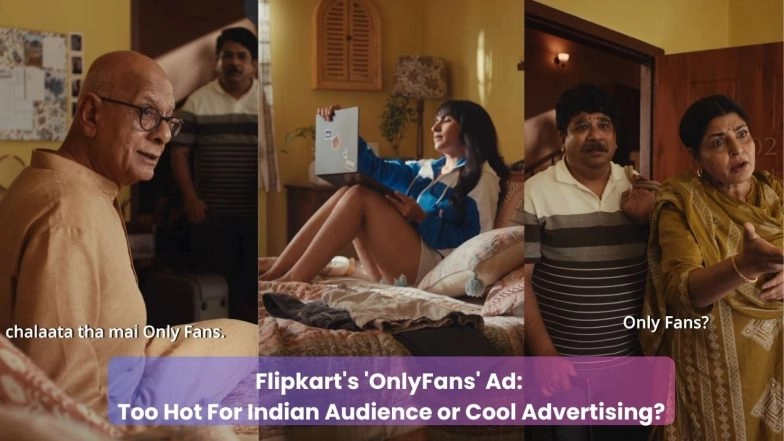
Flipkart, one of India's e-commerce giants, has once again managed to create a major stir online, this time with its latest ad campaign promoting its 'Cooling Days' sale. The ad cleverly uses a playful and provocative reference to OnlyFans, a platform known for adult content, to capture attention and promote its wide range of cooling products.
The ad features a young woman watching a video on her laptop, sweating. Her parents and grandfather enter the room and join the conversation, each hinting at using "Only Fans", leading the viewer to believe they are referring to the online platform. The ad takes an unexpected turn when it reveals the 'Only Fans' in question are actually ceiling & table fans and air coolers, followed by an announcement for Flipkart's 'Cooling Days' sale on ACs and other cooling appliances.
The ad's bold approach has sparked a frenzy of discussions and divided opinions on social media. Some viewers have praised the ad's creativity and humorous nature, while others have expressed concern over its suggestive tone and potential impact on younger audiences. This clash of viewpoints raises the question: is Flipkart's 'OnlyFans' ad a masterstroke of cool advertising, or is it too hot for the Indian audience to handle?
Flipkart Cooling Days 'OnlyFans' Ad Video:
View this post on Instagram
The Case for 'Cool Advertising'
Those who support the ad's innovative concept argue that it successfully breaks through the clutter of mundane advertising and creates a lasting impression. The clever use of wordplay and unexpected twists not only grabs attention but also resonates with the younger demographic, who are familiar with online culture and can appreciate the humour. Supporters of the ad argue that it's a bold and daring move that demonstrates Flipkart's willingness to experiment and engage with its audience in a fresh and exciting way.
Furthermore, proponents of the ad suggest that it cleverly highlights the importance of staying cool during India's scorching summers. By referencing "Only Fans" in a literal sense, the ad reminds viewers of the simple and effective ways to combat the heat, before pivoting to promote the superior cooling power of ACs and other advanced products available during the 'Cooling Days' sale. This clever association subtly reinforces the sale's message and encourages consumers to upgrade their cooling solutions.
The Case for 'Too Hot for India'
On the other hand, critics of the ad have voiced concerns about its suggestive nature and the potential for it to be misinterpreted, particularly by children and more conservative audiences. They argue that the reference to OnlyFans is unnecessary and could be seen as promoting a platform associated with explicit content. Some viewers have even accused the ad of trivialising the issue of adult content and potentially contributing to its normalisation. Also Read: OnlyFans Becomes World’s Most Revenue-Efficient Company, Beats Tech Giants NVIDIA, Apple, Meta, Microsoft, Google and Others.
Furthermore, opponents of the ad believe that it sets a dangerous precedent for future advertising campaigns. They worry that other brands might follow suit, resulting in a trend of increasingly provocative and inappropriate ads that could further blur the lines between acceptable and offensive content. They argue that brands have a responsibility to be mindful of their audience and avoid content that could be considered inappropriate or harmful.
The debate surrounding Flipkart's 'OnlyFans' ad highlights the subjective nature of advertising and the importance of context. What one viewer finds humorous and innovative, another might find offensive and inappropriate. This duality of reception is a reflection of the diverse attitudes and values within India's vast and heterogeneous population.
It's also worth noting that Flipkart's target audience for this ad is likely younger demographics who are more familiar with online trends and pop culture references. The ad's lighthearted and humorous tone is designed to resonate with this group, who are more likely to appreciate the wordplay and unexpected twist. However, the ad's reach is much wider, and it will inevitably encounter viewers who do not share the same understanding or appreciation for the ad's concept. Also Video: Flipkart Layoffs 2026: Nearly 500 Employees Asked To Leave After Performance Review, Says Report.
The controversy surrounding Flipkart's 'OnlyFans' ad raises important questions about the future of advertising in India. As brands strive to stand out in a crowded and competitive market, they are increasingly experimenting with bold and provocative concepts. This trend is likely to continue, fueled by the rapid growth of social media and the increasing influence of younger demographics.
However, brands also need to be mindful of the potential backlash and ensure that their ads are not only attention-grabbing but also responsible and respectful of Indian sensibilities. It's a delicate balancing act that requires a deep understanding of the audience, the prevailing cultural norms, and the potential impact of the ad's message.
Ultimately, whether Flipkart's 'OnlyFans' ad is considered 'cool advertising' or 'too hot for India' is a matter of individual perception. The ad has undoubtedly succeeded in creating a buzz and generating conversation, which is often a key objective of advertising. However, the diverse and often conflicting reactions to the ad also serve as a reminder of the challenges brands face in navigating the complex and nuanced landscape of Indian advertising.
DISCLAIMER: This article is strictly for informational and educational purposes to raise awareness about the said topic.
LatestLY DO NOT host, distribute, or provide links to sexually explicit content, leaked videos, or pirated material. Any search terms or keywords mentioned are solely for the purpose of explaining the viral trend and its associated dangers. We strongly condemn the circulation of non-consensual intimate imagery (NCII) and advise all readers to refrain from searching for or sharing such content, as doing so may lead to severe legal consequences.
(The above story first appeared on LatestLY on Mar 23, 2026 10:49 AM IST. For more news and updates on politics, world, sports, entertainment and lifestyle, log on to our website latestly.com).