Who Was Mark Tully? Know All About Veteran Journalist and BBC’s ‘Voice of India’ As He Dies at 90
Sir Mark Tully, the veteran journalist whose calm, distinctive voice became the definitive account of Indian history for millions of BBC listeners, passed away on Sunday, January 25, 2026. He was 90 years old. Tully died at a private hospital in South Delhi’s Saket area, where he had been undergoing treatment for age-related health issues over the past week.

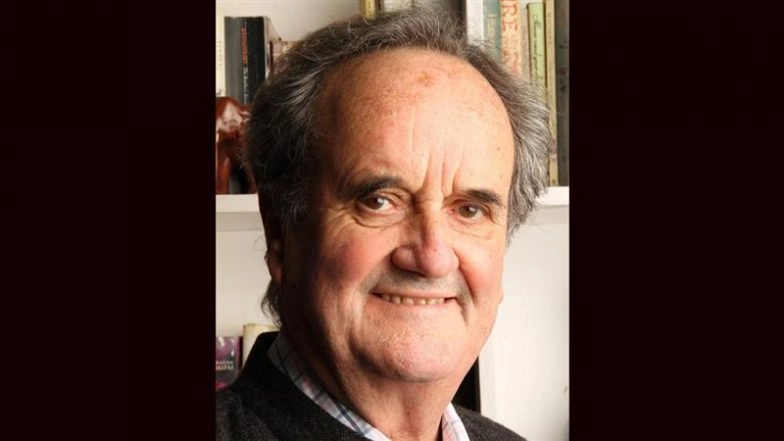
Mumbai, January 25: Sir Mark Tully, the veteran journalist whose calm, distinctive voice became the definitive account of Indian history for millions of BBC listeners, passed away on Sunday, January 25, 2026. He was 90 years old. Tully died at a private hospital in South Delhi’s Saket area, where he had been undergoing treatment for age-related health issues over the past week. His passing was confirmed by his close friend and former colleague Satish Jacob, marking the end of an era for international journalism in the subcontinent.
For over three decades, Tully was the primary lens through which the world viewed South Asia. From the 1971 Bangladesh Liberation War to the assassination of Indira Gandhi and the 1992 demolition of the Babri Masjid, his reporting was synonymous with accuracy and deep cultural empathy. Even after resigning from the BBC in 1994 following a public dispute with its leadership, Tully chose to remain in New Delhi, the city he considered his true home, continuing his work as a freelance broadcaster and acclaimed author.
Who Was Mark Tully?
Born on October 24, 1935, in Tollygunge, Calcutta (now Kolkata), William Mark Tully was the son of a British businessman. Though he spent his early years in British India, he was sent to England for his education and eventually studied theology at Cambridge with the intention of becoming a priest. However, his path shifted toward journalism, and he joined the BBC in 1964. He returned to India in 1965, beginning a lifelong association with the country that earned him the affectionate title “Tully Sahib” among the Indian public.
As the BBC’s New Delhi Bureau Chief for 22 years, Tully became a household name. In an era before 24-hour news cycles, Indians famously tuned their shortwave radios to the BBC to hear Tully’s dispatches, particularly during the 1975 Emergency when domestic media was heavily censored. His ability to report in fluent Hindi and his refusal to rely on Western stereotypes made him one of the most trusted foreign correspondents in history. He was later knighted in 2002 and received the Padma Bhushan, India’s third-highest civilian award, in 2005.
Mark Tully: A Chronicler of the Indian Soul
Beyond his voice on the airwaves, Tully was a prolific author whose books sought to unravel the complexities of Indian society. Works such as No Full Stops in India, India in Slow Motion, and The Heart of India remain essential reading for understanding the country’s social and political fabric. He had a unique talent for highlighting the "slow" but steady progress of the nation, often defending traditional Indian values against what he viewed as the pitfalls of aggressive modernization.
Even in his later years, Tully remained a keen observer of the Indian pulse. He continued to host the BBC Radio 4 program Something Understood until 2019, exploring themes of spirituality and philosophy. His colleagues remember him as a man of immense integrity and "Dill" (heart), as famously described by his son, with a heart that was "Hindustani, but a bit English too."
Tributes and Legacy
Tributes have poured in from across the globe, with political leaders, journalists, and citizens remembering him as the "voice of truth." Many recalled how his reporting during crises provided a sense of calm and clarity to a nation in turmoil. His longtime partner, Gillian Wright, and his children survive him.
Tully’s legacy lies in his role as a bridge between two cultures. He did not merely report on India; he lived it, breathed it, and ultimately became a part of its modern history. As one colleague noted, "India has lost its most faithful chronicler, and the BBC has lost its greatest voice."
(The above story first appeared on LatestLY on Jan 25, 2026 05:49 PM IST. For more news and updates on politics, world, sports, entertainment and lifestyle, log on to our website latestly.com).