What Are the Penalties for Hoarding LPG Cylinders?
India has invoked the Essential Commodities Act to combat an LPG hoarding crisis. Offenders face 3 months to 7 years in jail and heavy fines for illegal stockpiling. With a new 25-day refill rule and a crackdown on black marketing, the government aims to prioritise domestic gas supply amid global energy disruptions. Meanwhile, the Ministry of Petroleum has clarified that while there is no actual 'production failure,' demand distortion caused by hoarding is the primary cause of current delays.

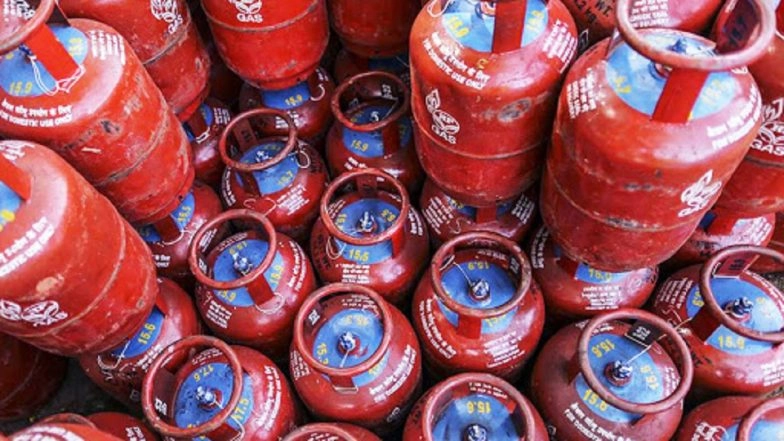
Mumbai, March 13: The Union government has issued a stern warning to traders and consumers alike, stating that the hoarding of Liquefied Petroleum Gas (LPG) cylinders could lead to up to seven years of imprisonment. This move comes as India invokes the Essential Commodities Act (ECA), 1955, to manage a nationwide storage and supply crisis triggered by geopolitical tensions in West Asia.
The crackdown follows reports of "panic-booking" and artificial scarcity in several major cities. To maintain equitable distribution, the Ministry of Petroleum and Natural Gas has mandated that domestic households generally keep a maximum of two 14.2 kg cylinders, one in use and one backup. Any quantity held beyond this without valid commercial licensing is now being classified as illegal hoarding. LPG Theft Surges in Bengaluru Amid Crisis, Video Shows Thief Stealing Gas Cylinder.
Penalties for Hoarding LPG Cylinders
The legal framework for these penalties is primarily rooted in Section 7 of the Essential Commodities Act. Those found guilty of hoarding can face a mandatory minimum jail term of three months, which can extend to seven years depending on the severity of the violation. The law also grants magistrates the discretion to impose uncapped fines based on the scale of the illegal profit made.
Beyond imprisonment, Section 6A of the Act empowers District Collectors to seize and confiscate hoarded goods even before a trial begins. This includes not just the gas cylinders themselves, but also the vehicles or equipment used for their unauthorised transport or storage. For distributors and agencies, a single conviction can lead to the permanent cancellation of their dealership licenses. LPG Shortage Fears Trigger ‘Induction Rush’ Across India as Homes and Restaurants Scramble for Electric Cooking.
New Rules to Curb Stockpiling
To discourage hoarding at the consumer level, the government has introduced a mandatory 25-day gap between refill bookings for domestic users. This "inter-booking period" is designed to prevent households from accumulating excess stock during the crisis. For the commercial sector, supply has been capped at 20% of their average monthly requirement to prioritise domestic kitchens, hospitals, and schools.
Authorities are also leveraging technology to prevent diversion. The "Delivery Authentication Code" (DAC) system is being expanded to cover 90% of consumers. This ensures that a cylinder cannot be logged as "delivered" unless the consumer provides a one-time code received on their registered mobile number, making it nearly impossible for distributors to divert stock to the black market.
State governments have been directed to establish district-level monitoring committees to oversee the supply chain. In some regions, like Tamil Nadu, authorities have gone a step further by detaining repeat offenders under the stringent Goondas Act. Police intelligence units are also monitoring social media platforms to identify and flag rumor-mongering that could trigger further panic-buying.
The Ministry of Petroleum has clarified that while there is no actual "production failure," demand distortion caused by hoarding is the primary cause of current delays. Consumers are urged to report any instances of black marketing through the national LPG emergency helpline (1906) or through official Oil Marketing Company (OMC) portals.
(The above story first appeared on LatestLY on Mar 13, 2026 04:06 PM IST. For more news and updates on politics, world, sports, entertainment and lifestyle, log on to our website latestly.com).