Reptiles As Border Guards? India Considers Using Snakes, Crocodiles on Bangladesh Border
India is reportedly exploring the use of snakes and crocodiles to secure unfenced riverine stretches along the Bangladesh border, according to The Federal. The plan, under review by the BSF on Amit Shah’s direction, aims to address security gaps in difficult terrain, though concerns remain over feasibility, safety, and environmental impact.

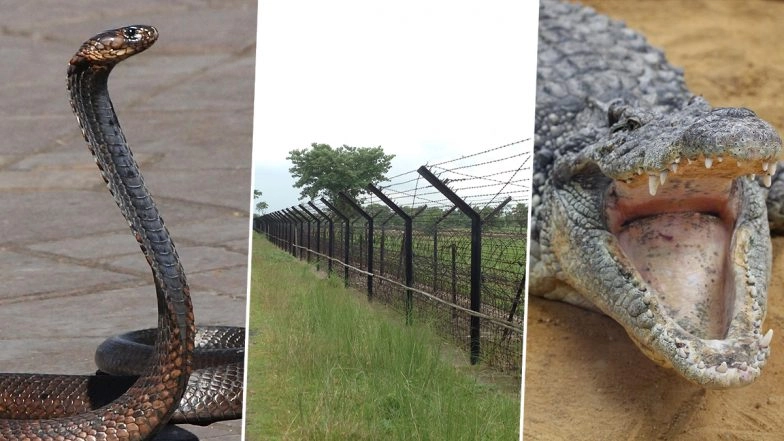
India is reportedly exploring an unconventional plan to strengthen security along difficult stretches of its border with Bangladesh by deploying reptiles such as snakes and crocodiles in riverine areas. According to a report by The Federal, the proposal aims to address vulnerabilities in regions where traditional fencing is not feasible.
The reported move follows directions from Union Home Minister Amit Shah to the Border Security Force to assess the feasibility of using natural deterrents in marshy and waterlogged terrain along the border. Why Has Bangladesh Shut Most Visa Services in India Amid Diplomatic Strains; What It Means for Indian Travelers.
India Considers Using Snakes, Crocodiles on Bangladesh Border
India shares a 4,096-km border with Bangladesh, of which around 175 km consists of rivers and marshlands that are difficult to fence. While large portions of the border have already been secured with fencing, these gaps are seen as vulnerable points that can be exploited for unauthorised crossings and smuggling. The reported plan involves introducing predatory reptiles in such areas to act as a biological deterrent, discouraging movement across these stretches.
Shift Toward 'Deterrence-First' Strategy
According to The Federal, the directive was issued after a high-level meeting in New Delhi, with BSF units in eastern and northeastern sectors tasked with identifying suitable locations.
Officials have also been asked to map border outposts with poor mobile connectivity and compile data on local incidents, indicating a broader push toward intelligence-backed border management. The approach signals a possible shift toward unconventional and environment-based security measures. What Tarique Rahman Said About India-Bangladesh Ties in His First Speech After the Election Victory (Watch Video).
The report highlights that the BSF is dealing with manpower shortages and infrastructure limitations, which have contributed to security challenges in remote areas. These constraints have reportedly prompted authorities to consider alternative methods to strengthen surveillance and deterrence.
However, the proposal may raise practical and ethical concerns, including environmental impact, human safety, and effectiveness in preventing crossings.
Historical and Political Context
The India-Bangladesh border has long been sensitive, shaped by the legacy of the 1947 partition that divided communities and families across regions. Cross-border movement often occurs due to economic reasons, including seasonal work and local ties. At the same time, border enforcement has been a point of friction between the two countries.
Human rights groups have previously criticised the BSF over incidents involving civilians, adding to tensions around border management policies.
(The above story first appeared on LatestLY on Apr 05, 2026 09:39 PM IST. For more news and updates on politics, world, sports, entertainment and lifestyle, log on to our website latestly.com).