Underground Local Trains in Mumbai Soon? What We Know
Mumbai railway authorities are exploring underground suburban train routes to tackle chronic overcrowding and space constraints. Studies are underway for key stretches on the Central and Western lines, including Churchgate–Mumbai Central and CSMT-Parel. The proposal aims to improve safety, commuter comfort, and optimise urban land use.

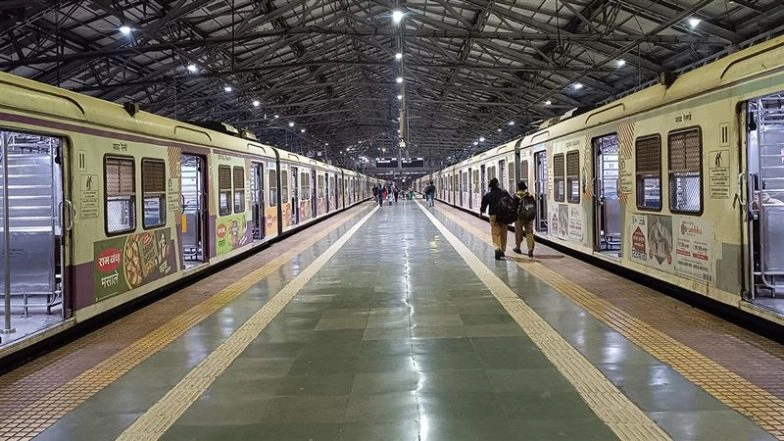
Mumbai’s suburban railway network may see a major transformation as officials consider developing underground local train corridors to address persistent overcrowding. Early-stage discussions focus on key high-density routes across the city’s Central and Western lines, where passenger volumes continue to strain existing infrastructure.
The proposal comes as authorities face mounting challenges in expanding above-ground rail capacity due to limited space, costly land acquisition, and the complexities of relocating residents. Underground routes are being examined as a potential long-term solution to improve commuter conditions and modernise the system. Panvel Elevator Accident: 4 Passengers Rescued After Lift Plummets at Panvel Railway Station (Watch Video).
Mumbai May Soon See Suburban Trains Go Underground
The Mumbai Railway Vikas Corporation (MRVC) has initiated preliminary studies to assess the viability of underground corridors. One of the key segments under review is the Churchgate–Mumbai Central stretch on the Western line.
In parallel, additional suburban lines between Chhatrapati Shivaji Maharaj Terminus (CSMT) and Parel on the Central line are also being studied. These efforts aim to identify whether underground construction can be implemented efficiently in densely built urban areas. Mumbai Local Train Services Disrupted on Central Line After Empty Rakes Derail Near Dombivli Station, Derailment Triggers Peak-Hour Chaos (Watch Videos).
Proposed Routes Across Key Corridors
Officials are evaluating broader underground connectivity along two of Mumbai’s busiest suburban routes. On the Central line, the corridor between CSMT and Kalyan is under consideration. On the Western line, the Churchgate to Virar stretch is being explored.
These routes handle some of the highest commuter traffic in the city, making them critical targets for capacity enhancement.
Potential Impact on Commuters
If implemented, underground suburban lines could significantly reduce overcrowding and improve travel safety. Controlled access systems may help regulate passenger flow, while grade separation could minimise accidents caused by track crossings.
The shift underground could also free up surface land, offering opportunities for urban redevelopment and infrastructure improvements.
A Long-Term Urban Transport Strategy
Mumbai’s local train network remains a primary mode of transport for millions of daily commuters, despite ongoing metro expansion. However, congestion during peak hours continues to be a major concern.
While the underground rail proposal is still at a conceptual stage, it reflects a broader effort by authorities to rethink urban mobility solutions in a space-constrained city. Further studies will determine the feasibility, cost, and timeline of such a project.
(The above story first appeared on LatestLY on Apr 20, 2026 03:24 PM IST. For more news and updates on politics, world, sports, entertainment and lifestyle, log on to our website latestly.com).