What Is the Fake Payment Screenshot Scam? How Fraudsters Use Fake Receipts to Trick Retailers
As digital payments become increasingly common, businesses are facing a growing threat from the “Fake Payment Screenshot Scam.” In this fraud, scammers use forged or app-generated payment receipts to falsely claim a transaction was completed, exploiting the visual design of mobile payment screens to deceive retailers and avoid making actual bank transfers.

- Read in
- हिंदी
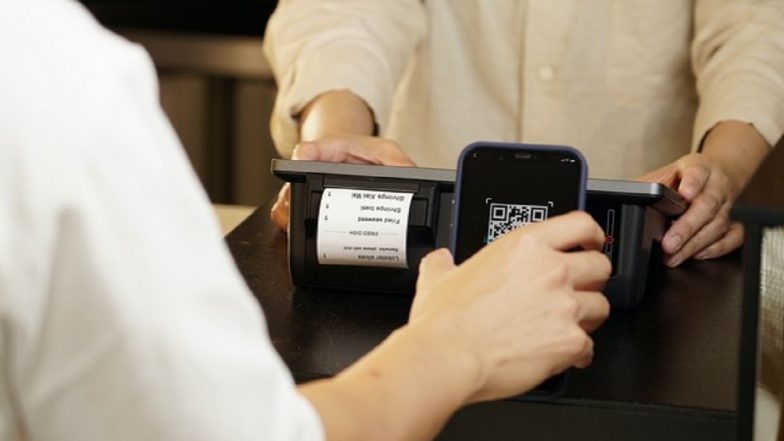
Digital payment systems have revolutionized daily financial transactions worldwide, offering unparalleled convenience for both retail businesses and consumers (Dahiphale et al., 2024). However, this rapid shift toward cashless economies has also introduced new vulnerabilities, with malicious actors increasingly exploiting the visual design of mobile transaction screens (Dahiphale et al., 2024). Security authorities and retail associations are warning businesses about the "Fake Payment Screenshot Scam," a social engineering tactic where fraudsters bypass actual bank transfers entirely by presenting forged, app-generated receipts at checkout.
What is the Fake Payment Screenshot Scam?
The mechanism behind this fraud relies heavily on the psychological manipulation of retail workers during busy operating hours. A bad actor selects items at a retail counter and requests to pay via a real-time mobile payment network, such as the Unified Payments Interface (UPI) or equivalent instant-transfer digital wallets. What Is ‘Scam-Yourself’ Attacks? Scammers Find New Ways To Trick Users Through ‘Social Engineering’ Techniques; How To Spot Such Threats and Stay Safe.
Instead of completing the transaction via an official banking application, the perpetrator utilizes specialized, unauthorized cloning applications or web tools. These fraudulent programs are explicitly designed to generate realistic, high-fidelity mock-ups of successful transaction pages (Wu, 2026). Within seconds, the scammer enters the merchant’s name, the correct monetary amount, and a fabricated transaction ID, producing a deceptive visual image that closely mimics an official bank confirmation receipt.
The Mechanics of Visual Deception
Once the fraudulent confirmation is generated, the scammer displays the phone screen briefly to the cashier or merchant as "proof" of successful execution. Because the interface features genuine-looking logos, matching fonts, and appropriate banking colors, standard visual checks often fail to detect the forgery (Wu, 2026).
The perpetrator typically utilizes peer pressure, citing network delays, immediate time constraints, or crowded store conditions to discourage the store employee from checking their own ledger (Roy, 2026). Believing the funds are en route, the merchant permits the customer to leave with the high-value goods, discovering the financial deficit only during end-of-day reconciliation. Digital Arrest Scam: Gujarat Elderly Man Duped of INR 1.47 Crore Over 28 Days by Fraudsters Posing as CBI, ED and Police Officials.
Why Traditional Visual Checks Fail
The rising frequency of this cyber fraud highlights an escalating structural issue in standard point-of-sale interactions: a heavy reliance on a customer's physical smartphone screen. In real-time payment infrastructures, successful operations depend on immediate debiting and crediting across independent bank systems coordinated by a central server (Aryan, 2023). However, while the backend network ensures cryptographic security, it does not inherently protect merchants from offline spoofing or social engineering at the checkout counter (Edburg et al., 2024).
Furthermore, recent advancements in digital forgery and image generation have drastically expanded the accessibility of high-quality synthetic artifacts (Wu, 2026). Bad actors no longer require technical expertise to execute these frauds; public-facing cloning applications automate the generation process entirely, making manual visual authentication unreliable.
Strategic Defenses for Retailers
To insulate operations from the financial damages of screenshot forgery, merchants must move away from visual confirmation and implement verification protocols driven strictly by internal business records.
-
Enforce Independent Ledger Verification: Store employees should never accept a customer’s screen as valid confirmation. A transaction must only be considered complete once the business observes the incoming funds directly via the merchant portal, native banking application, or official business SMS alerts.
-
Deploy Automated Audio Confirmation Tools: Utilizing internet-connected smart speakers or dedicated "sound boxes" provided by digital payment service providers can drastically mitigate risk. These automated devices audibly announce successful incoming payments in real time, effectively removing human error from the visual verification loop.
-
Establish Employee SOPs: Retail managers should formally instruct front-line cashiers to refrain from releasing merchandise until internal verification is achieved. Cashiers should be trained to handle high-pressure customer tactics with neutral adherence to standard operating procedures.
-
Utilize Dynamic Merchant QR Codes: Whenever possible, businesses should transition away from static, printed countertop QR codes to dynamic point-of-sale terminals that generate a unique QR code for each specific invoice amount. This forces a structured data sync between the merchant platform and the customer's payment application.
As digital payments continue to dictate global commerce, the balance between operational speed and financial security remains a primary concern for retailers (Dahiphale et al., 2024). By integrating systematic verification technologies and enforcing strict checkout protocols, modern merchants can effectively render fake screenshot scams obsolete.
(The above story first appeared on LatestLY on Jun 01, 2026 05:24 PM IST. For more news and updates on politics, world, sports, entertainment and lifestyle, log on to our website latestly.com).