Ancient Samnite Mystery: Children Buried With Bronze Warrior Belts Found in 2,500-Year-Old Cemetery in Italy
Archaeologists in southwestern Italy have uncovered a 2,500-year-old necropolis containing the remains of children buried with oversised bronze 'warrior' belts. The discovery was made during preventive excavations at the site of a former tobacco factory in Pontecagnano Faiano, near Salerno.

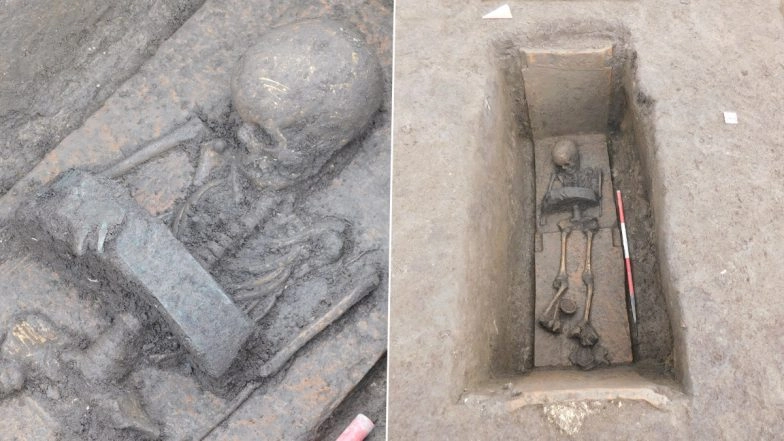
Rome, March 13: Archaeologists in southwestern Italy have uncovered a 2,500-year-old necropolis containing the remains of children buried with oversised bronze "warrior" belts. The discovery was made during preventive excavations at the site of a former tobacco factory in Pontecagnano Faiano, near Salerno. While such decorative bronze bands are a hallmark of adult Samnite warriors, their presence in the graves of two children aged between five and ten has provided researchers with a rare glimpse into ancient social hierarchies and the symbolic transmission of power.
The excavation, overseen by the Superintendency of Archaeology for Salerno and Avellino, unearthed a total of 34 burials dating back to the 4th and 3rd centuries B.C. During this era, the Samnite people, an Italic group known for their fierce resistance against early Rome, dominated the region. Of the graves discovered, 15 belonged to infants and children, organized in distinct clusters that likely reflect family units. Most burials consisted of simple earthen pits covered with angled roof tiles, though three elite stone-box tombs made of expensive travertine and tufa were also identified. Viral Video Shows Lava From Piton de la Fournaise Volcano Severs Key Coastal Road on Reunion Island.
Samnite Burials of Children With Bronze Warrior Belts Found in Cemetery in Italy
The most significant find involves the bronze belts, which were unmistakable symbols of masculine status in Samnite culture. Typically used to secure the tunics of adult men, these wide, decorated bands were found draped over the midsections of two young children. Because the belts are clearly sized for adults, archaeologists believe they were never worn by the children during their lifetimes.
Instead, the belts likely served a funerary purpose, acting as a symbolic rite of passage for those who died before they could reach warrior age. By placing these artifacts in the graves, the families may have been asserting the children’s hereditary social rank or signaling their noble lineage to the "denizens of the underworld" to ensure their protection in the afterlife. Rare ‘Doomsday Fish’ Wash Ashore in Mexico as Middle East Tensions Fuel Online Speculation (Watch Video).
A Wealth of Funerary Offerings
In addition to the unusual child burials, the necropolis yielded a diverse array of grave goods that align with traditional Samnite customs. Male burials featured iron weaponry, including spearheads and javelins, while female graves were furnished with personal ornaments such as rings and fibulae (decorative brooches).
The site also contained various ceramic vessels used in ritual banquets, including:
- Skyphoi: Deep wine cups with two handles.
- Lekythoi: Slender flasks for storing perfumed oils.
- Paterae: Shallow bowls used for drink offerings (libations).
The settlement at Pontecagnano holds a long archaeological record, founded originally in the 9th century B.C. and later influenced by Etruscan culture before falling under Samnite control. The newly discovered sector of the southern necropolis dates to a period of intense cultural and political change just prior to the Roman conquest.
(The above story first appeared on LatestLY on Mar 13, 2026 07:36 PM IST. For more news and updates on politics, world, sports, entertainment and lifestyle, log on to our website latestly.com).