Microsoft Updates Copilot Terms to ‘Entertainment Purposes Only’ Amid AI Accuracy Concerns
Microsoft has reclassified its Copilot AI as being for “entertainment purposes only” in its latest terms of use to avoid legal liability for AI hallucinations. Despite this disclaimer, the company continues to report strong sales growth for the tool, which is now used by 3% of its paying customers.

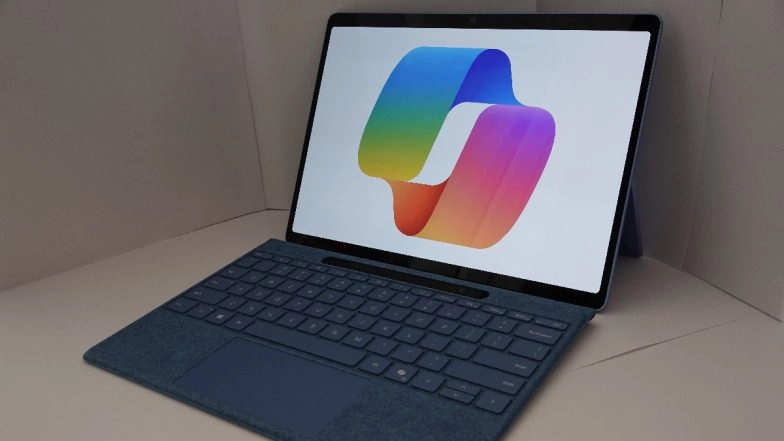
Microsoft has updated the terms of use for its Copilot AI suite, explicitly categorising the tool for “entertainment purposes only.” The change, which applies across the company’s productivity applications including Excel, PowerPoint, and the 365 suite, advises users to engage with the AI at their own risk. This shift in positioning comes despite Microsoft’s continued aggressive marketing of the tool as a primary driver for enterprise and consumer productivity.
The update to the service agreement appears designed to mitigate legal liability regarding "hallucinations", a phenomenon where Large Language Models (LLMs) generate factually incorrect or fabricated information. While Microsoft continues to integrate Copilot into 78 different products, the new terms underscore a cautious approach to the reliability of AI-generated content in professional environments. Satya Nadella Announces Copilot Cowork To Automate Complex Multi-Step Workflows in Microsoft 365.
Shift in Legal Liability and Accountability
The revised terms, which were reportedly integrated into Microsoft’s official documentation as early as October last year, serve as a legal safeguard. By labelling the output as entertainment, Microsoft effectively shifts the responsibility for factual accuracy to the end-user. The move ensures the company remains clear of legal claims arising from inaccurate data, flawed code, or incorrect financial analysis produced by the AI.
Industry experts note that while AI models like OpenAI’s GPT and Anthropic’s Claude have improved, they remain prone to errors. Microsoft’s stance highlights that the AI should be viewed as a supplementary tool rather than an autonomous decision-maker.
Continued Push for Enterprise Adoption
Despite the "entertainment" disclaimer, Microsoft’s commercial strategy remains focused on workplace integration. Microsoft CEO Judson Althoff recently informed staff in an internal meeting that the company had met "audacious goals" for Copilot sales in the last quarter. As of December 31, 2025, approximately 3% of Microsoft’s customer base had transitioned to paid Copilot subscriptions, a figure the company is looking to grow significantly in 2026.
To further this momentum, Microsoft recently introduced 'Copilot Cowork,' a tool built on Anthropic’s Claude Cowork technology. This specific iteration is aimed at high-level productivity in the software-as-a-service (SaaS) sector, directly competing with traditional workflows at firms like TCS and Infosys.
The Rise of 'Vibe Working' and Fact-Checking
The company has previously used the term “vibe working” to describe the seamless use of AI in daily tasks. However, with the new terms of use, Microsoft is now urging a more rigorous approach to human oversight. Users are encouraged to fact-check all AI-generated outputs before relying on them for critical business operations. Microsoft Unveils Multi-Model AI Upgrades as Copilot Integrates Claude and GPT for Real-Time Verification.
This transition reflects a broader industry trend where tech giants provide powerful generative tools while simultaneously issuing broad disclaimers. The "use at your own risk" mandate serves as a reminder that while AI can draft emails or format spreadsheets, the final accountability for the work product remains with the human professional.
(The above story first appeared on LatestLY on Apr 06, 2026 03:07 PM IST. For more news and updates on politics, world, sports, entertainment and lifestyle, log on to our website latestly.com).